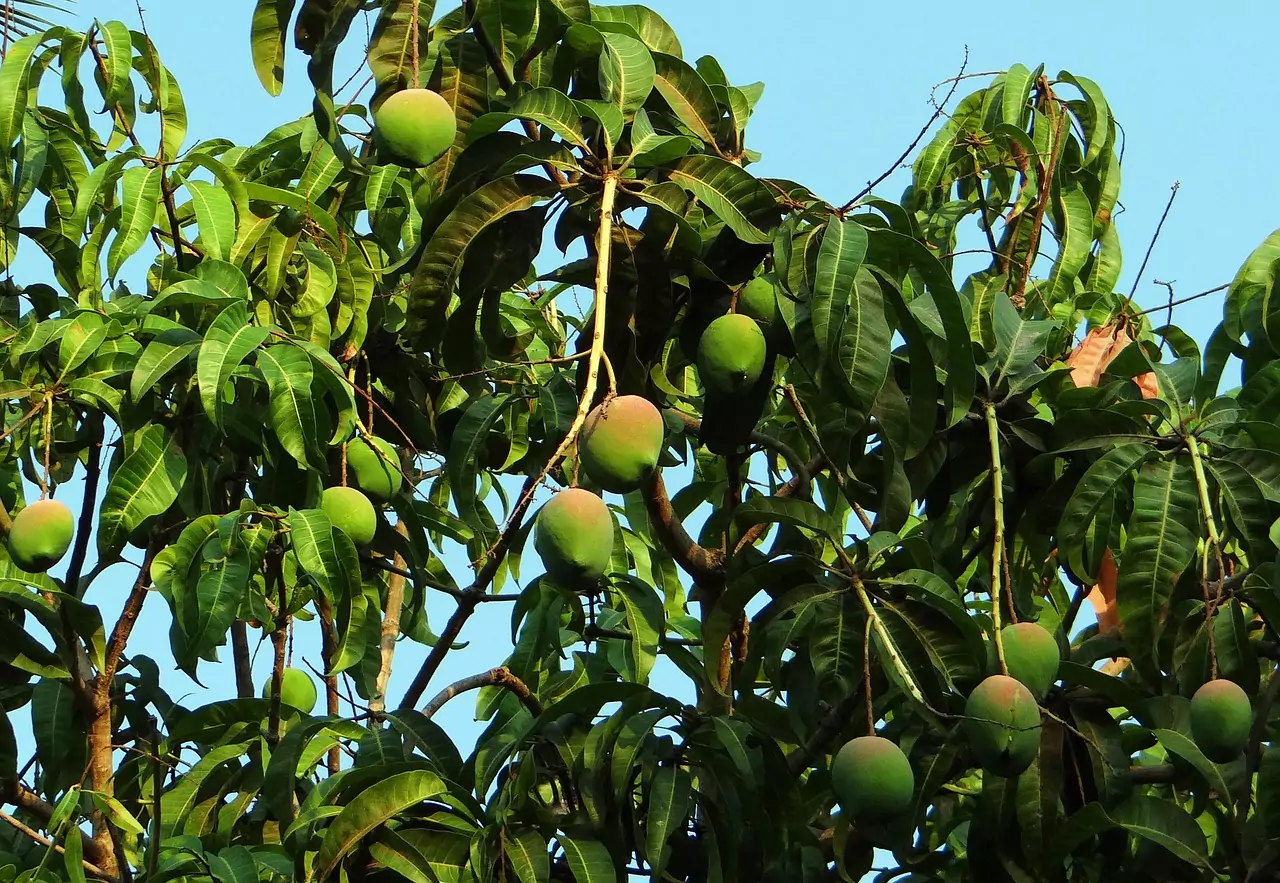
Have you ever imagined having your own garden?
Perhaps what comes to mind is a beautiful flower garden, a lush vegetable garden, or an orchard full of crops. No wonder, because the three types of plants have a myriad of benefits, both for personal consumption and high economic value if sold.
In the world of agribusiness, one type of plant that is of high economic value is seed plants (Spermatophytes). Because seed plants can be used as food, medicine, clothing, ornamental plants, and industrial raw materials.
Interestingly, seed plants are not only limited to fruits that produce seeds, but also include ornamental plants, food-producing plants, and fiber-producing plants for the clothing industry.
Want to know more about seed plants? Come on, check out the definition, characteristics, classification, benefits, and reproductive system below!
Seed Plants (Spermatophytes)
Seed plants or Spermatophytes are a group of plants that have organs in the form of seeds as a means of reproduction. The term Spermatophyta comes from the Greek, namely sperm which means ‘seed’ and phyton which means ‘plant.’
Seeds act as the main structure in the reproduction of seed plants. This seed is formed from the development of the embryo that is inside the ovule after the fertilization process takes place.

Seed plants have a very wide diversity and are not limited to fruit-bearing plants alone. Citing data from Harvard University BioNumbers, there are about 352,000 species of seed plants in the world, with the majority coming from the group of angiosperms or flowering plants.
In Indonesia, seed plants play an important role in various sectors, ranging from food, clothing, medicine, decoration, to industry. Based on a report from the National Research and Innovation Agency (BRIN), there are about 40,000 species of seed plants that grow in Indonesia.
Interestingly, this figure covers about 9 percent of the total species of seed plants in the world, making Indonesia one of the countries with the highest biodiversity. Some examples of typical Indonesian seed plants include:
- Resin (Agathis dammara): used in the resin and varnish industry.
- Hajj Fern (Cycas rumphii): an ornamental plant that also has a high conservation value.
- Melinjo (Gnetum gnemon): often used as food in the form of chips and vegetables.
Ciri-ciri Tumbuhan Berbiji (Spermatophyta)
Seed plants (Spermatophytes) have a more complex structure compared to other plant groups such as mosses (bryophytes) and ferns (Pteridophytes). Its body part consists of clearly distinguishable roots, stems and leaves.
However, because seed plants are of various types, many people are still often mistaken in distinguishing them from other plant groups. To understand more deeply, here are the general characteristics of seed plants:
- Have seeds as the main means of reproduction.
- Has a complex network of vessels (Xylem and phloem).
- Contains chlorophyll, so it is capable of photosynthesis.
- The generation of sporophytes is more complex compared to mosses and ferns.
- Reproduce sexually (generative) and asexually (vegetative).
- Most live on land, although some can live in aquatic environments.
- Sexual breeding tools in the form of flowers or strobilus (conifers).
From the above characteristics, it follows that seeds are the main characteristic that distinguishes seed plants from mosses and ferns. In addition, another advantage of this plant is that it has a more complex network of vessels, which are the xylem and phloem.
- The xylem serves to transport water and minerals from the roots to the stems and leaves.
- Phloem serves to channel the results of photosynthesis from leaves to all parts of plants, including stems and roots.
The presence of this network of vessels allows seed plants to grow larger and stronger than plants that do not have a network of vessels, such as mosses.
Classification Of Ferns
Seed plants (Spermatophytes) are divided into two large groups, namely gymnosperms (open seed plants) and angiosperms (closed seed plants).
1. Gymnosperms (Open-seeded plants)

Gymnosperms are a group of seed plants whose ovules are not protected by fruit leaves or pericarp. Therefore, it is referred to as an open-seeded Plant. The word gymnosperm itself comes from the Greek, namely gymnos which means ‘naked’ or ‘open.’
Characteristics of gymnosperms:
- The seeds are open, not encased by the fruit.
- The trunk is Woody and has a Cambium, so it is generally a large tree.
- It does not have true flowers, but it has a means of reproduction in the form of strobilus (conifers).
- The leaves are needle-shaped or scaly.
- It generally has a large taproot and grows straight down.
- It has a transport network in the form of Xylem (Water and mineral transporters) and phloem (photosynthetic transporters).
- Divided into four main classes, namely:
- Coniferophyta (contoh: cemara, Araucaria sp.)
- Cycadophyta (contoh: pakis haji, Cycas rumphii)
- Ginkgophyta (example: girl’s hair tree, Ginkgo biloba)
- Gnetophyta (contoh: melinjo, Gnetum gnemon)
2. Angiosperms (closed seed plants)

Angiosperms are a group of seed plants that have flowers as a means of generative reproduction. In contrast to gymnosperms, the ovules in angiosperms are protected by the ovules, which later develop into true fruits.
Characteristics of angiosperms:
- It has ovules protected by ovules.
- Consists of various forms of plants, ranging from large trees, vines, shrubs, to non-woody plants.
- The root system can be either a fibrous root or a taproot.
- It has flowers that serve as a means of generative reproduction.
- The leaves are relatively wider and flattened, with a variety of diverse shapes.
- The STEM can be branched or unbranched.
- It can grow in a variety of habitats, from the polar regions to the tropics.
- Seeds are divided into two main groups based on the number of pieces of seeds:
- Monokotil (tumbuhan berkeping satu): contohnya, jagung (Zea mays), bawang merah (Allium cepa), keladi (Caladium), padi (Oryza sativa).
- Dikotil (tumbuhan berkeping dua): contohnya, cabai merah (Capsicum annuum), kentang (Solanum tuberosum), bunga dahlia (Dahlia sp.), cassava (Manihot utilissima).
The Benefits Of Seed Plants
Seed plants (Spermatophytes) have a high economic value and provide various benefits to humans. This type of plant is used in many sectors, such as food, medicine, decoration, clothing, industrial materials, to environmental preservation.
1. Food ingredients
Seed plants are the main source of food for humans, both as staple foods, vegetables, and fruits. Some crops such as rice, corn, wheat, and sago are staple foods for most of the world’s population.
In addition, various vegetables such as tomatoes, cabbage, potatoes, carrots, kale and spinach are rich in vitamins, proteins and fiber that are beneficial to health. Some grains such as jackfruit seeds, basil seeds, and pine seeds can also be consumed or processed into food.
Meanwhile, fruits such as mango, apple, guava, passion fruit, watermelon, Sapodilla and Cherry are not only delicious but also rich in antioxidants and nutrients that are good for the body.
2. Medicines
Many seed plants contain active compounds that are useful in medicine. One of them is cloves, which are known to relieve pain, reduce inflammation, and have antibacterial properties.
Coriander is often used to help launch the digestive system and maintain heart health. In addition, ginkgo has long been used in traditional medicine to improve the cognitive function of the brain and relieve migraines and other headaches.
3. Decoration and houseplants
In addition to being useful as food and medicine, seed plants are also often used as decorations and ornamental plants to beautify rooms, parks, and landscapes.
Several types of plants such as Hajj Ferns, cypresses, and cacti are often used to decorate homes and gardens because of their unique and aesthetic shapes. In addition, flowers such as roses, hibiscus, daisies, and sunflowers are also very popular as ornamental plants because of the beauty of their attractive colors and shapes.
4. Clothing
The textile industry also relies heavily on seed plants as raw materials for the manufacture of fabrics and clothing. Cotton is the main material in the manufacture of cotton fabrics used in the clothing industry around the world. In addition, the fibers from the hemp plant are also widely used in the production of high-quality fabrics that are strong and durable.
5. Industrial raw materials
Seed plants are also utilized in a variety of industries, from the cosmetics industry to papermaking. Wood from various types of seed trees, such as pine and Acacia, is often used as a raw material for papermaking.
In addition, plant oils and fats such as palm and Olive are widely used in the cosmetic, pharmaceutical and food industries. The sap produced by some types of trees such as rubber is used as a raw material in the rubber industry that produces various products such as tires, gloves, and medical equipment.
6. Building materials
Wood from seed plants also plays an important role in the construction industry and furniture making. Teak wood is known as a very strong and durable material, so it is often used for the manufacture of furniture and buildings. In addition, mahogany wood is also often used in the manufacture of wooden floors, cabinets, and various high-quality furniture products.
7. Environmental Conservation
In addition to providing economic benefits, seed plants also play an important role in maintaining ecosystem balance and environmental sustainability. Plant roots help prevent soil erosion and reduce the risk of flooding and landslides.
In addition, seed plants also function as carbon dioxide absorbers (CO₂) and produce oxygen (O₂) through the photosynthesis process, thus contributing to reducing global warming. The presence of seed plants also helps maintain biodiversity by providing habitat for various species of animals and microorganisms.
Reproductive System Of Seed Plants
Seed plants can reproduce in two ways, namely generatively (sexually) and vegetatively (asexually). Both of these methods allow seed plants to multiply and maintain their viability in a variety of environments.

1. Generative reproduction
Generative reproduction in seed plants occurs through the flower, which serves as the main reproductive organ. This process begins with the formation of male cells (pollen grains) and female cells (stigma).
The process of generative breeding involves two main stages:
- Pollination (pollination): the pollen from the stamens falls on the stigma, which can happen through the help of wind, water, insects or other animals.
- Fertilization (fertilization): after pollination occurs, the pollen moves towards the ovule through the pollen tube. The sperm cells from the pollen then fertilize the egg in the ovule, so that an embryo or ovule is formed.
Plants that reproduce generatively produce seeds that can later grow into new plants. Examples of seed plants that reproduce generatively include rice, corn, guava, cucumber, bark, mango, tomato, and papaya.
2. Vegetative reproduction
Vegetative reproduction occurs without going through the process of pollination and fertilization. This reproduction is carried out by vegetative organs such as shoots, rhizomes (rhizome roots), or stolons (creeping stems).
Some examples of natural vegetative reproduction mechanisms in seed plants include:
- Shoots: for example in bananas and bamboo, which produce shoots from the stem or root.
- Rhizoma (rhizome root): for example in ginger and galangal, which develop through rhizome roots in the soil.
- Stolons: for example, in strawberries and puzzle grass, which reproduce through creeping stems at ground level.
Plants that reproduce vegetatively can grow faster than plants that reproduce generatively because they do not require the process of pollination and fertilization. Examples of seed plants that reproduce vegetatively include bananas, bamboo, breadfruit, potatoes, and duck cocor.
Cover
Seed plants play an important role in human life and ecosystems. With a wide variety of species and benefits, this plant is not only a source of food, medicine, clothing, and industry, but also contributes to maintaining environmental balance.
In addition, the reproductive system of seed plants, which includes both generative and vegetative reproduction, allows them to constantly develop and adapt to various natural conditions. Understanding the characteristics and benefits of seed plants can help us manage natural resources more wisely, so that their existence is maintained for future generations.
Sources and references:
- Number of species of extant seed plants (spermatophyte). BioNumbers Harvard University.
- The Biology Primer.
- What is a Seed? New York Botanical Garden.
- The Role of Seed Plants. LibreTexts Biology.
- Featured image: Tumbuhan berbiji (pixabay.com/sarangib)

