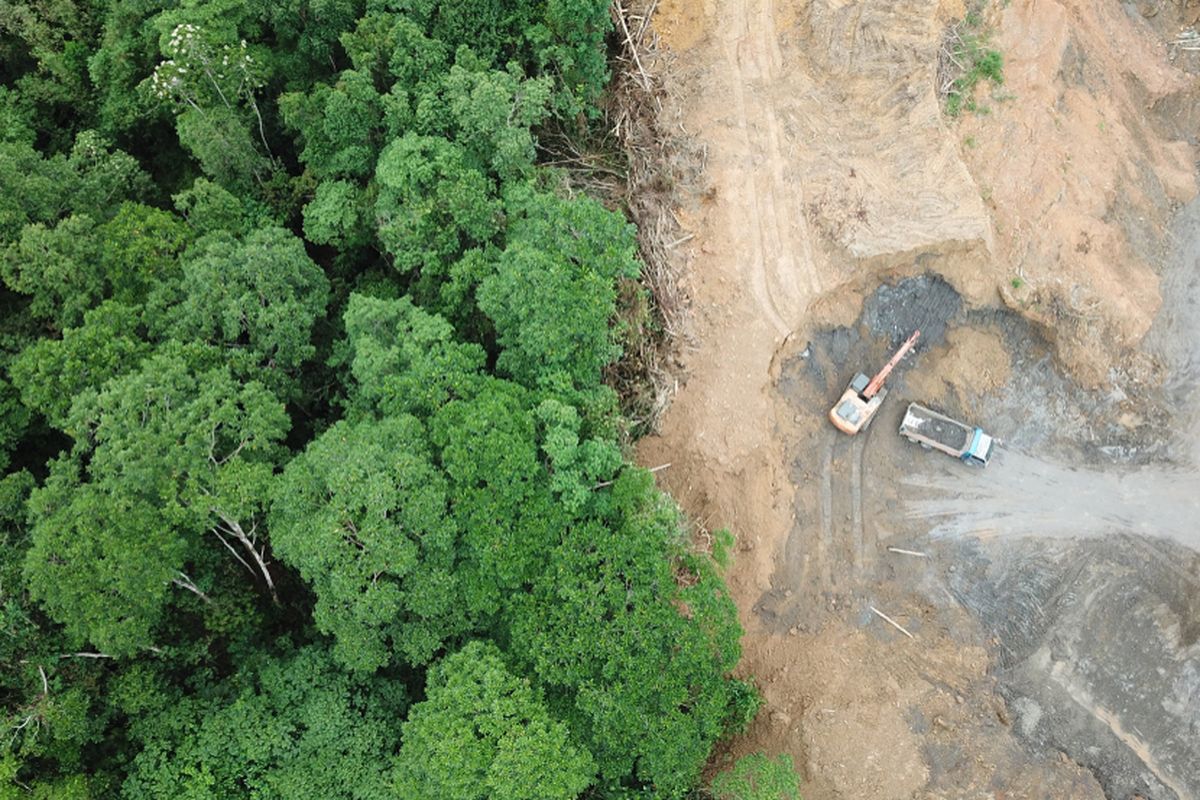
Imagine if the once lush forest now turned into barren and arid land. The air becomes hot, the soil loses its fertility, and many wildlife lose their habitat. This is the reality facing many regions of the world due to deforestation.
However, there is hope to restore the damaged ecosystem again—through reforestation.
In Indonesia, various efforts have been made to re-green degraded forests, from planting trees in watersheds to mangrove forest restoration. However, how big is the impact? What are the challenges still faced?
Let’s take a deeper look at how Indonesia is striving to restore its forests to their former glory and preserve the environment for future generations.
Understanding Reforestation

According to the Food and Agriculture Organization (FAO), reforestation is the process of replanting forests or land that has previously lost its tree cover due to logging, fires, or other human activities.
The main purpose of reforestation is to restore the functions of forest ecosystems, such as maintaining climate balance, protecting biodiversity, and providing natural resources for humans. Thus, reforestation plays an important role in reducing the effects of climate change and improving environmental quality.
Basically, reforestation is an attempt to ‘heal’ the Earth by re-greening land that has been damaged. However, more than just planting trees, reforestation also ensures that restored forest ecosystems can function as natural forests.
Difference between reforestation and reforestation
Many people often confuse reforestation and reforestation. Both are related to tree planting, but have fundamental differences.
Reforestation is carried out in areas of forest that have been cut down or disturbed to replace missing trees. The focus is on replanting trees so that the area is green again.
Reforestation, on the other hand, includes the complete restoration of ecosystems. In addition to planting trees, reforestation also aims to improve the quality of soil, water, and support the restoration of biodiversity.
In other words, reforestation can be part of reforestation, but reforestation has a broader scope because it involves the restoration of the ecosystem as a whole.
Benefits Of Reforestation For The Earth And People

Did you know that reforestation has many amazing benefits for the environment and our lives? Some of them are:
1. Reducing The Impact Of Climate Change
One of the biggest benefits of reforestation is its ability to absorb carbon dioxide (CO₂) from the atmosphere, which is a major cause of global warming.
According to the World Resources Institute, tropical forests are capable of absorbing up to 2.4 billion tons of CO₂ per year, making them a natural solution in reducing greenhouse gas emissions. With the increasing extent of forest areas being restored, the rate of climate change can be suppressed, so that the Earth’s temperature remains stable.
In Indonesia, net deforestation in 2021-2022 reached 104 thousand hectares, according to data from the Ministry of Environment and Forestry (MoEF). This figure shows how important reforestation is in balancing ecosystems and reducing the negative impacts of climate change.
2. Preventing Natural Disasters
Dense forests serve as a natural barrier that can prevent various disasters, such as floods, landslides, and erosion. Tree roots help stabilize the soil and absorb rainwater, thereby reducing the risk of disasters that can harm humans as well as the environment.
With reforestation, the frequency and impact of natural disasters can be minimized. In addition, reforestation also helps maintain soil fertility, which is very important for the sustainability of the agricultural sector and the lives of people around the forest.
3. Providing Habitat for Biodiversity
Forests are home to thousands of species of flora and fauna. Unfortunately, deforestation has led to the loss of natural habitat for many wildlife, increasing the risk of their extinction. Reforestation is an important solution in restoring natural ecosystems and ensuring that various species can live and reproduce properly.
For example, a reforestation program in Gunung Leuser National Park has helped preserve the endangered Sumatran orangutan population. By restoring degraded forests, we can protect wildlife while maintaining the balance of the ecosystem as a whole.
4. Improve Air Quality
In addition to absorbing carbon dioxide, trees planted through reforestation also play an important role in producing oxygen through the process of photosynthesis. This helps improve the quality of the air we breathe every day. In addition, trees can also absorb pollutants such as dust and other harmful gases, making the air cleaner and healthier.
Imagine, one adult tree is able to produce enough oxygen for four people every day! Therefore, the more trees planted, the better air quality we enjoy.
5. Improving Public Welfare
Reforestation also contributes to the economic well-being of communities. Recovered forests can be a source of various products of economic value, such as wood, fruits, as well as raw materials for natural medicines.
In addition, reforestation creates new jobs in various sectors, from planting and maintaining trees to processing non-timber forest products, such as honey, rattan and essential oils.
Moreover, healthy forests also encourage the growth of natural tourism sectors, such as ecotourism and educational tourism, which provide additional economic benefits to local communities.
6. Maintaining the water and soil cycle
Forests have an important role in maintaining the balance of the water cycle. The trees that grow in the forest serve as natural water stores, absorbing rainwater, and then slowly releasing it into the soil. This process helps maintain the stability of river flow, reduce the risk of flooding during the rainy season, and prevent drought in the dry season.
In addition, forests also play a role in increasing soil fertility. Fallen leaves and twigs will undergo a decomposition process and become humus, which is rich in nutrients. This humus layer is very important to maintain the fertility of agricultural land and support the growth of other crops.
7. Reducing The Effects Of Urban Heat Island
In urban areas, reforestation plays a role in reducing the effect of ‘Urban Heat Island’, a phenomenon in which the temperature of the city is higher than the surrounding area due to the lack of green space and the dominance of concrete and asphalt. Trees in green areas can provide shade, absorb heat, as well as increase air humidity.
According to research, the presence of green spaces in cities can lower the air temperature by 2-8°C, thereby creating a more comfortable environment for residents. In addition, trees also help absorb air pollutants, such as carbon monoxide and dust particles, so that air quality in urban areas becomes better.
Examples Of Reforestation
After discussing the benefits of reforestation, we now look at some real examples of reforestation projects that have been successful in various parts of the world.
Here are some of them:
1. Reforestation project in Jeruklegi Wetan Village, Indonesia
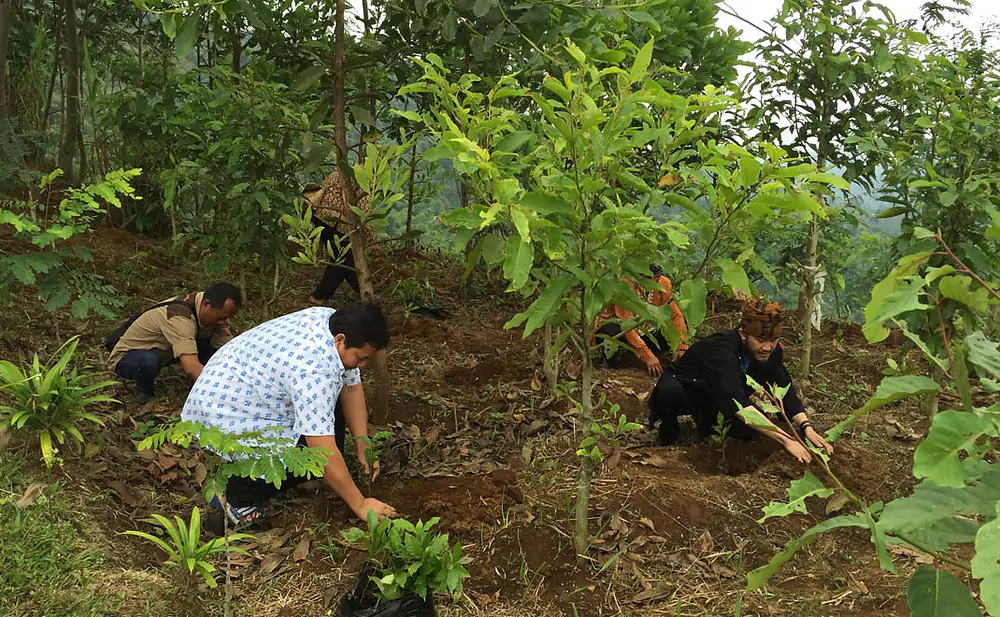
In Indonesia, one successful example of reforestation occurred in Jeruklegi Wetan Village, Cilacap. In the past, the land in this village was a barren area that experienced ecosystem degradation. However, through reforestation efforts involving local communities, the land has now been turned into a lush green area.
Various types of trees such as mahogany, albizia, and trembesi are planted to improve soil conditions and increase biodiversity. As a result, this area is now a habitat for wildlife such as birds and monkeys, as well as providing economic benefits through forest products and ecotourism-based natural tourism potential.
2. Mangrove forest restoration in Indonesia
Indonesia has one of the largest mangrove forest restoration programs in the world. One of the prominent projects is the replanting of mangroves in Pantai Indah Kapuk, Jakarta, which aims to prevent beach abrasion as well as increase marine biodiversity.
According to the Ministry of Environment and Forestry (MoEF), Indonesia has successfully restored more than 600,000 hectares of mangrove forest since 2020. These efforts help coastal ecosystems stay healthy, as well as support the economy of coastal communities through the Fisheries and ecotourism sectors.
3. Program ‘One Billion Trees’ di Selandia Baru
New Zealand has an ambitious project called’ One Billion Trees’, which targets planting one billion trees by 2028. The Program aims to reduce carbon emissions, improve soil quality, and restore ecosystems damaged by deforestation.
This initiative involves various parties, including the government, the private sector, and local communities. By 2023, more than 500 million trees have been planted. In addition to the environmental benefits, the project also created thousands of new jobs, especially in the Sustainable Forestry and agriculture sectors.
4. Proyek ‘Great Green Wall’ di Afrika
The ‘Great Green Wall’ project is one of the world’s largest reforestation efforts, aiming to plant 8,000 km of trees in the Sahel, Africa. The initiative began as a solution to address desertification, the growing spread of deserts due to climate change and soil degradation.
To date, more than 20 million hectares of land have been successfully restored, creating jobs for millions of people, as well as improving food security and the quality of life of people in the region. This project is a clear example of how reforestation can have a huge impact on ecosystems and human well-being.
5. Platform Digital EcoGrow di Indonesia
In the digital age, technology also plays a role in encouraging reforestation efforts. EcoGrow is a community-based platform that combines the concepts of reforestation, crowdfunding, and blockchain technology to ensure transparency and sustainability of forest conservation projects in Indonesia.
Through EcoGrow, communities can contribute to funding and supervising reforestation projects transparently. The initiative helps re-green critical land, while empowering local communities by creating conservation-based economic opportunities.
Forest reforestation efforts in Indonesia
Indonesia continues to make various reforestation efforts to restore damaged forests and achieve global environmental targets.
Here are some concrete steps that have been taken:

1. Forest and Critical Land Restoration
According to the Ministry of Environment and Forestry (MoEF), Indonesia has restored 1.2 million hectares of forest and critical land during 2019-2023. The measure supports the Nationally Determined Contribution (NDC) target of reducing greenhouse gas emissions by 29% independently and 41% with international support by 2030.
2. National Movement for Watershed Restoration(DAS)
The National Movement for Watershed Restoration focuses on planting trees in watersheds to prevent flooding, erosion, and soil degradation. This Program helps to improve water quality as well as maintain the balance of the river ecosystem.
3. Social Forestry Program
Social forestry programs involve local communities in managing and restoring forests. Until 2023, it has covered 4.7 million hectares of land and involved more than 1.2 million families. This Program provides economic benefits while preserving the environment.
4. Mangrove Forest Restoration
Indonesia has one of the largest mangrove restoration programs in the world. Since 2020, more than 600,000 hectares of mangrove forest have been restored, helping to reduce abrasion and increase marine biodiversity.
5. Collaboration with the private sector and society
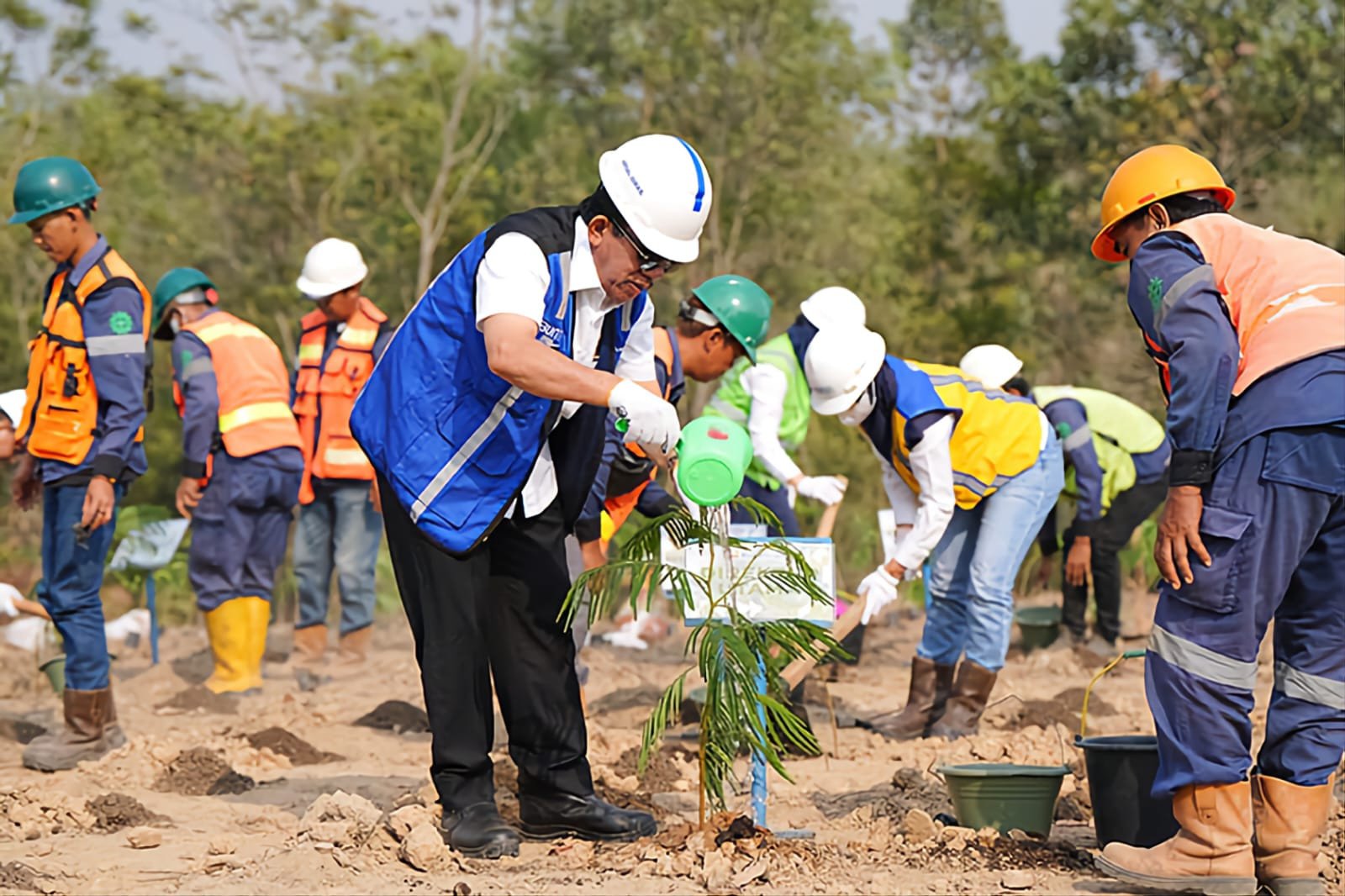
Reforestation programs involve various parties, including governments, private companies, NGOs, and local communities. Several initiatives such as EcoGrow and tree planting campaigns by various organizations are helping to accelerate forest recovery.
Reforestation as the key to environmental recovery
Reforestation is a crucial step in maintaining ecosystem balance and addressing the effects of climate change. Indonesia has made various efforts, ranging from forest and critical land restoration, watershed restoration, to community involvement in social forestry programs.
While challenges such as deforestation and land conversion still exist, collaboration between governments, the private sector, and communities is key to achieving broader reforestation targets.
By continuously strengthening conservation policies and raising awareness of the importance of reforestation, we can ensure that forests remain a source of life for people and biodiversity. Every tree planted today is an investment in a greener and more sustainable future.
References:
https://ppid.menlhk.go.id/siaran_pers/browse/2435%20
https://www.forestdigest.com/detail/1216/berapa-deforestasi-netto-hutan-indonesia
Featured image: Mertani