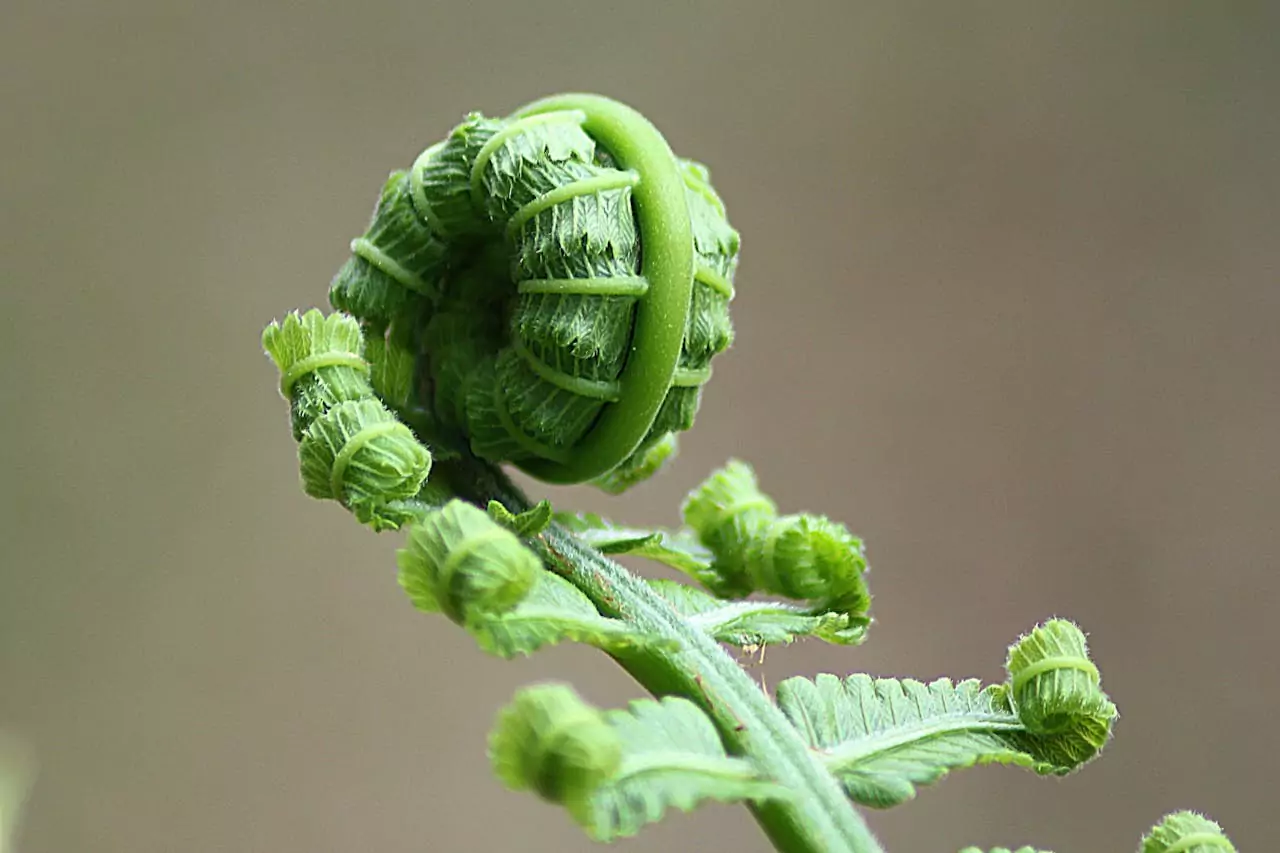
Have you ever noticed green plants with unique, curled leaves when they were young? That’s Ferns!
In addition to beautifying the environment, these plants also have an important role in the ecosystem. Unlike flowering plants, ferns reproduce using spores and are able to grow in a variety of habitats, from damp forests to stone surfaces. Not only that, some types can even be consumed and used as traditional medicine.
Curious about the uniqueness and benefits of ferns? Let’s go deeper!
Understanding Ferns
Ferns (Pteridophyta) are a group of vascular plants that reproduce through spores.
These plants are better known as ferns or ferns and are often found in a variety of environments, from tropical rainforests to Home yards. Some common examples of ferns that are easily found around us include Clover (Marsilea), suplir (Adiantum), and pole Ferns (Cyathea contamans).

According to the National Museum of the Philippines, Ferns have various benefits for humans and the environment. Here are some of the main uses of ferns:
- Food sources: several types of ferns can be consumed, such as vegetable Ferns (Diplazium esculentum), garuda Ferns (Pteridium aquilinum), and Clover (Marsilea).
- Traditional medicine ingredients: Ferns are often used in herbal medicine to treat various diseases. For example, extracts from some types of supplements are believed to have antioxidant and anti-inflammatory properties.
- Ornamental plants: because it has a unique and varied leaf shape, many species of ferns are used as ornamental plants, both for interior and exterior.
- Maintaining ecosystem balance: Ferns play a role in preventing erosion, absorbing rainwater, and providing oxygen. In addition, this plant is also a habitat for various insects and small animals.
According to Sandy et al. (2016), Indonesia has about 1,300 species of ferns, making it one of the countries with the highest diversity of ferns in the world. Meanwhile, based on data from the Natural History Museum, there are about 13,000 species of ferns in the world, so that about 10 percent of the world’s fern species grow in Indonesia.
With various benefits and roles in the ecosystem, Ferns are one of the important plant groups to be preserved.
Characteristics Of Ferns
At first glance, Ferns look similar to seed plants because they have true roots, stems, and leaves.
However, this plant has unique characteristics that distinguish it from other plants. One of the main characteristics of ferns is their way of reproduction, which does not use seeds or flowers, but spores.
Here are some characteristics of ferns:
- Has a transport vessel system: Ferns have a transport network in the form of Xylem (transporting water and minerals) and phloem (transporting the results of photosynthesis).
- Undergoes a rotation of offspring (metagenesis): Ferns undergo two phases in their life cycle, the sporophyte phase (produces spores) and the gametophyte phase (produces gametes).
- Have rhizomes (stems in the ground): most Ferns have stems that are underground (rhizomes), while some species have towering stems.
- Young Leaf shoots curl up: the young leaves of ferns grow by rolling inward, which is one of their characteristics.
- There are two types of leaves based on their function: sporophiles (leaves that produce spores) and tropophils (leaves that do not produce spores and function for photosynthesis).
- The shape and size of the leaves vary: large leaves are called macrophiles, while small leaves are called microfiles.
- Body sizes vary: Ferns can range in size from 2 cm to 5 meters, depending on the species.
- Have fine hairs on the lower trunk: these fine hairs serve to help the absorption of water and nutrients from the surrounding environment.
Types of ferns
According to the Natural History Museum, there are about 13,000 species of ferns in the world. Some types of ferns are able to grow and survive in a variety of environments and different climatic conditions. Therefore, Ferns are grouped into several types based on certain aspects.

Here is the classification of ferns:
Types of ferns
1. Ferns by leaf size
By the size of the leaves, ferns are divided into two types:
- Macrophages: large-leaved ferns, such as bird’s nest ferns (Asplenium nidus), pole Ferns(Cyathea contamans), and suplirs (Adiantum).
- Mikrofil: tumbuhan paku berdaun kecil, contohnya paku rane (Selaginella), paku kawat (Lycopodiopsida), dan paku ekor kuda (Equisetum debile).
2. Ferns by spore shape and size
Ferns are also classified by the shape and size of their spores, which are:
- Homospores or isospores: types of ferns that produce only one type of spore of the same size and shape. Contohnya paku kawat (Lycopodiu), paku Dryopteris filix-mas (dari famili Polypodiaceae), dan Homospora nagel.
- Heterospores or anisospore: a type of ferns that can produce spores of two different sizes (large female spores and small male spores). For example,the water fern (Marsilea crenata), the nage Fern (Selaginella), and the water fern (Salvinia).
- Transitional (mixed): types of ferns that produce spores that are the same size but of different types (male and female sex). For example, Horsetail (Equisetum debile).
3. Ferns based on leaf function
Judging by the function of the leaves, ferns are divided into two types:
- Sporophyll: it has leaves that serve to photosynthesize and produce spores.
- Tropophyl: it only has leaves that serve for photosynthesis but do not produce spores.
4. Based on the arrangement of leaves and sporangium
Based on the arrangement of their leaves and spores, Ferns are grouped into four main classes:
- Ancient Ferns (Psilopsida): ancient ferns that have a simple body arrangement. Psilopsida are also known as naked spikes because of their small leaves and True Roots. Contohnya Rhynia major, Taeniocrada deeheniana, dan Psilotum triquetrum.
- Horsetail (Equisetopsida): a fern plant that has a spiral or circular branching, its stem is segmented and hollow, and has rhizomes. The leaves are small (microfilaments) or in the form of transparent scales arranged in a circle. There is a strobilus at the end of the stem, it is a kind of transitional spike. Contohnya Equisetum debile.
- Wire spikes (Lycopsida): ferns that have stems with wire-like shapes, small leaves (microfilms) like hairs or scales, and have a collection of sporophiles in the form of strobilus at the end of branching. Take Lycopodium cernuum for example.
- True Ferns (Pteropsida): Ferns are very easy to find in the surrounding environment. These Ferns have very varied sizes and shapes, the leaves are large and in the form of sheets. Examples are the suplir (adiantum) and the water Nail (Marsilea crenata).
Habitat Of Ferns

Ferns generally grow in shady and humid environments, such as tropical rainforests, rock crevices, and around water sources. This plant can be found attached to tree trunks, soil surfaces, rocks, and even in water.
According to the Aakash Institute, some types of ferns are able to adapt to more extreme environments, such as sandy soils. An example is the Horsetail (Equisetum debile), which can survive in soils with low moisture content.
More specifically, the habitats of ferns include:
- Moist and shady forests: the main growing place for most species of ferns.
- Rock crevices: some types of spikes can live by sticking to fairly damp rocks.
- Tree trunk (epiphytic): a type of epiphytic spike grows by attaching to a tree trunk without taking nutrients from its host.
- Aquatic: some species, such as the water fern (Marsilea crenata), grow in aquatic environments such as swamps or river banks.
- Sandy soil: certain types, such as horsetail, are able to adapt to drier soil conditions.
Reproductive System Of Ferns
Ferns have two ways of reproducing, namely vegetative reproduction (asexual) and generative reproduction (sexual). In addition, ferns also undergo metagenesis, which is the cycle of rotation of offspring between the sporophyte and gametophyte phases:
1. Vegetative (asexual)reproduction
Vegetative reproduction in ferns occurs in the absence of fusion of sex cells. The main way of vegetative reproduction in Ferns is through stolons or rhizomes (internodal underground stems).
These stolons will produce gemma (buds) which then develop into new plants.
2. generative (sexual)reproduction
Generative reproduction occurs through the fusion of male and female sex cells. The mechanism is as follows:
- Ferns produce anteridium (male reproductive organ) that produces spermatozoids and archegonium (female reproductive organ) that produces OVA.
- Spermatozoids move towards the ovum using water as a medium.
- After fertilization, a zygote is formed, which then develops into a sporophyte (new Fern).

3. Metagenesis (rotation of offspring in Ferns)
In addition to reproducing vegetatively and generatively, ferns also undergo metagenesis, which is the rotation of offspring between two phases:
- Gametophyte phase: spores that fall in the appropriate place will develop into protalium (gamete-producing generation). This Protalium will form the anteridium (producing spermatozoids) and the archegonium (producing OVA).
- Sporophyte phase: after fertilization occurs between the spermatozoid and the ovum, a zygote is formed that grows into an adult Fern. This sporophyte will produce new spores, which then spread and start the cycle again.
According to Gramedia Blog, the principle of metagenesis in various types of ferns – both Homosporous Ferns, Heterosporous ferns, and transitional Ferns—has the same pattern.
Knot
Ferns (Pteridophyta) are a group of vascular plants that reproduce using spores. With a unique structure, these plants have true roots, stems, and leaves and undergo rotation of offspring (metagenesis). The variety of species of ferns allows them to grow in a variety of habitats, from moist forests, tree trunks, to sandy soils. In addition, Ferns have various benefits, both as ornamental plants, foodstuffs, traditional medicines, and ecological roles in maintaining ecosystem balance.
With its adaptability and various benefits, Ferns are one of the important plant groups for the environment and human life.
Therefore, the existence of ferns needs to be preserved so that the ecosystem remains balanced and the benefits can continue to be enjoyed by future generations.
Sources and references:
- Pteridophytes and Lycophytes. National Museum of the Philipines.
- Pteridophytes (ferns, lycophytes, and their allies). Natural History Museum.
- Sandy, Pantiwati, Hudha, Latifa. (2016). Species diversity of Tumbuha Paku (Pteridophyta) in the area of Lawean Sendang waterfall, Malang regency. In: Proceedings of the National Seminar II Year 2016. Malang, 26 March 2016. Malang: cooperation of Biology Education Study Program FKIP with the Center for environmental and Population Studies (PSLK) University of Muhammadiyah Malang.
- Pteridophytes: General Characteristics, Habitat, Size and Plant Body. Aakash Institute.
- Featured image: Tumbuhan paku (pexels.com/Pixabay)

