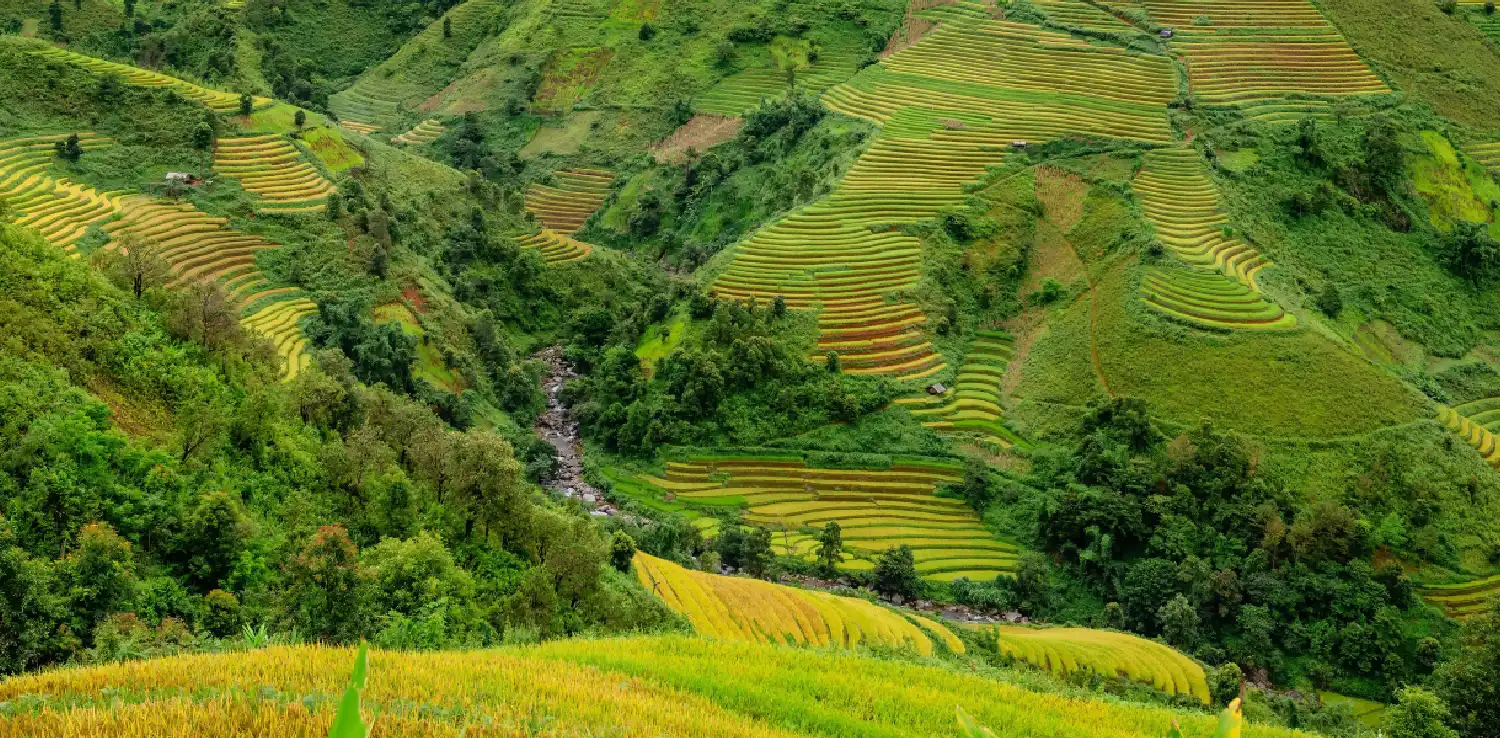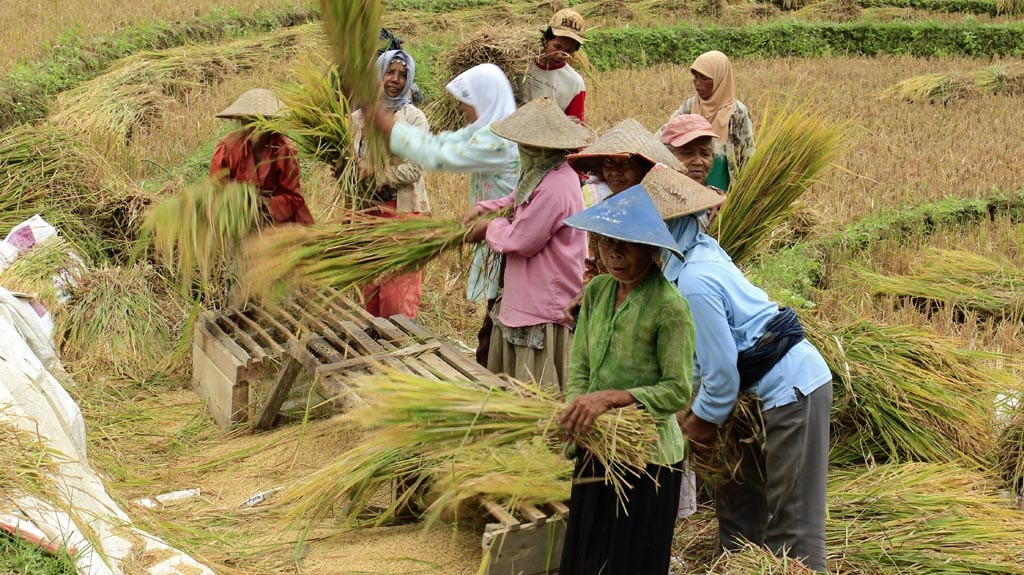
Have you ever thought that forests and agriculture could actually grow side-by-side without destroying each other?
For a long time, the expansion of agricultural land has often been considered one of the causes of forest cover loss. However, there is an approach that actually integrates both into a mutually supportive system, namely agroforestry (wanatani). In practice, trees, agricultural crops, and the surrounding environment are managed together in a single landscape that remains productive while maintaining ecosystem balance.
So, how does the agroforestry concept actually work, and why is this practice increasingly being cited as a solution to keep forests sustainable without sacrificing human needs? Let’s explore further!
What Is Agroforestry?
The Indonesian term wanatani comes from the combination of the words wana, meaning forest, and tani, meaning agriculture.
Simply put, this term refers to a land management system that combines trees with agricultural crops, and sometimes even livestock, within a single area managed in an integrated manner.
In his book An Introduction to Agroforestry, P.K.R. Nair explains that agroforestry is a land-use system that integrates forestry and agricultural components into a single management unit. Its goal is to maintain ecosystem balance in the long term.
In practice, agroforestry systems usually involve several main components, such as:
- Forest trees that help maintain soil fertility and provide natural shade
- Agricultural crops that serve as a source of food and income for the community
- Additional components such as livestock, which in some systems are utilized to increase land efficiency
Forms of Agroforestry
Agroforestry systems do not have just one pattern. Their practice can vary depending on land conditions, climate, and the needs of the communities managing them.
In agroforestry studies, there are at least several main forms that are often applied to combine food production with ecosystem sustainability.
Here are some commonly known agroforestry systems:
1. Agrisilviculture
The agrisilviculture system combines forestry trees with agricultural crops on the same land. Agricultural crops are usually annual plants that can be harvested in a relatively short time.
This pattern is widely applied because it is relatively simple and easy for farmers to adapt. In addition to maintaining agricultural yields, the presence of trees also helps maintain soil fertility and reduces the risk of erosion.
Examples of its application include:
- Corn planted between sengon trees
- Coffee cultivated under the shade of canopy trees
- Upland rice or soybeans planted alongside timber trees
2. Silvopasture
Unlike the previous system, silvopasture combines trees with livestock activities. In this system, livestock are grazed in areas that are also planted with specific trees.
Silvopasture practices are generally suitable for regions with grasslands, savannas, or hills that allow for natural livestock grazing.
Some benefits of this system include:
- Natural shade for livestock, resulting in a cooler environmental temperature
- Additional feed sources, such as leaves or forage crops
- More efficient land use, as one area can support more than one production activity
3. Agrosilvopasture
Agrosilvopasture is the most complete form of agroforestry because it combines three components simultaneously within a single land management system, namely:
- Forestry trees
- Agricultural crops
- Livestock
In this system, a single landscape can produce various products simultaneously, ranging from agricultural yields and forestry commodities to livestock products. Although its management is more complex, this approach is considered highly efficient as it maximizes land utilization.
Furthermore, the agrosilvopasture system also provides income source diversification for the community. If one commodity experiences a decline in yield, other components within the system can still support the land manager’s economy.
Read also:
- What Is Community Empowerment? Principles, Factors, and Real-World Examples
- Social Forestry: Definition, Types, Benefits, and Examples
4. Taungya System
The Taungya system is a method of planting forestry trees alongside seasonal agricultural crops during the initial stages of land management. In this system, agricultural crops are usually harvested first, while the forestry trees are left to continue growing until they reach a larger size.
The Taungya method is often used in forest rehabilitation programs or the reforestation of production forest areas.
This pattern provides two advantages simultaneously, namely:
- Utilizing empty space during the early growth of trees
- Providing short-term yields for farmers before the trees fully develop
5. Mixed Garden
One of the most common forms of agroforestry found in Indonesia is the mixed garden. This system plants various types of crops on a single plot of land, forming a vegetation structure that resembles a natural forest.
This diversity of plants creates a kind of mini-ecosystem that is more stable. In addition to producing various types of harvests, this system also helps maintain soil fertility and increases biodiversity at the landscape level.
In a mixed garden, there is usually a combination of:
- Fruit trees such as durian or mango
- Food crops or spices
- Timber trees or other economically valuable plants
6. Homegarden Agroforestry

This form of agroforestry is widely found in rural areas of Indonesia. The homegarden system utilizes the area around a house to plant various types of crops that are useful for daily needs.
Besides being environmentally friendly, this system also helps strengthen family food security by providing various food sources directly from the home garden.
Some components usually found in this system include:
- Fruit trees, such as bananas or papayas
- Vegetables and food crops
- Family medicinal plants (TOGA)
- Small-scale livestock such as chickens or ducks
7. Alley Cropping System
In the alley cropping system, agricultural crops are planted between rows of trees arranged in parallel. These trees are usually selected from species that can improve soil quality or provide sufficient shade.
With proper management, alley cropping systems can create a balance between agricultural production and the ecological functions typically provided by forest areas.
Some of the main benefits of this system include:
- Reducing soil erosion, especially on sloping land
- Improving soil fertility through leaf litter
- Maintaining agricultural productivity without removing trees from the landscape
The Benefits of Agroforestry in Realizing Sustainable Agriculture
Here are several benefits of agroforestry that make this system considered one of the approaches to sustainable agriculture:
1. Helping to Maintain Forest Cover
In agroforestry systems, trees remain an important part of the agricultural landscape. This means the land still retains vegetation cover that helps maintain its ecological functions.
Reports from the Food and Agriculture Organization (FAO) also show that agroforestry practices can help reduce pressure on forests in various regions that depend on forest resources.
Some of the positive impacts include:
- helping to reduce the pressure of forest clearing,
- maintaining soil structure and fertility,
- as well as suppressing the risk of land degradation.
2. More Productive Land
Unlike monoculture systems that only plant one commodity, agroforestry combines several types of plants in one area. As a result, the land can produce a more diverse harvest.
In addition to increasing harvest variety, this combination of plants also helps maintain soil fertility because each plant has a different ecological function.
For example, one agroforestry system can contain:
- food crops,
- plantation commodities such as coffee or cacao,
- as well as fruit trees or economically valuable timber plants.
3. Helping to Maintain the Water Cycle
Trees in agroforestry systems play a major role in maintaining the water balance in the soil. Tree roots help increase the soil’s ability to absorb rainwater, so water does not simply run off the surface.
The impact is quite significant, such as:
- helping to reduce erosion,
- maintaining groundwater availability,
- as well as reducing the risk of floods and droughts in some regions.
4. More Diverse Sources of Income
Because it consists of many types of plants, agroforestry provides opportunities to harvest various commodities. Thus, the community does not rely solely on one product.
This diversification helps reduce the risk of loss if one commodity fails to harvest or market prices drop. For example, in a single plot of land, one can obtain:
- food crop yields,
- harvests of fruit or plantation commodities,
- as well as yields from timber trees or other economically valuable plants.
5. Supporting Biodiversity
Agroforestry landscapes usually have a more diverse vegetation structure compared to monoculture farmland. This condition makes the environment friendlier to various types of plants and wildlife.
Therefore, agroforestry is often considered a community-based conservation approach. This system allows land to remain utilized for production while still providing living space for various species within the ecosystem.
Examples of Agroforestry in Indonesia

Agroforestry practices are actually nothing new in Indonesia. In many regions, indigenous and local communities have long managed land by combining trees, food crops, and other commodities within a single landscape.
According to the Ministry of Environment and Forestry (KLHK), Indonesia has vast potential for the development of agroforestry systems as part of a sustainable forest management strategy, while simultaneously supporting food security and climate change mitigation.
Some examples of well-known agroforestry practices in Indonesia include:
1. Repong Damar Krui in Lampung
One famous example of traditional agroforestry is the *repong damar* in the Krui region, Lampung. This system centers on the damar tree (Shorea javanica), which is managed by the community as a source of damar resin.
Under the damar canopy, the community also typically plants various other crops, such as coffee, pepper, and various fruit plants.
The structure of these gardens forms a multistrata agroforestry landscape, a system with several layers of vegetation that resemble the structure of a natural forest. In addition to providing a sustainable source of income for the community, *repong damar* also helps maintain forest cover and biodiversity in the region.
2. Talun Gardens in West Java
In West Java, the community is familiar with the *talun* or *kebun talun* system, which is a form of mixed garden that combines various types of plants on a single plot of land.
This plant diversity makes the land more productive while helping to maintain soil fertility. Its vegetation structure also resembles a secondary forest rich in various types of plants.
Some plants commonly found in this system include:
- fruit trees such as durian, rambutan, and mango,
- food crops such as cassava or banana,
- as well as various timber and spice plants.
3. Community Forests in Yogyakarta
In the Special Region of Yogyakarta, many farmers develop community forests by combining timber trees and food crops on the same land.
A fairly common example is:
- teak trees as the primary timber commodity,
- which are planted alongside secondary crops such as corn or peanuts.
This system allows farmers to obtain yields on two time scales: short-term harvests from food crops, and long-term economic value from timber trees.
4. Rubber–Rice Agroforestry in Jambi
In several regions of Jambi, communities also implement agroforestry systems that combine rubber trees with food crops such as upland rice.
Within a single landscape, farmers can harvest rubber latex, plant rice for food needs, and add other local food crops or spices.
This approach helps maintain plant diversity on the land while preserving land management practices that have long developed within the local community’s culture.
Read also:
- Silviculture: Principles, Techniques, and Its Role for Forests
- What is Agribusiness: Definition, Benefits, Scope, and Examples
Agroforestry, Farming Without Losing Forests
Agroforestry (wanatani) shows that agriculture and forests do not have to be mutually exclusive. By integrating trees, food crops, and other commodities into a single landscape, the land remains productive while maintaining ecological functions such as soil fertility, water availability, and habitat for various wildlife.
In Indonesia, this practice has long been implemented through various traditional land management systems. This means that agroforestry is not just a new concept, but also part of local wisdom proven capable of maintaining the balance between production and conservation.
The more agroforestry practices are implemented, the greater our opportunity to keep forests sustainable without halting agricultural activities. In short, farming continues, and the forest remains safe!
Featured image: Farmers in Indonesia farming / Source: KRT News