In the midst of the dark shadow of the depletion of forest resources, a new glimmer of hope appears in Batu Lapis Village.
Deli, a village youth who used to live from chopping wood, has now found another way to survive—through coffee beans. This small step he took slowly changed not only his life, but also the future of his village.
Uncertainty of the future in Batu Lapis Village
Moses, a father of three, often pondered the future of his offspring. He is aware that natural resources in the forest are depleting.
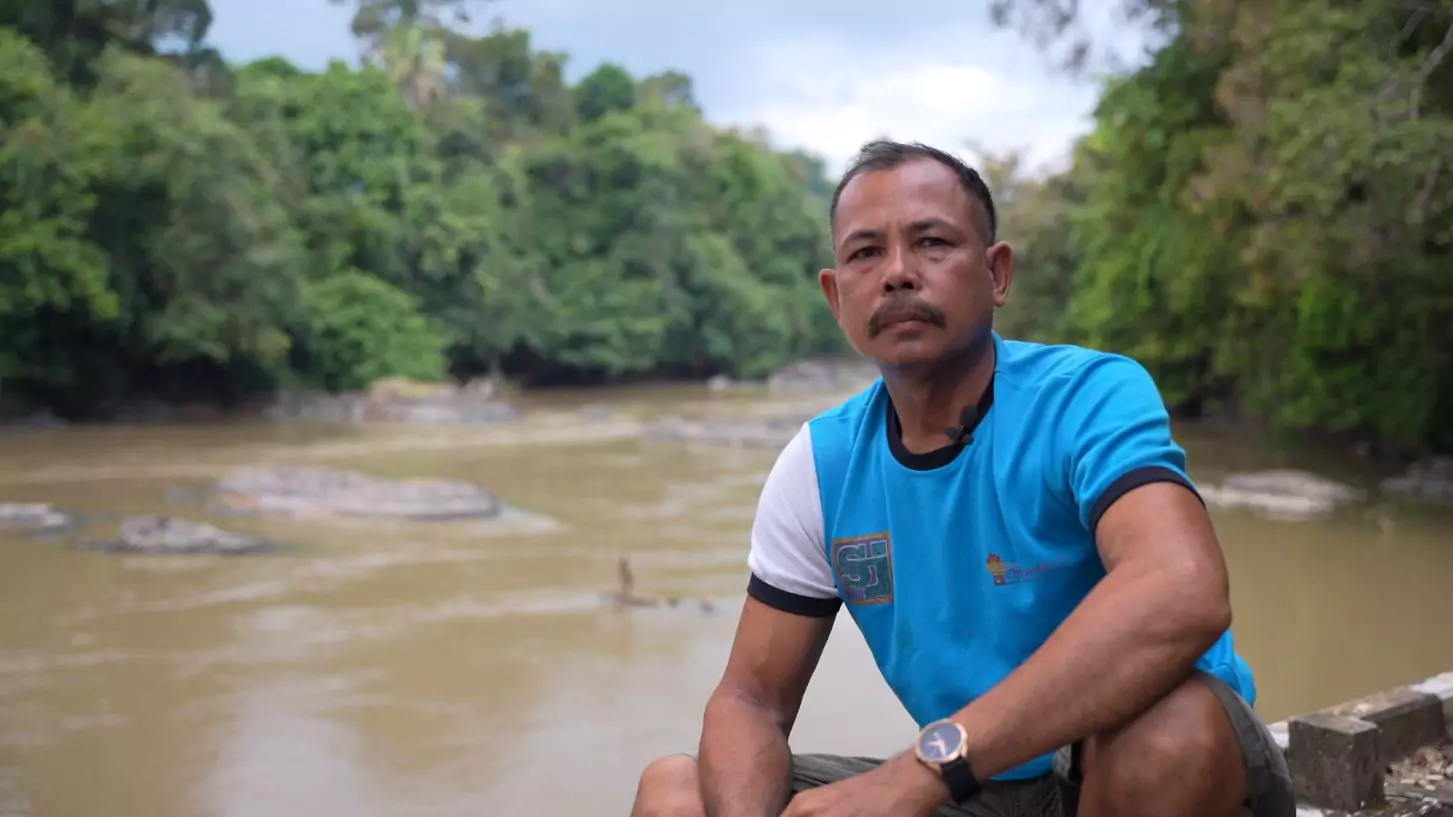
‘Maybe our generation can still survive, but what about our grandchildren?’he said while talking on the terrace of his house.
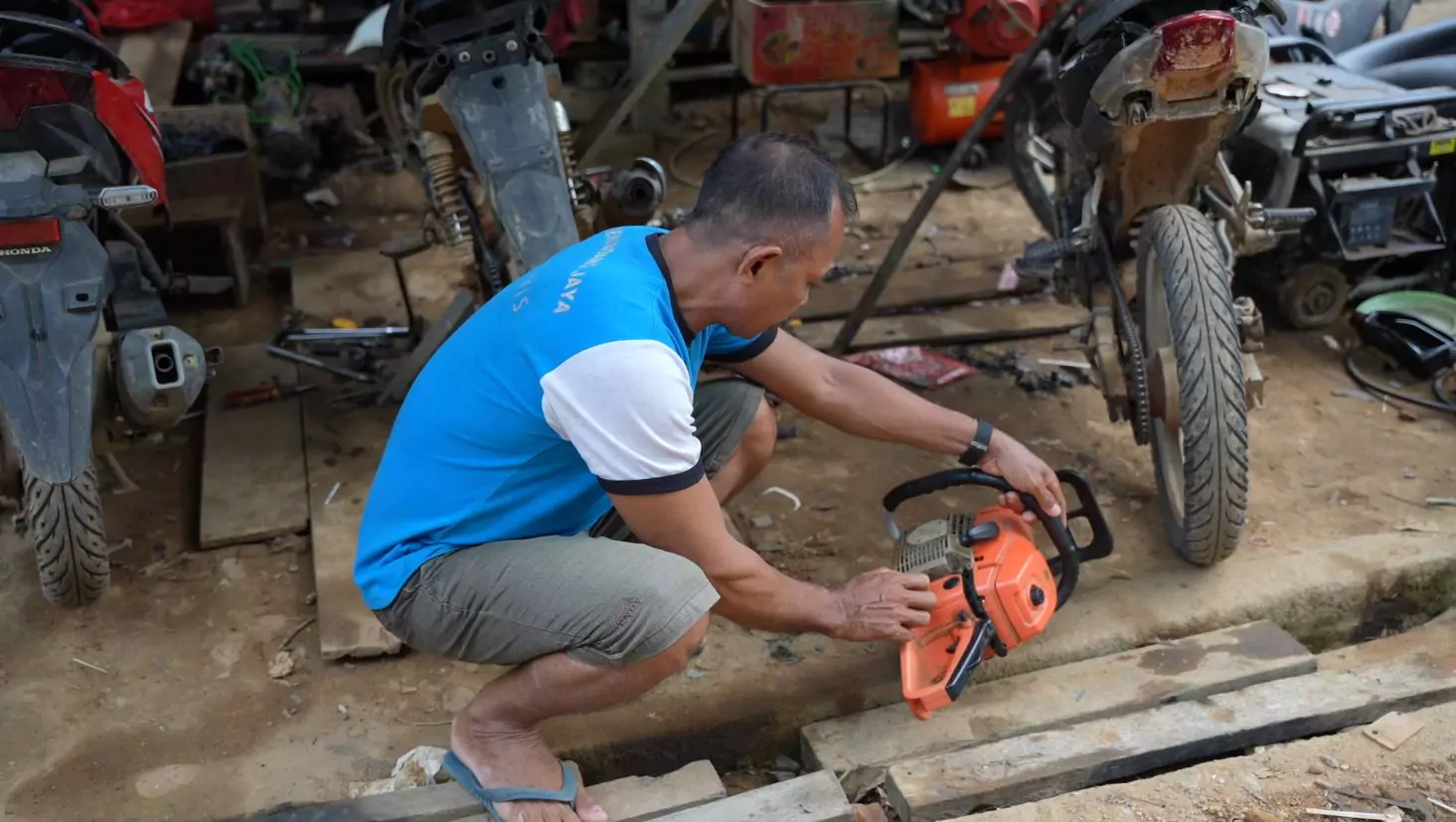
For decades, Moses has worked as a woodcutter in the forests of Borneo. As part of the Dayak tribe, Moses depended on forest products for his livelihood.
Farming and cutting Ironwood is the main occupation of the majority of residents in Batu Lapis Village, Ketapang regency, West Kalimantan. In the last two decades, this work has indeed advanced the village. The economic condition of the community is getting better.
‘The houses here used to be small, but now they are bigger, and we can build roads to make transportationeasier,’ Moses said.
However, he realized that dependence on logging could not be relied upon forever. Increasingly stringent government regulations related to logging are becoming a pressure for villagers.
‘We certainly want to find other jobs that are safer and no longer destroy the forest,’ Moses said Hopefully.
Deli and Clarisa: New Hope for the future of the village
Hope is now starting to appear, thanks to the efforts of two young people from Batu Lapis Village, Deli and Clarisa.
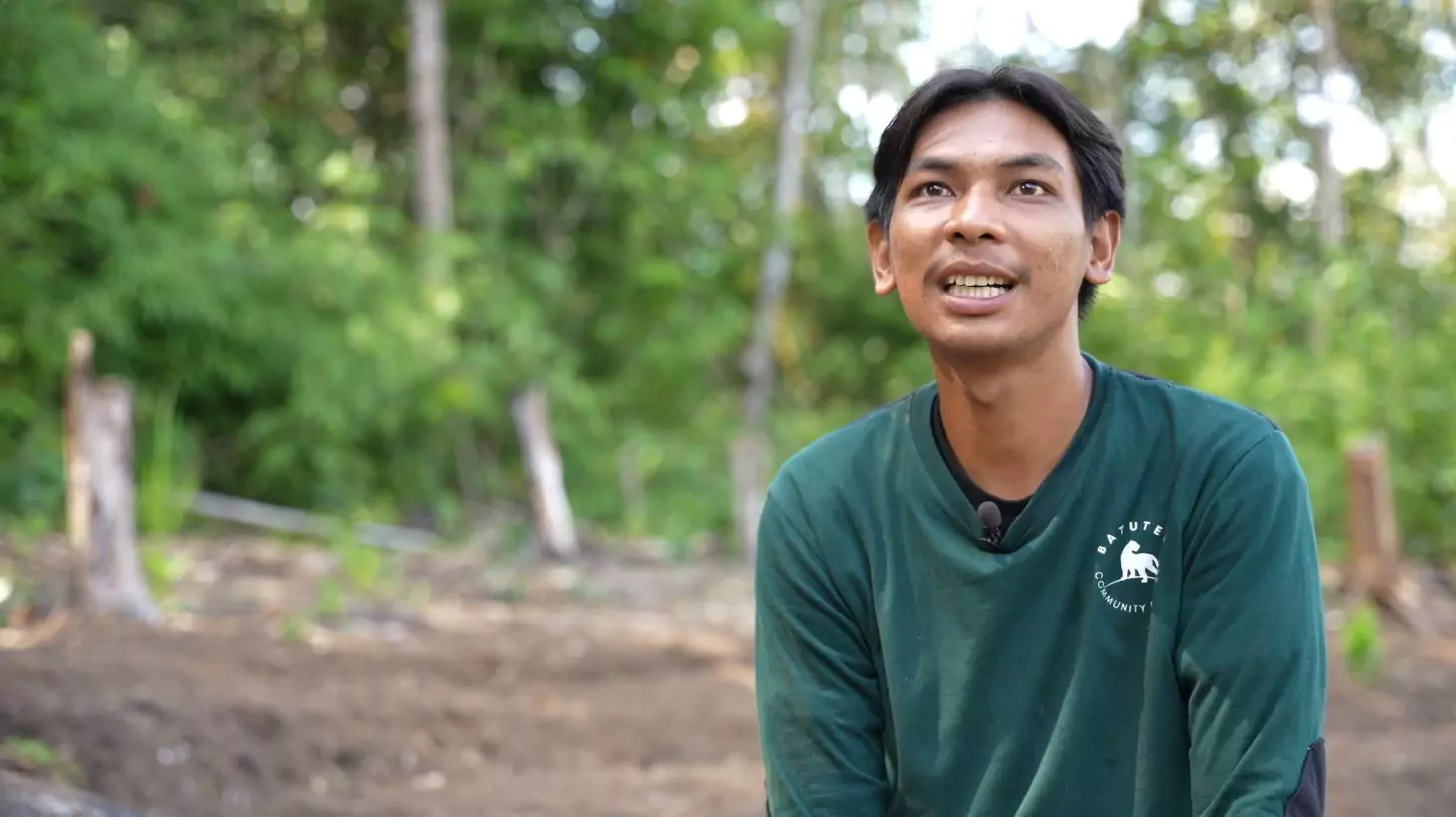
They are graduates of Kahiu Academy–a mentoring program for school dropouts initiated by Yayasan Initiasi Alam Rehabilitasi Indonesia (YIARI). After the training, Deli and Clarisa were accompanied to develop independent businesses, such as teaching children or farming.
‘If there is education for children, as well as training and mentoring for residents, such as in farming, this can be a hope for us in the future,’ Moses said with an optimistic smile.
Building a coffee plantation in Batu Lapis Village
One morning, a wooden boat drove over the Biha River receding due to drought.
On it, Deli with a companion from YIARI sat preparing to go to the field.
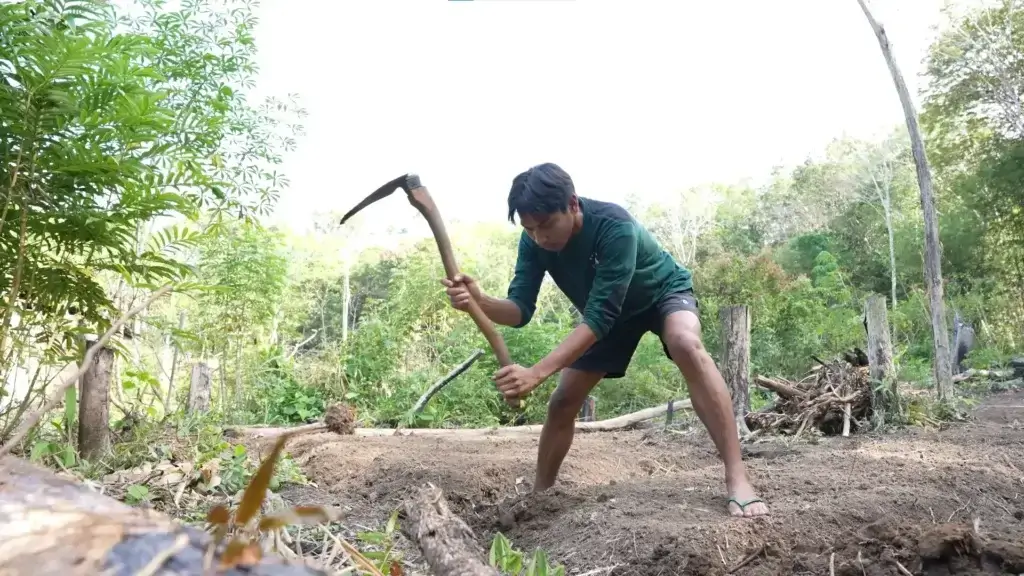
Arriving at the farm, Deli immediately prepare equipment for gardening. He walked along the path to his field, where he had prepared ten beds of plants.
In the middle of the field, stands a seedling house with a black tarpaulin that shades the leaves of coffee seedlings that are starting to grow. With care, Deli watered the plants that would become the forerunner of the first coffee plantation in Batu Lapis Village.
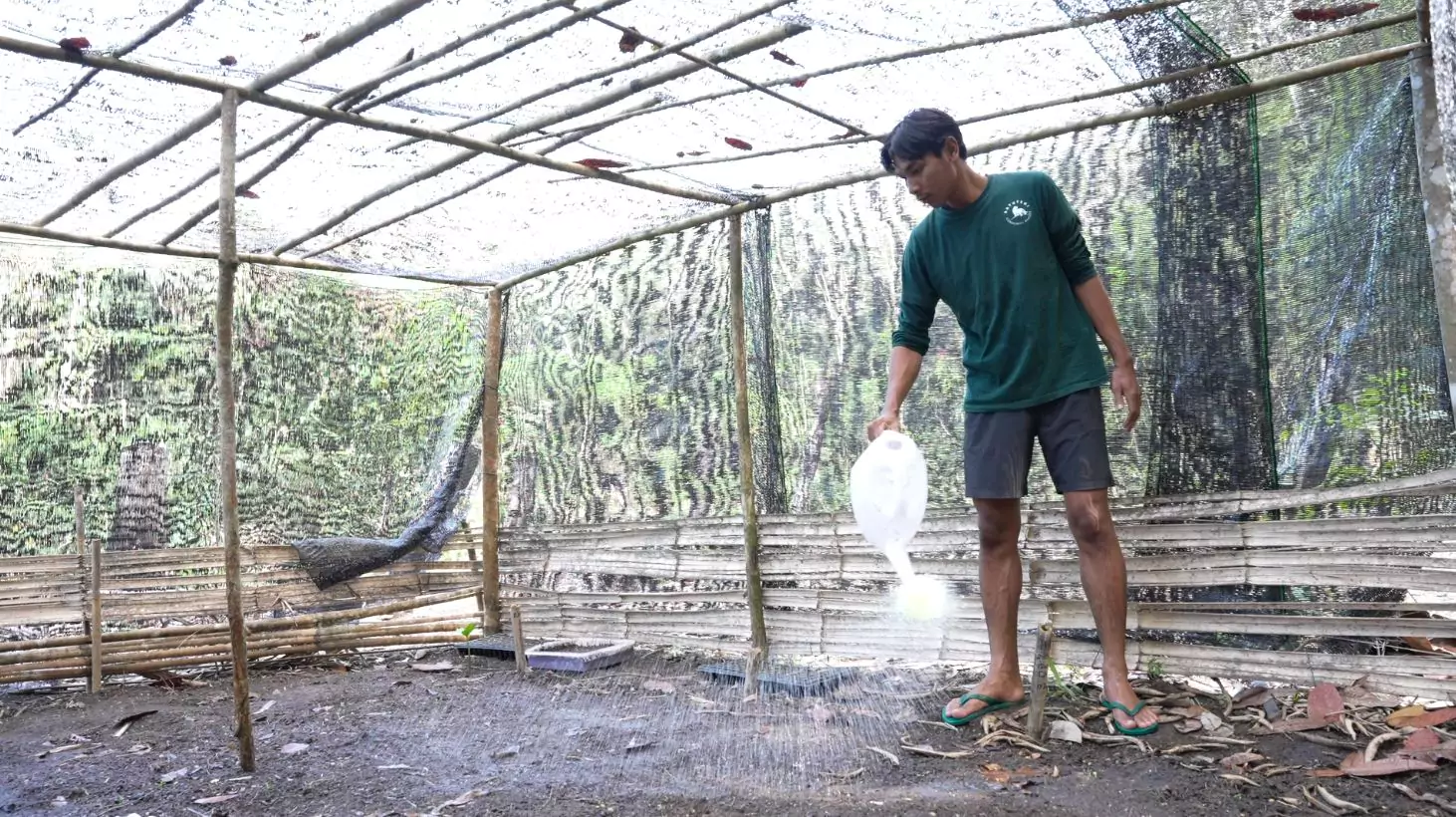
Before his foray into agriculture, he worked as a woodcutter and animal hunter. ‘I used to cut wood and hunt, but I realized that this job was not suitable for me,’ he says.
Meeting with Kahiu Academy changed his life. He was interested in the agricultural science taught in the program and attended training for four months in Ketapang.
After graduation, Deli was sent to Lampung to learn more about coffee cultivation, including seeding techniques, seedlings, and planting.
The choice of coffee as the main crop is not without reason.
‘In Batu Lapis Village, most people plant oil palm whose storage only lasts 2 days at most. While the coffee beans can be stored longer, dried and stored for months,” said Deli.
In addition, the coffee I can send to the city by motor, so this is more practical for me,’ he added. This is a more effective solution for delis that still do not have large vehicles for transportation of agricultural products.
New hope for the future of the village
For Deli, coffee plantations are a new hope. The support of his family and friends strengthened his resolve.
‘I hope this effort can inspire other people. If many follow, people’s lives can be better, the village economy increases, and the environment is protected from forest destruction,’ he said excitedly.
Dieka, Kahiu Academy’s program manager, took part in reviewing Deli and Clarisa’s progress.
‘Kahiu Academy is intended for school dropouts so that they have skills and can be independent,’ explained Dieka.
The programme is for young people aged 17-25, with four months of intensive training covering a range of subjects, from agriculture to gender equality.
‘We hope the participants can practice the knowledge they get for themselves and their communities,’ Dieka added.
With 48 materials provided during the training, Dieka hopes that there will be more “Deli” and “Clarisa” who can practice their knowledge for the good of themselves and the community.