Have you ever wondered what a world would be like without a healthy ocean? The sea is not only a beautiful expanse of blue water, but also a source of life for billions of people, from small fishermen to large industries that depend on the wealth of the sea.
However, overexploitation and pollution have threatened our marine ecosystems. If left unchecked, not only the environment will suffer, but also the global economy and food security.
This is where the blue economy comes in as a solution. The concept offers a smart way to make sustainable use of marine resources, ensuring future generations can still enjoy the benefits.
How does the blue economy actually work? And what are some examples of its application in Indonesia? Let’s dive deeper!
Understanding The Blue Economy
Konsep ekonomi biru pertama kali diperkenalkan oleh Gunter Pauli dalam bukunya The Blue Economy: 10 Years, 100 Innovations, 100 Million Jobs. Pauli defined the blue economy as an economic model inspired by nature, in which resources are used efficiently, waste is minimized, and ecosystem balance is maintained.
Different from traditional economic approaches that often focus solely on financial gain, the blue economy ensures that human activities do not harm the environment, especially marine ecosystems.
According to the World Wide Fund for Nature (WWF), the blue economy is an approach that aims to make sustainable use of marine resources, while maintaining the health of their ecosystems. This means that sectors such as fisheries, marine tourism and renewable energies must be run in an environmentally friendly way so that they can be enjoyed by future generations.
In other words, the blue economy is the way humans make use of the ocean’s wealth without damaging it. It is like, we ‘borrow’ resources from nature, and then return them in the same or even better condition. Thus, it is not simply ‘take, use, consume’, but ‘take, Use, keep, and preserve’.
The concept and history of the Blue Economy
As mentioned earlier, the concept of the Blue Economy was first conceived by Gunter Pauli in 2010. Pauli proposed an economic model inspired by nature, in which resources are utilized efficiently and sustainably without harming the environment.
Over time, this concept evolved and began to be adopted by various countries, including Indonesia, as a solution to manage marine resources responsibly.
The main principle of the blue economy is to make optimal use of marine resources, but still maintain the balance of the ecosystem. It covers various sectors, such as:
- Sustainable fisheries -ensuring fish stocks are maintained by implementing environmentally friendly fishing methods.
- Marine tourism -developing conservation-based tourism without damaging marine habitats.
- Renewable energy -utilizing energy sources from the ocean, such as waves and wind, to reduce dependence on fossil fuels.
- Sustainable marine transport -reducing carbon emissions with the use of environmentally friendly technologies in the maritime industry.
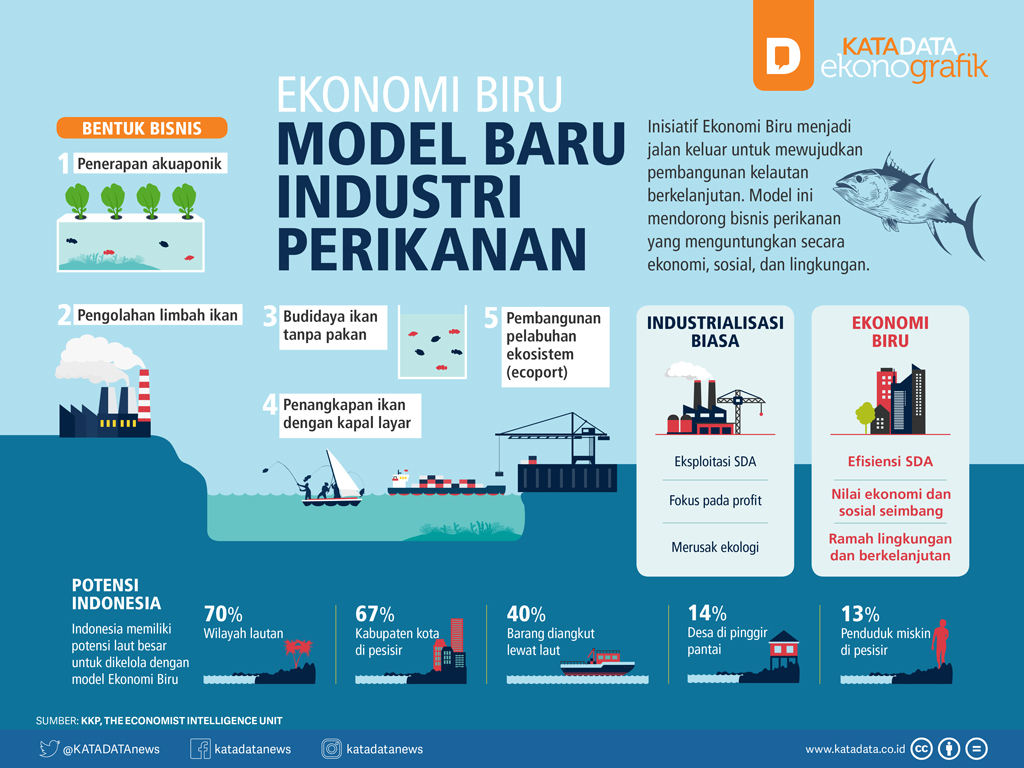
With the above principles, the overall artinua of marine activities must be carried out in an environmentally friendly manner. For example, as seen in the following infographic.

In practice, the blue economy puts forward an eco-friendly and inclusive approach, so that all activities related to the sea must be carried out responsibly in order to maintain the balance of the ecosystem.
For example, the blue economy-based fishing industry model not only focuses on fishing, but also ensures the sustainability of fish stocks for future generations.
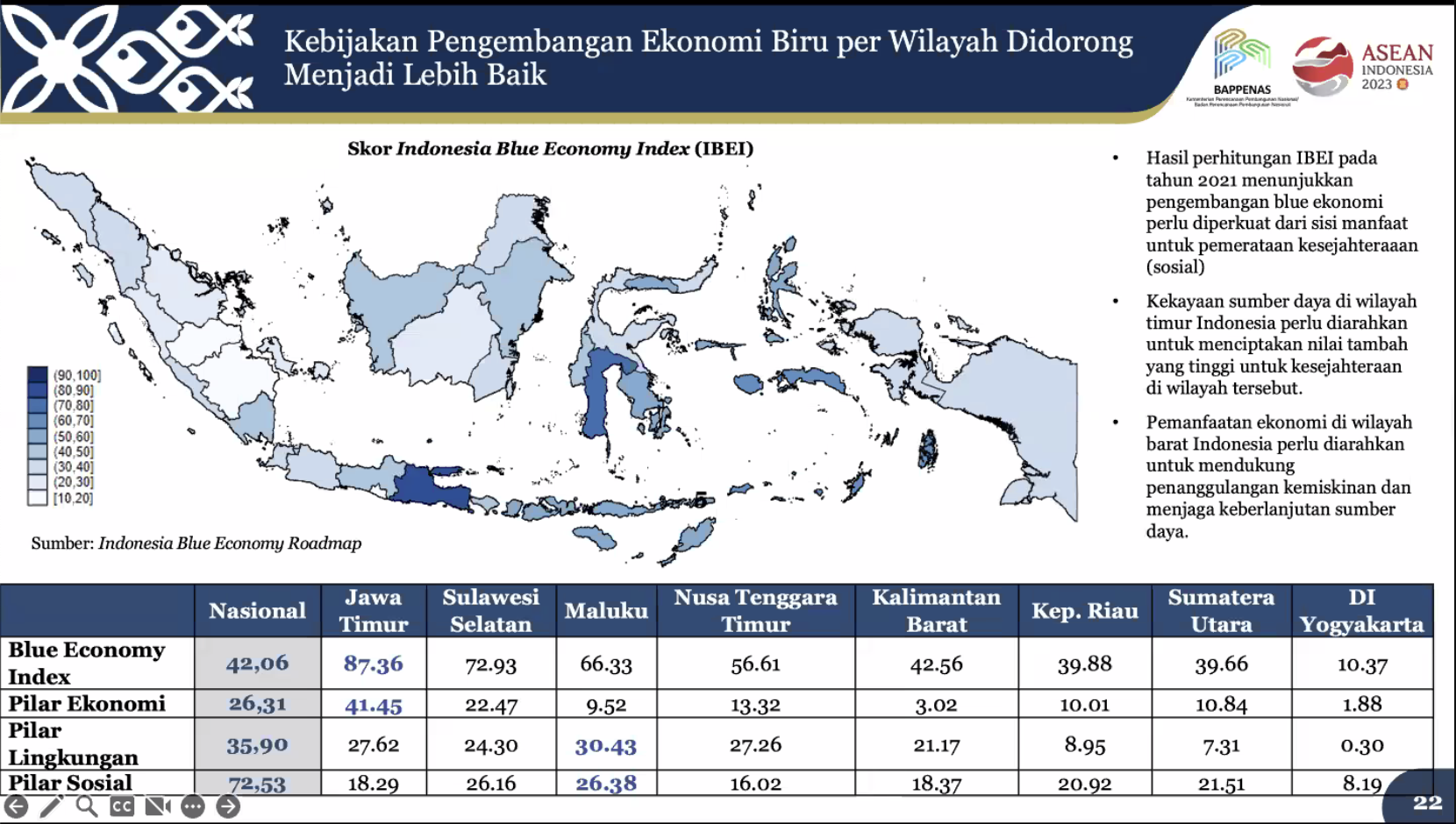
The government has even compiled a blue economy roadmap as a guide to implementing this concept, as you can see in the following image.

This roadmap covers various strategic sectors, such as fisheries, tourism, to renewable energy. The main goal is to make Indonesia a sustainable world maritime axis until 2045.
The Important Role Of The Blue Economy
There are several reasons why we should understand and manifest the blue economy for the sustainability of our oceans. Among them are the following.
1. Maintaining the balance of the marine ecosystem
In addition to being a tourist destination, the sea is also home to thousands of species of living things. By implementing a blue economy strategy, we can ensure economic activity does not damage marine ecosystems.
The blue economy emphasizes the sustainable management of marine resources, thus helping to preserve biodiversity as well as the health of marine ecosystems for future generations.
2. Reduce pollution and waste
Marine pollution, especially plastic waste, poses a serious threat to marine life. The blue economy encourages more environmentally friendly business practices, such as reducing the use of single-use plastics, implementing recycling and waste management systems, and developing environmentally friendly innovations in the marine industry.
With this approach, we can reduce pollution and maintain the quality of the marine environment.
3. Reducing the impact of climate change
Marine ecosystems, such as mangrove forests and seagrass beds, play an important role in absorbing carbon emissions and mitigating the effects of climate change.
Through the blue economy, the preservation of these ecosystems can be optimized so that the ocean remains an effective natural carbon sink. In addition, sustainable ocean-based economic practices can also reduce the carbon footprint of human activities.
4. Encouraging economic growth
The sea has enormous economic potential. According to the report of the Ministry of Marine Affairs and Fisheries (2017), the Marine and fisheries sector contributes about 7% to Indonesia’S GDP. In addition, the market value of marine resources and related industries is estimated at USD 3 trillion per year globally.
By applying the principles of the blue economy, the utilization of this potential can be done wisely and sustainably, thus providing long-term economic benefits without damaging the environment.
5. Creating jobs
In addition to benefiting the environment, the blue economy also opens up new job opportunities. The global marine fisheries sector provides about 57 million jobs, and this number continues to grow with the development of marine-based industries, such as seaweed farming, renewable energy from the sea (waves, wind, and tides), and ecotourism and marine tourism.
With proper management, the blue economy can create more jobs and improve the well-being of coastal communities.
6. Improving food security
The ocean is a source of animal protein for about 3 billion people worldwide. By implementing the Blue Economy Strategy, we can ensure that the stock of marine resources is maintained, so as to meet global food needs in a sustainable manner.
Examples Of Blue Economy In Indonesia

As the largest archipelagic country in the world, Indonesia has implemented a blue economy in various sectors to maintain the balance of marine ecosystems while improving the welfare of coastal communities. Here are some examples of blue economy implementation in Indonesia:
1. Seaweed cultivation in East Nusa Tenggara (NTT)
Seaweed is not only a raw material for food and cosmetics, but also a source of livelihood for many fishermen in East Nusa Tenggara (NTT).
Through an environmentally friendly cultivation system, seaweed farmers can increase their income without damaging the marine ecosystem. In fact, according to Binus data (2023), Indonesia is now one of the largest seaweed producers in the world.
2. Marine ecotourism in the Thousand Islands
Kepulauan Seribu in DKI Jakarta is one of the successful examples of the implementation of the blue economy through marine ecotourism. By preserving the marine environment and developing nature-based tourism, this area has managed to attract tourists while improving the local economy.
Activities such as snorkeling and diving in the waters that are still preserved in beauty become the main attraction for tourists. In addition, conservation education is also applied so that tourists can understand the importance of maintaining marine ecosystems.
3. Renewable energy from ocean currents in the Lombok Strait
Indonesia has great potential in the development of renewable energy from the Sea, one of which is through Marine current power plants (PLTAL).
In the Lombok Strait, a pilot project to harness ocean currents as a source of clean energy has been launched. According to Neliti research (2016), this project aims to reduce dependence on fossil fuels and support a green energy transition that is more environmentally friendly.
By utilizing stable and inexhaustible ocean currents, Indonesia can produce energy sustainably without causing high carbon emissions. In addition, the use of Ocean Energy is also in line with global efforts to combat climate change and reduce the negative impacts of global warming.
4. Mangrove conservation in Surabaya
Mangrove Botanical Garden in Surabaya is one example of the success of coastal ecosystem conservation that combines aspects of Environmental Conservation, Education, and tourism. Mangroves play an important role in resisting coastal abrasion, providing habitat for a variety of marine species and birds, and sequestering carbon to mitigate the effects of climate change.
Through mangrove conservation, coastal ecosystems can be maintained while providing economic benefits through the educational tourism sector. Many tourists and students come to learn about the importance of mangrove forests and how to maintain their sustainability.
In addition, the surrounding community also gets economic benefits with business opportunities in the ecotourism sector.
5. Sustainable fisheries management in Southeast Sulawesi
In Southeast Sulawesi, the implementation of the blue economy in the fisheries sector has had a positive impact on smallholders and the environment. Previously, many fishermen used destructive fishing methods, such as fish bombs or Tiger trawls, which led to a decline in fish populations as well as damage to coral reefs.
However, with the approach of the blue economy, fishermen are now starting to switch to more environmentally friendly fishing methods, such as using selective fishing gear and following local regulations regarding fishing seasons.
In addition to helping preserve marine ecosystems, this method also provides long-term benefits for fishermen, as it ensures the availability of fish for the future. In this way, fishermen can make wiser use of marine resources, improve their well-being and maintain the sustainability of the marine ecosystem in their region.
Creating a sustainable future with the Blue Economy
As a maritime country, Indonesia has a great responsibility in maintaining its seas. Support from the government, industry players, and the community is needed so that the concept of the blue economy can be applied widely and effectively. Every small step, such as reducing plastic waste, supporting sustainable fishery products, and participating in marine conservation, will have a big impact on the future of our planet.
Now is the time for us together to realize a greener and more sustainable future by applying the principles of the blue economy in our daily lives. By doing so, we not only safeguard the environment but also create new economic opportunities that are more inclusive and sustainable for all.
References:
https://pslh.ugm.ac.id/ekonomi-biru/
https://indonesia.go.id/kategori/editorial/7556/indonesia-siapkan-lima-jurus-mengelola-ekonomi-biru
https://www.oecd.org/en/topics/sub-issues/water-governance/blue-economy.html
Featured image: MonitorDay