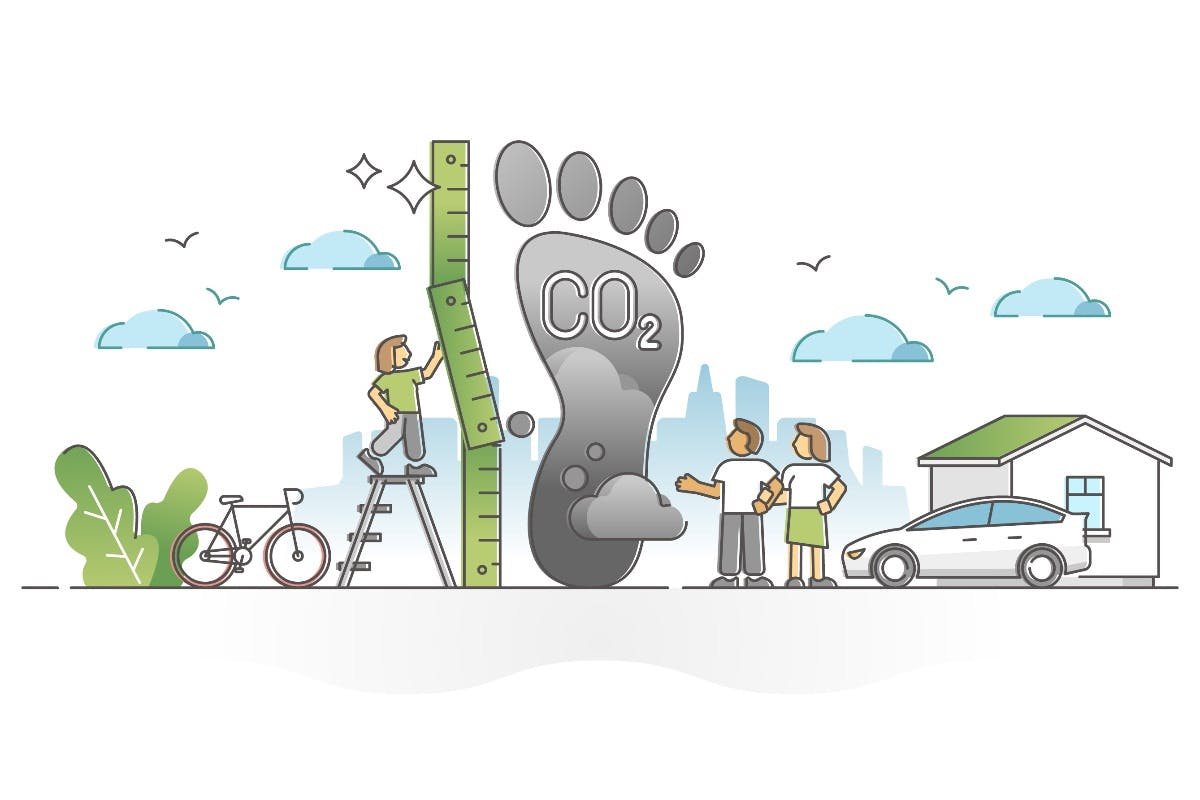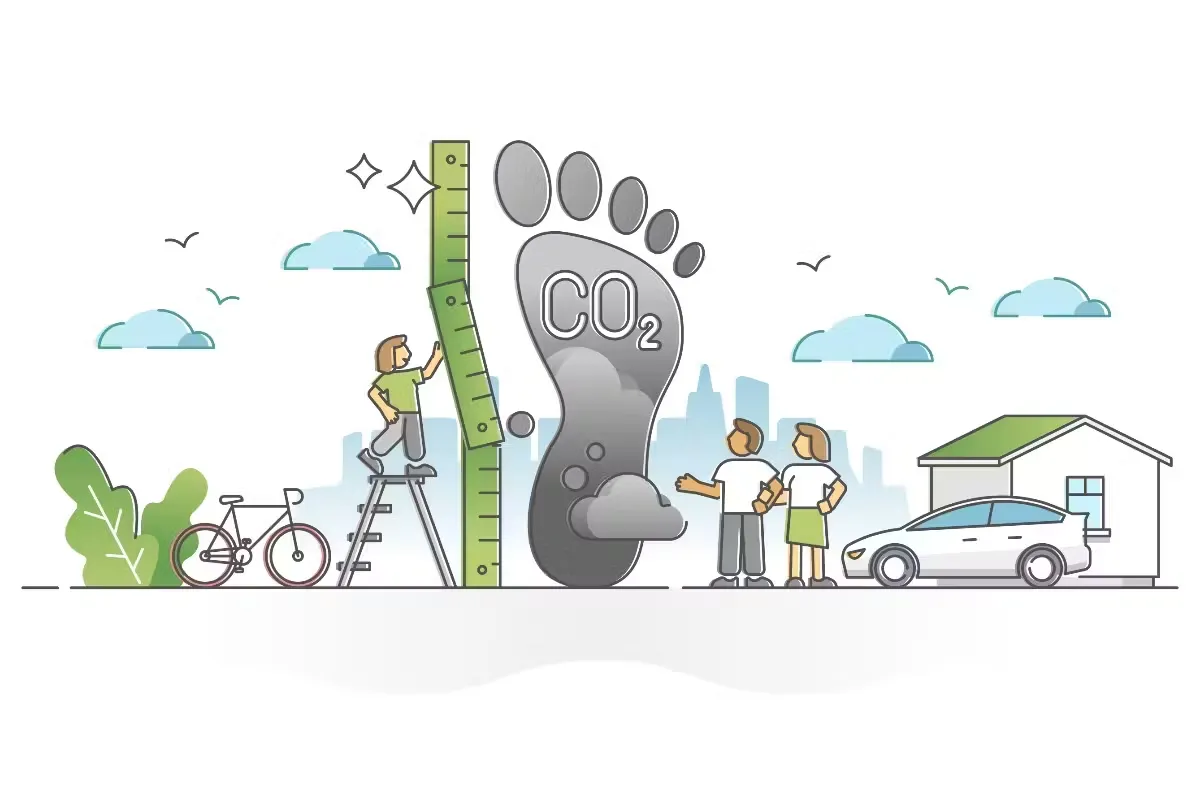
Have you ever thought that every activity we do—from turning on the lights, using our cell phones, to enjoying a cup of coffee in the morning—leaves its mark on the Earth?
These traces are known as carbon footprints, and without us knowing it, their number continues to grow every day.
The more carbon emissions released into the atmosphere, the greater the impact on the environment, such as global warming, extreme climate change, and damage to ecosystems. But, how much do our activities actually affect the carbon footprint? And more importantly, what can we do to reduce it?
Let’s take a deeper look at how carbon footprints form, what causes them, and the steps we can take to make real change!
What is a carbon footprint?
Have you ever thought about the impact of daily activities on the environment? This concept is known as carbon footprint.
The carbon footprint is the total greenhouse gas emissions produced by human activities, either directly or indirectly. These gases include carbon dioxide (CO₂), methane (chī), and nitrous oxide (N₂O), all of which contribute to global warming and climate change. (Reel, 2024).
In other words, the Carbon Footprint refers to the amount of greenhouse gases released into the atmosphere as a result of various human activities, such as the use of motor vehicles, electricity consumption and the production process of goods.
The more activities that involve burning fossil fuels, the greater the resulting carbon footprint. Interestingly, each individual has a different carbon footprint, depending on their lifestyle, location, and type of activity.
Carbontrail calculates an individual’s average carbon footprint as follows.

According to the Our World in Data 2024 report, the energy sector is the largest contributor to global carbon emissions, which is about 73% of total emissions. In it, electricity and heat production are the main contributors.
In addition, the transportation sector accounted for about 16%, while food production and distribution accounted for nearly 26%. That is, even the food we consume every day has its own carbon footprint!
Globally, the average carbon footprint per capita stands at around 4 tonnes of CO₂ per year. However, in developed countries such as the United States, this figure could reach 16 tonnes of CO₂ per person—four times higher than the global average.
Conversely, in developing countries such as Indonesia, the per capita carbon footprint rate tends to be lower. Despite this, large populations still contribute significantly to total national carbon emissions.
Causes Of The Appearance Of A Carbon Footprint
After understanding the concept of carbon footprint, it is important to realize almost all aspects of modern life contribute to carbon emissions. From large activities such as power plants to small habits, such as enjoying a cup of coffee in the morning, everything has an impact on the environment.
There are various factors that cause carbon footprints, but here are some of the main causes to consider:
1. Use of fossil energy
Electricity that powers lights, fuels vehicles, to gas for cooking or heating water comes mostly from burning fossil fuels such as coal, petroleum, and natural gas.
This fossil energy is one of the main contributors to global carbon emissions. According to International Energy Agency (IEA) data for 2023, the energy sector accounts for 73% of total global greenhouse gas emissions.
2. Transportation
How many vehicles are used every day? Cars, planes, ships and other vehicles are part of modern life, but they are also one of the main causes of carbon emissions.
According to the latest data, Land Transport accounts for 45% of the total emissions of the global transport sector, while aircraft account for about 12%.
3. Industry and production of goods
Everything we buy, from clothes to Gadgets, has a huge carbon footprint.
Industrial production processes, especially in sectors such as steel and cement, generate significant carbon emissions. According to the World Resources Institute’s 2024 report, the industrial sector is responsible for 6.5% of total global emissions.
4. Agriculture and deforestation
According to the book ‘carbon footprint: Global impacts and control efforts’ by Mamik Suendarti (2024), carbon footprint mainly comes from human activities such as fossil fuel burning and deforestation.
Not only that, the food we eat also contributes to carbon emissions. Products such as beef and milk have a high carbon footprint due to livestock processes that produce methane gas.
Deforestation activities— the clearing of agricultural land by cutting down trees-also exacerbate the situation. Trees that were supposed to absorb carbon were instead cut down, increasing the amount of carbon in the atmosphere.
Here are the data we refer to from ZonaEBT in 2023:

The impact of carbon footprint on the Earth
The ever-increasing carbon footprint has a domino effect that threatens the sustainability of the planet. One of the biggest impacts of the carbon footprint is global warming.
When greenhouse gases such as carbon dioxide (CO₂) accumulate in the atmosphere, they act like a giant blanket trapping the Earth’s heat. As a result, global temperatures are rising, causing various changes that upset the balance of ecosystems.
Here are some of the serious impacts of the carbon footprint on the Earth:
1. Extreme climate change
Extreme weather phenomena such as stronger storms, major floods, and prolonged droughts are a direct result of climate change triggered by carbon emissions.
Menurut laporan Intergovernmental Panel on Climate Change (IPCC) tahun 2021, suhu global telah meningkat rata-rata 1,1°C sejak era pra-industri, dan sebagian besar peningkatan ini disebabkan oleh aktivitas manusia.
2. Melting polar ice and sea level rise
Global warming is causing ice sheets in the North and South Poles to melt at an alarming rate.
As a result, sea levels rise, threatening small islands and coastal areas. If these conditions persist, coastal cities are at risk of sinking, forcing millions of people to evacuate.
3. Ecosystem damage
Natural habitats such as forests and oceans are seriously disrupted by climate change. This accelerates the extinction of various animal and plant species.
Coral reefs, which are home to thousands of marine species, are now experiencing mass bleaching due to warming and ocean acidification. If not addressed immediately, damage to these ecosystems will have a major impact on the food chain and the balance of nature.
Carbon Footprint Example
Now we already understand carbon footprints are everywhere, but did you know carbon footprints don’t just have one type?
As it turns out, there are several types of carbon footprints that we can encounter in everyday life. Here are some examples:
1. Jejak karbon pribadi (individual carbon footprint)
Personal carbon footprint is the greenhouse gas emissions generated from daily activities, such as vehicle use, electricity consumption at home, to the food you choose.
For example, if you often travel in a private car, the carbon emissions from that vehicle will be part of your personal carbon footprint. The more you use fossil fuels, the greater your carbon footprint.
2. Jejak karbon produk (product carbon footprint)

Every item we consume, from food to clothing and gadgets, has a carbon footprint that comes from its production process, distribution, to how it is disposed of.
For example, electronic products such as mobile phones and laptops have a fairly high carbon footprint due to their energy-intensive manufacturing and distribution processes. Reporting from Telkomsel (2024), using a laptop for 8 hours per day produces a carbon footprint of around 433 gCO₂e.
3. Jejak karbon organisasi (organizational carbon footprint)
Not only individuals, organizations such as companies and government agencies also have a carbon footprint from their operations.
An organization’s carbon footprint includes emissions from office energy use, employee transportation, and waste disposal. For example, Apple reports that they are successfully reducing their carbon footprint to carbon neutral by switching to renewable energy and reducing emissions in their supply chain.
4. Jejak karbon negara (national carbon footprint)
Each country has a national carbon footprint, which is calculated based on the total greenhouse gas emissions from various sectors, such as energy, transportation, industry and agriculture.
For example, the United States is one of the largest emitters, with a national carbon footprint of more than 5.1 billion tons of CO₂ per year. Other countries such as China, India, and Russia also contribute large amounts of carbon emissions.
5. Jejak karbon layanan (service carbon footprint)
The digital services we use every day, such as video streaming, cloud computing, and shipping, also leave a carbon footprint.
Every time you watch a movie on a streaming platform, the data processed and stored on the server generates carbon emissions. According to the Shift Project (2019) Research, digital consumption accounts for about 4% of total global carbon emissions, and this figure continues to increase as internet users increase.
How To Reduce Carbon Footprint
Reducing our carbon footprint is not only the responsibility of governments or large corporations, but we all—as individuals—have an important role to play in keeping the planet healthy.
There are many ways we can reduce our carbon footprint, and some of them are very easy to implement in our daily lives. Here are some simple steps you can start right now:
1. Using environmentally friendly energy
One of the best ways to reduce your carbon footprint is to switch to renewable energy sources.
You can start by installing solar panels on your home or, if possible, opt for green power that uses energy from wind and sun. With this step, we can reduce dependence on fossil fuels, which are the main cause of carbon emissions.
2. Not ashamed to buy used goods
Feel free to buy second-hand items such as clothing, furniture or electronics.
By buying second-hand goods, you help reduce the demand for new production, which often requires large amounts of energy and produces high amounts of carbon emissions. In addition, buying used goods is also more economical, you know.
3. Using LED or halogen lamps
If you haven’t used LED lights yet, it’s time to switch!
LED lamps are much more energy efficient than incandescent or halogen lamps, and have a longer service life. By using LED lights, you will save electricity, while reducing the carbon footprint of household energy consumption.
4. Choose reusable items
As much as possible, avoid disposable items and switch to reusable items, such as stainless water bottles instead of plastic bottles, cloth shopping bags to replace plastic bags, and reusable food containers to reduce the use of styrofoam
5. Using public transportation or cycling
One of the easiest ways to reduce your carbon footprint is by using public transportation, cycling, or even walking if it’s a short distance away.
Personal transportation, especially those using fossil fuels, is one of the biggest contributors to carbon emissions. Therefore, switching to public transportation or using bicycles is very effective to reduce our carbon footprint.
6. Avoiding food waste
Every wasted food is wasted energy and resources. Spending whatever food we consume, storing food properly, and utilizing leftovers, is a big step in reducing our carbon footprint.
With these simple steps, you can calculate your carbon footprint, while taking active steps to reduce it.
It’s time to act for a better future
The ever-increasing carbon footprint has serious impacts on the Earth, from extreme climate change to ecosystem destruction. However, the good news is that we can all contribute to reducing it.
Every small step we take—like using renewable energy, switching to greener transportation, or reducing food waste—has a huge impact on keeping the planet sustainable. The more people who are aware and act, the greater the positive change we can create.
The Earth is our only home. Let’s take care of it together and reduce our carbon footprint from now on!
References:
- https://www.geeksforgeeks.org/what-is-carbon-footprint
- Featured image: Prismic