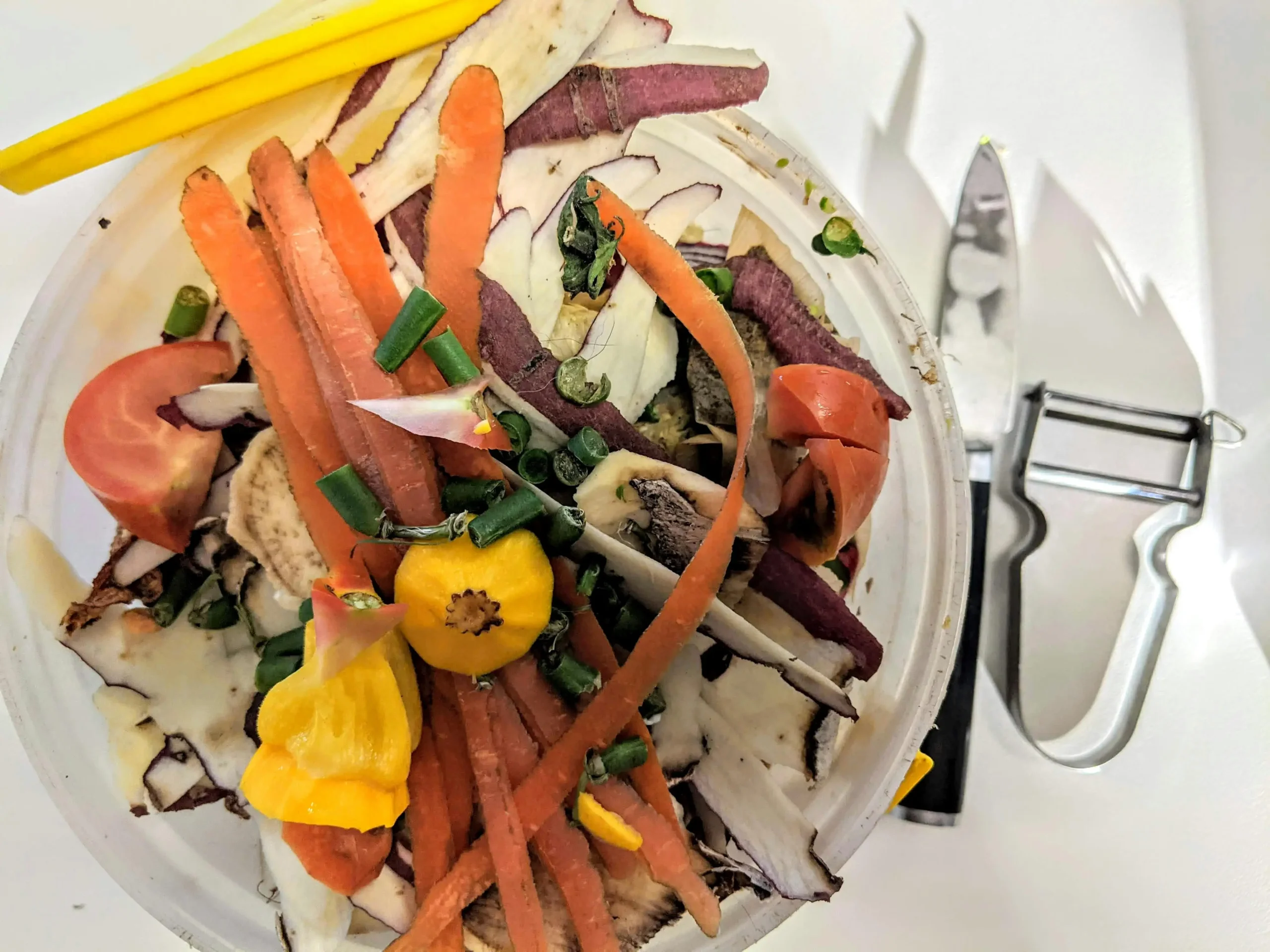
Did you know that kitchen waste such as fruit peels, tea grounds, and vegetable pieces do not have to be thrown away immediately? Organic waste can actually be used as a useful product in everyday life.
One of the increasingly popular ways of processing it is by creating an ecoenzyme.
Imagine if kitchen waste that usually ends up in the trash can actually be turned into a multifunctional liquid that is beneficial for Home Hygiene, plant health, and even the environment. Interesting, isn’t it?
Then, how to make it and what are the benefits you can get? Come on, find out more!
Definition Of Ecoenzyme
Ekoenzyme, or eco enzyme, is a liquid resulting from fermentation of organic materials such as fruit and vegetable peels with added sugar and water.
This process creates complex solutions containing various active enzymes and natural chemical compounds.
The concept of ecoenzyme was first introduced by Dr. Rosukon Poompanvong from Thailand as an environmentally friendly method of managing household waste and reducing the impact of global warming. This idea was later developed and popularized by Dr. Joean Oon, a naturopath from Malaysia, who further examines the benefits of eco-enzymes in everyday life.
The fermentation process of the eco-enzyme takes place anaerobically (without air) for about three months. During this time, microorganisms decompose organic matter and produce enzymes and compounds such as acetic acid, propionic acid and natural probiotics.
Content and types of enzymes in Ecoenzymes
Each batch of ecoenzymes can have a different enzyme composition, depending on the type of material used and the fermentation conditions. But in general, ecoenzymes contain the following main types of enzymes:
- Protease: decomposes proteins into smaller molecules.
- Lipase: breaks down fats and oils into fatty acids and glycerol.
- Amylase: breaks down complex carbohydrates into simple sugars.
- Cellulase: destroys plant fibers such as cellulose.
- Pectinase: breaks down pectin, a substance found in many fruit and vegetable cell walls.
The main raw materials for making ecoenzymes usually consist of orange peel, pineapple, mango, tomato, and green leaves. This combination of ingredients contributes to the complexity and stability of enzymes during the fermentation process.
During fermentation, the eco-enzyme solution will undergo a change in color and aroma. Successful ecoenzymes generally have the following characteristics:
- Even dark brown color.
- The characteristic Aroma of strong fermentation, with a mixture of sweet and sour.
- The pH value is below 4 after three months of fermentation, indicating the formation of natural organic acids.
Benefits Of Ecoenzymes
Ecoenzyme is a versatile liquid from the fermentation of organic waste that can be used in various fields, ranging from household needs, Agriculture, Animal Husbandry, to waste treatment.
In addition to being more environmentally friendly, its use is also much more efficient than synthetic chemical products that have the potential to pollute nature.
1. For household use
Most conventional cleaning products contain chemicals such as phosphates, nitrates, ammonia, and chlorine. If discharged into waterways, these substances can pollute the environment and negatively affect long-term health.
As a natural alternative, ecoenzymes can be used in various household activities, including:
- Washing tableware and clothes.
- Cleaning fruits and vegetables from pesticide residues.
- Mopping the floor and cleaning the kitchen and bathroom.
- Used as bath soap, shampoo, or natural hand wash.
- Eliminates unpleasant odors in the room or sewer.
- Repels insects such as flies, cockroaches, and mosquitoes.
- Helps to cope with parasites in pets.
2. For agriculture and plantation
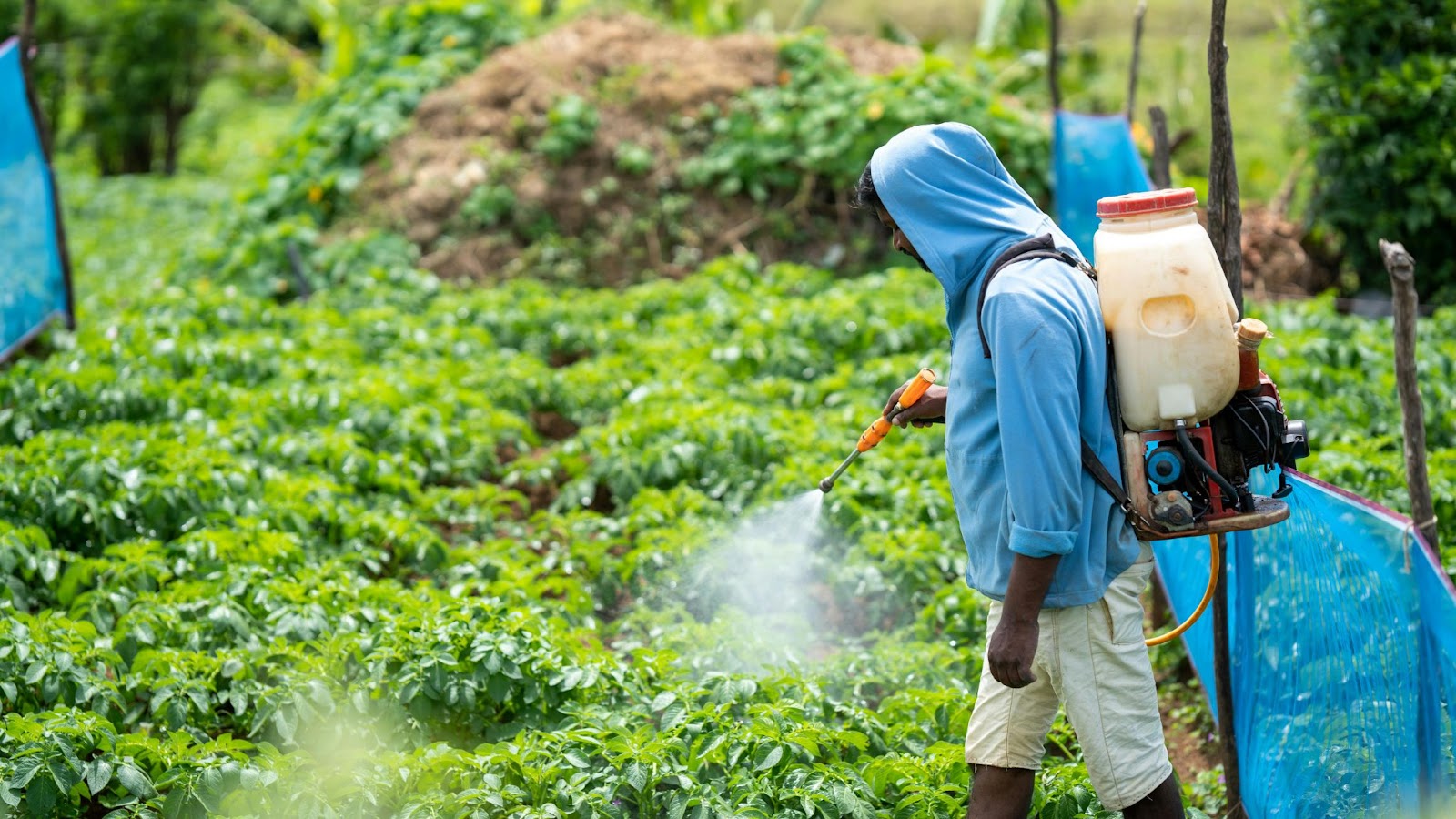
Excessive use of pesticides and chemical fertilizers in agriculture leads to soil degradation and environmental pollution. Ecoenzymes are present as a natural solution that supports sustainable agriculture. Benefits include:
- Fertilize the soil and accelerate the process of seed germination.
- Improve plant health and productivity.
- It acts as a natural plant hormone by converting ammonia to nitrate (NO₂), which is essential for plant growth.
- Help rehabilitate barren and sandy land to be more fertile.
- Serves as a natural pesticide and herbicide to protect plants from pests.
3. For animal husbandry and livestock health
In the world of livestock, ecoenzymes can create a cleaner and healthier environment, while improving the welfare of farm animals. Some of the benefits of its use are:
- Reduce unpleasant odors from the cage and repel flies.
- Maintain the cleanliness of the cage and the comfort of the animal.
- Improves the endurance and quality of livestock meat when added to their food or drink.
4. For sewage treatment and environment

In contrast to ordinary detergents that only emulsify fats, eco-enzymes work as natural catalysts that decompose fats and contaminants into simpler molecules. This process makes cleaning more effective and does not pollute the water.
By pouring the diluted ecoenzyme into a river, ditch, or drainage system, you can help:
- Purify wastewater naturally.
- Reduce the level of water pollution.
- Restore river ecosystems; fish and aquatic biota that previously disappeared can come back to life.
The use of eco-enzymes also has a direct impact on reducing the volume of organic waste. Because it is made from food waste and fruit peels, eco-enzymes help to significantly lower the cost of managing household waste.
How to make your own eco-enzyme at home
Want to contribute to reducing kitchen waste and at the same time get a versatile liquid that is environmentally friendly? You can make your own ecoenzyme at home with simple ingredients. Here are the tools, materials, and steps you need to know.
Tools and materials
Ecoenzymes are made from three main components: sugar, fruit and vegetable residues, and water. The comparison ratio is 1: 3: 10. That is, for every 1 kg of sugar, you need 3 kg of leftover fruits and vegetables and 10 liters of water.
Ingredients used:
- Leftover fruits and vegetables: choose those that are fresh and uncooked, not rotten, moldy, or wormy. The more types of fruits and vegetables used, the more diverse the benefits of enzymes produced. Cut into small pieces to speed up fermentation.
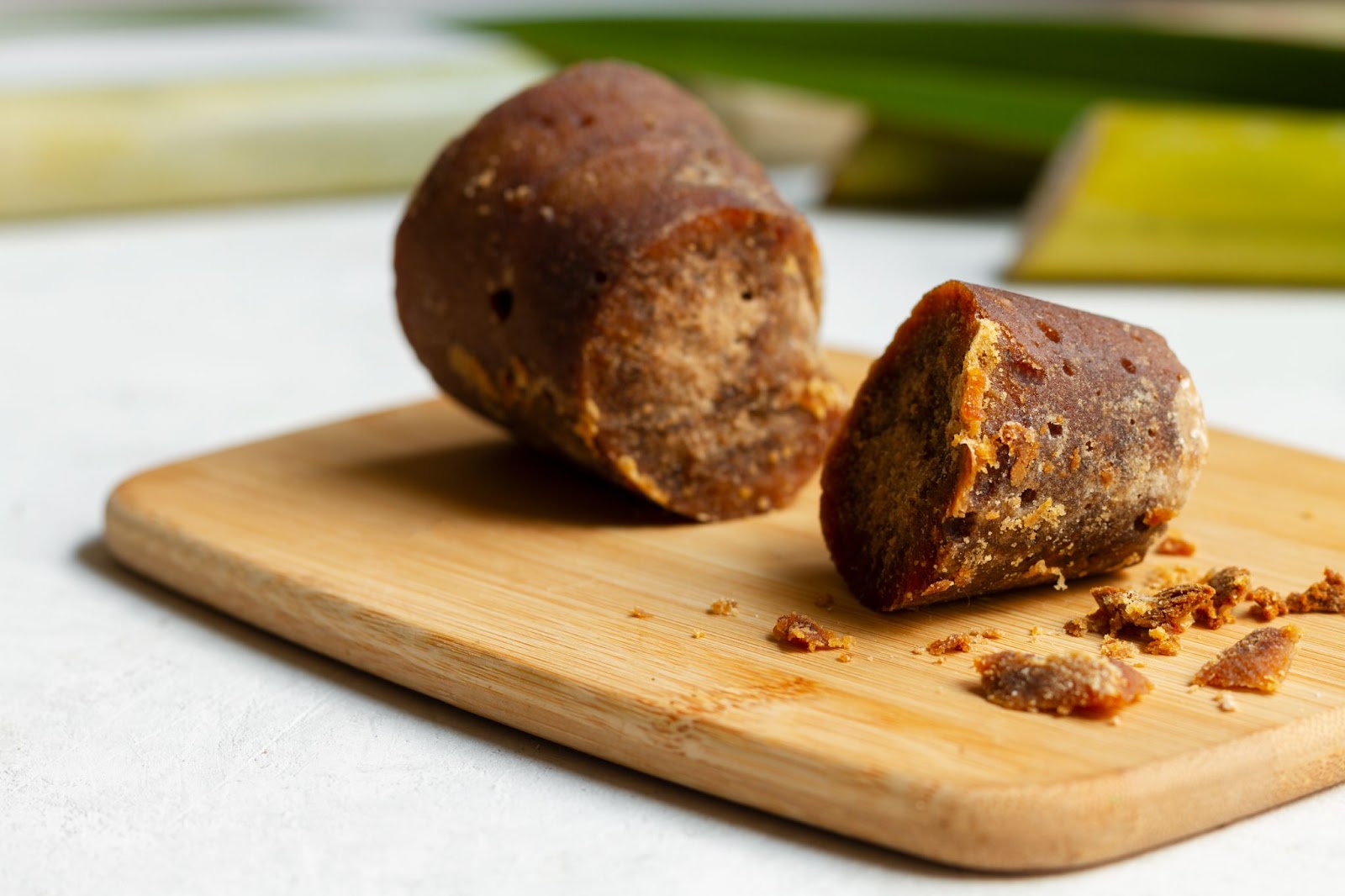
- Sugar: use natural sugars such as palm sugar, cane brown sugar, palm sugar, or molasses. Avoid using white sugar because it has gone through a bleaching process that reduces its mineral content.
- Water: water can come from wells, rainwater that is directly collected, pump water, gallon water, or AC wastewater that is clean and not contaminated with chemicals.
Necessary tools:
- Plastic containers with a wide mouth (avoid glass or metal as they cannot withstand gas pressure).
- Plastic or wooden spoon or mixer.
- Sieve and a small plastic bottle for storage of the final result.
Steps to create an Ecoenzyme
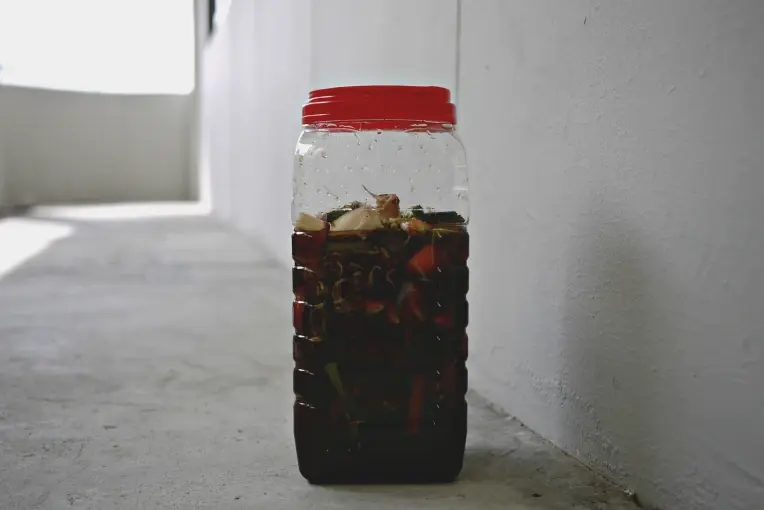
Clear plastic jar with a red lid and contains a mixture of organic waste, sugar ,and water (Source: monoandco.com)
- Thoroughly wash the container from soap or other chemical residues.
- Fill the container with water to 60% of its capacity.
- Add sugar in the amount of 10% by weight of water, then stir until dissolved.
- Add the remaining pieces of fruit and vegetables as much as 30% of the weight of the water, then stir until well blended.
- For a fresher aroma, you can add orange peel, lemon, or pandan leaves.
- Leave some free space in the container to make room for the fermented gases.
- Close the container tightly, but keep it easy to open for the “burping”process.
During the first 30 days, periodically open the lid of the container to release gas. - Press down on the remaining floating material every now and then to keep it submerged in the liquid.
- Store containers in a cool, well-ventilatedarea, away from direct sunlight, lavatories, trash cans, or chemicals.
Fermentation lasts for at least 3 months. After that, strain the echoenzyme liquid and store in a plastic bottle. - The remaining fermentation dregs can still be used as plant fertilizers, waterway cleaners, or new eco-enzyme materials.
Important notes
- Avoid using paper, glass, metal, or thin plastic containers.
- The ideal color of the eco-enzyme is dark brown. If it turns black, add the same amount of brown sugar to reactivate the fermentation.
- The appearance of a white, black, or brown coating on the surface is a normal part of the process.
- If larvae or worms appear, let the fermentation continue and make sure the container remains tightly closed.
- The longer the fermentation, the better the quality of the resulting eco-enzyme.
- The harvested ecoenzyme has no expiration period and does not need to be stored in the refrigerator.
Cover
Creating an eco-enzyme is not only a matter of managing kitchen waste, but also a real step towards a more sustainable lifestyle and caring for the environment. By utilizing materials that are commonly considered garbage, you can produce versatile liquids that are beneficial for households, agriculture, to environmental preservation.
In addition to saving costs, the use of eco-enzymes also helps reduce dependence on synthetic chemicals that are at risk of polluting water and soil. The manufacturing process is simple, the ingredients are easy to find, and the benefits are vast.
So, what are you waiting for? Start from your own kitchen and invite family or friends to try making ecoenzymes together. This one small step can have a big impact on a cleaner and healthier Earth.
Referencessources :
Enzymesos. What is Eco Enzyme?. Accessed on March 8, 2025
Featured Image: Limbah organik (Pexels.com/Denise Nys)

