Silakan atur halaman utama di Settings → Reading → Your homepage displays
dan pilih A static page, lalu pilih halaman dengan template Home.
Seminar results of a rapid survey of long-tailed monkeys on 4 islands in Indonesia: threats and expectations
The long-tailed monkey with the scientific name Macaca fascicularis, is one of the most widespread primates in Indonesia. In fact, some of its subspecies are only found on small islands and are now facing serious pressure.
To reveal the latest condition of the species, the Directorate of Species Conservation and genetics of the Ministry of Forestry together with YIARI (Yayasan Initiasi Alam Rehabilitasi Indonesia) organized a Seminar on the results of a rapid survey of long-tailed monkeys on four islands in Indonesia on March 18, 2025.
What are the important results of this seminar related to the conservation of long-tailed monkeys? Here’s the summary.
Results and impact of the Seminar results of a rapid survey of long-tailed monkeys on 4 islands in Indonesia
Background and conduct of the survey
Located at the Manggala Wanabakti building, Jakarta, this hybrid seminar presented academics and conservation organizations to discuss the results of a rapid survey of long-tailed monkeys (MEP) conducted by YIARI with the Directorate General. KSDAE Ministry of Forestry, BKSDA Aceh, BKSDA East Kalimantan, and BTN Karimunjawa.
The survey was conducted from May to July 2023 in four locations, namely Simeulue Island, Lasia Island, Karimunjawa National Park, and Maratua Island. The four islands are known to be a habitat for subspecies of long-tailed monkeys that have distinctive morphological characteristics and a very limited geographical distribution.
The lack of scientific data on their population and distribution makes these areas a priority in primate conservation in Indonesia. In addition, the taxonomic status of the four subspecies has not been supported by sufficient molecular data. Therefore, this survey is an important step to support more targeted and scientifically evidence-based conservation efforts.
Survey findings and their impact on conservation strategies
Mr. Silverius Oscar excelled giving a sabutan on the pulpit (Hasna Latifatunnisa|YIARI)
The chairman of YIARI, Silverius Oscar Unggul, stressed that this survey provides a more comprehensive picture of the condition of long-tailed monkey populations in areas that have received less attention.
The resulting Data is an important reference for governments, academics, and conservation organizations in developing long-term preservation strategies.
Further research, especially in the field of genetic studies and Macaca conservation, is needed to deepen scientific understanding while perfecting the conservation approach applied.
One of the important components in maintaining the survival of long-tailed monkeys in the Wild is to provide education to the community in order to foster collective awareness.
This Seminar is expected to form a joint commitment in strengthening the protection of long-tailed monkeys in their natural habitat, as well as producing concrete recommendations to improve conservation effectiveness through synergy between the government, non-governmental organizations, and academics.
The results of this discussion are expected to be the foundation of a stronger conservation policy, based on scientific data, and able to encourage conservation efforts in the future.
However, the strategies developed will not be effective without a deep understanding of the real threats facing this species in the field.
Serious threat to long-tailed monkeys
On the same occasion, Silverius also highlighted the various serious threats facing long-tailed monkeys, especially due to illegal rearing practices and increasing conflicts with humans.
The demand for monkeys as exotic pets has been growing steadily in recent years. Capture from the wild not only endangers the individuals taken but also the mothers of the tragically killed long-tailed baby monkeys, but also damages the social structure of the group in the native habitat.
Torture of long-tailed monkeys is also common, making them live in conditions that are not in accordance with animal welfare standards. In fact, every animal is entitled to 5 Freedoms or five freedoms that must be met to ensure the quality of life of animals. Such freedom includes: freedom from hunger and thirst, discomfort, pain and injury, freedom to behave naturally, and freedom from stress and fear.
Without immediate and coordinated protection efforts, the population of long-tailed monkeys on small islands is threatened to continue to decline and faces the risk of extinction.
Recognizing the urgency of the threat, various parties are now pushing for strengthening conservation efforts that are more structured and data-based.
Data-driven conservation expectations and efforts
Speaker and MC sitting on stage during the seminar (Hasna Latifatunnisa|YIARI)
In this context, the Seminar on the results of a rapid survey of long-tailed monkeys on four islands in Indonesia became an important momentum in formulating more scientific and systematic conservation measures.
Director of species and genetic Conservation, Nunu Anugrah S.Hut., M.Sc., said that the priority of future species conservation activities will be focused on the IUCN Red List approach, an important instrument for monitoring changes in the conservation status of species over time.
This approach is considered crucial because it can help understand the dynamics of animal populations scientifically, and become the basis for designing conservation policies that are more targeted and science-based.
Slide presentasi IUCN Red List yang ditampilkan pada layar proyektor (Hasna Latifatunnisa|YIARI)
As part of strengthening national capacity, the Ministry of Forestry together with BRIN and ID SSG IUCN are formulating the establishment of a national institution or committee that will play a role in conducting an independent assessment of the status of Threatened Species in Indonesia.
The hope is that the results of the Seminar on the results of a rapid survey of long-tailed monkeys on 4 islands in Indonesia can be a strategic reference for more structured and systematic conservation investments, involving various stakeholders.
YIARI is also actively developing a long-tailed monkey conservation program, with special attention to zoonotic issues, animal welfare, and mitigation of conflicts between humans and animals.
Long-tailed monkey and ape population data collection in Sumatra, Java, and Kalimantan also continues to be carried out as a basis for strengthening protection strategies.
These measures are evidence that long-tailed monkey conservation requires cross-sector collaboration, is based on science, and is based on a long-term commitment.
Support Together The Survival Of Long-Tailed Monkeys
Participants who attended the hybrid seminar on the results of a quick survey of long-tailed monkeys on 4 islands in Indonesia (Hasna Latifatunnisa|YIARI)
Seminar on the results of a rapid survey of long-tailed monkeys on 4 islands in Indonesia provides a deeper understanding of the challenges that threaten the survival of this species.
Their protection requires real support from various parties, ranging from governments, communities, to conservation organizations.
Here are some steps we can take together:
1. Avoid Keeping Wildlife
The long-tailed monkey is a wildlife that has an important role in maintaining the balance of the ecosystem. Keeping them as pets actually damages the social structure of their group and accelerates population decline in nature.
2. Raising Awareness About The Dangers Of Animal Exploitation
One of the major challenges in conservation is the lack of public understanding of the impacts of wildlife trade. Education about the importance of protecting animals can reduce the demand for long-tailed monkeys as pets.
3. Spreading Information About The Importance Of Conservation
The more people know the importance of protecting endangered species, the greater the impact. Dissemination of educational and accurate information can foster concern and community participation in conservation efforts.
YIARI continues to develop various long-tailed monkey conservation programs through research, education, and collaboration with various parties.
Support from all walks of life is essential to maintain the existence of this species in the wild.
Come on, take part in preservation efforts. Spread this information so that more people care and help keep long-tailed monkeys from exploitation and extinction.
Success in Raising Chickens: The Journey of a group of women farmers in Lampung
In the midst of efforts to improve food security and community welfare, the use of yard land is more creative. One of the innovations that began to be implemented was the assistance of free-range chicken livestock-not only to meet the nutritional needs of the family, but also as a promising business opportunity.
Entering early 2025, Gapoktan Wanatani Lestari (KWT), one of YIARI’s assisted gapoktans, built a chicken coop from local bamboo. The Program has three main goals: provide a more accessible source of protein, increase family income, and produce organic fertilizer for horticultural crops.
Then, how is this assistance carried out? Come on, look further!
Building A Chicken Coop In Mutual Cooperation
Chicken coop from local bamboo in free range chicken livestock Assistance program (Tim Comdev | YIARI)
The Gapoktan Wanatani Lestari farmer women’s group at KPH Batutegi, Lampung, utilizes the land in their yard by implementing an integrated farming system. In addition to cultivating horticultural crops, this group is now developing a free-range chicken farming business as part of a farming diversification strategy.
The technical planning of this program has been started since the end of December 2024 and began to be implemented in the first week of January 2025. The first step was the construction of a chicken coop, which was facilitated by the IAR Indonesia Foundation (YIARI) with the active support of the local farming community. As a form of independence, members of the farmer group independently collect local bamboo to be used as the main material for the walls and floor of the cage.
In the spirit of mutual cooperation, the husbands of members of the farmer group participated in the construction of a chicken coop measuring 11 x 2 meters. This effort is expected to improve the welfare of group members through optimal utilization of local resources and encourage food security at the household level.
Installation of tarpaulin in free range chicken livestock Assistance program(Comdev | YIARI team)
The cage construction process involved 15 people, including yiari staff, interns, and KWT members ‘ mothers. They work together to ensure that the cages built have a sturdy structure, are comfortable, and meet the needs of keeping chickens.
The construction was carried out in stages, starting from the manufacture of the frame, the installation of bamboo walls, to the completion of the floor and roof. To increase protection from wind and rain, the walls of the cage are sheathed with tarpaulin to keep the temperature inside stable. With a more awake environment, chickens can grow optimally and healthily.
The First Step Towards Quality Chicken Production
After the cage is completed on January 22, 2025, the next step is to create an optimal environment for the growth of chickens. The main factors that are considered include ventilation, placement of feed and drinking, lighting, and cleanliness of the cage.
Proper ventilation is a top priority to ensure smooth air circulation, reduce excess moisture, and prevent the spread of diseases. In addition, the placement of feed and drinking places is strategically designed to be easily accessible to chickens, minimize the risk of contamination, and reduce feed waste.
To keep the temperature of the cage warm, especially at night, a lamp is installed that serves as a source of lighting and heating. Adequate lighting helps chickens stay active while reducing stress that can affect their growth and health. With optimal cage management, it is expected that chickens can grow healthy and produce high quality production.
Chicken coop with good ventilation, lights, and bamboo drinking place(Tim Comdev / YIARI)
As part of the utilization of local resources, chicken feed containers are made from bamboo. The use of bamboo is not only environmentally friendly, but also more economical and easily obtained by farmer groups. With this approach, the free-range chicken farming program also reduces dependence on more expensive plastic or metal equipment.
At the initial stage, a total of 266 two-week-old village chickens that had been vaccinated began to be put into cages. In the next four weeks, the second Cage is planned to be completed to accommodate an additional 200 chickens. With this system, farmer groups can harvest every month, with a target of chicken weight reaching 1 kg within 2.5 months.
Free-range chickens are fed quality feed in cages(Tim Comdev | YIARI)
In addition to ensuring supportive housing conditions, nutritional aspects are also a major factor in the cultivation of free-range chickens. Chickens need quality feed with a balanced composition that includes protein, carbohydrates, vitamins, and minerals to support optimal growth and maintain endurance.
In addition, regular monitoring of chicken health is very important to prevent disease, increase the success rate of cultivation, and ensure healthy and quality livestock. This step includes vaccination, monitoring of the symptoms of the disease, as well as the implementation of strict cage hygiene.
Various potentials and benefits of Free-Range Chicken
In addition to providing economic benefits from sales, raising free-range chickens also opens up opportunities for farmer groups to implement an integrated agricultural system.
One of the main benefits of this business is the utilization of chicken manure as an organic fertilizer. This fertilizer can increase soil fertility and productivity of horticultural crops managed by farmer groups. With the presence of organic fertilizers, the cost of purchasing chemical fertilizers can be reduced, making agricultural businesses more efficient and environmentally friendly. In addition, an integrated agricultural system creates a more efficient production cycle, in which livestock waste is reused to support the agricultural sector.
More than just financial benefits, raising free-range chickens also brings social benefits to the community. This activity strengthens the spirit of mutual cooperation among members of farmer groups and provides opportunities for them to develop new skills in raising livestock and managing businesses independently.
Cover
Assistance in the cultivation of free-range chicken is a clear proof that community empowerment can run in harmony with environmental sustainability. With the support of various parties and the spirit of mutual cooperation, the program is expected to continue to grow and inspire more communities to use the yard productively.
In the future, the farmer women’s Group (KWT) Gapoktan Wanatani Lestari plans to increase production capacity and expand the chicken sales market. This step will open up greater economic opportunities for its members, as well as contribute to strengthening food security in their regions.
Assistance like this proves that innovation in the agricultural sector is able to provide broad benefits, both in terms of economic, social, and environmental. Let’s together support sustainable agriculture and empower more communities to be independent!
Forest security with kph Batutegi: mission to protect the heart of Sumatra’s forests from encroachment
Batutegi protected forest located in Lampung is one of the most vital forest areas on the island of Sumatra. This area is a natural habitat for a variety of flora and fauna, including endemic species found only in Indonesia.
However, the threat of increasingly massive forest encroachment has the potential to damage the ecological balance and disrupt the survival of species in it. If not treated immediately, this damage can have long-term impacts on environmental sustainability.
To overcome this problem, Batutegi Forest Management Unit (KPH) together with Yayasan Initiasi Alam Rehabilitasi Indonesia (YIARI) implemented a technology-based conservation approach. Joint teams in the field continue to carry out security and surveillance against potential destruction.
What is the strategy and implementation like? Check out the following description!
Getting To Know Batutegi Forest Management Unit
Batutegi protected forest spans an area of 58,174 hectares in Lampung Province, covering three districts: Tanggamus, West Lampung, and Central Lampung. In addition to functioning as a priority watershed, this area also stores high biodiversity which has outstanding ecological and conservation value.
Since 2008, YIARI has been actively conducting conservation activities in the area, with an initial focus on wildlife protection as well as habitat rehabilitation. Regular patrols and monitoring of animal populations are part of the protection effort.
The collaboration between YIARI and kph Batutegi was further strengthened as the threat of forest encroachment increased. In response to this, in 2025, YIARI continues the forest Security program with kph Batutegi as a form of long-term commitment in maintaining sustainable forest ecosystems.
With the support of modern technologies such as GPS-based monitoring systems, surveillance drones, and rapid reporting applications, teams in the field are able to respond more efficiently to potential threats. This strategy not only reduces the number of encroachments, but also strengthens the ecological function of forests as a buffer for life and sustainable biological resources.
Tracing the trail of encroachment in the Rindingan Forest
Pieces of wood left over from illegal logging in Batutegi protected forest (Rh | YIARI team)
Understanding the conditions and threats on the ground is a crucial first step in efforts to preserve forests. One of the main areas of concern is the Rindingan core block, a strategic conservation area in the Batutegi protected forest.
This area is not only an important habitat for a variety of rare species, but also provides vital ecosystem services to the surrounding environment.
Unfortunately, the Rindingan core block is facing heavy pressure due to ongoing illegal encroachment activities. Unlicensed land clearing, illegal logging, and hunting disrupt the natural balance and accelerate the destruction of ecosystems.
If left unchecked, the impact can be far-reaching: from disruption of water sources, to a decline in biodiversity, to the destruction of ecological systems that sustain the lives of local communities.
In response to these conditions, KPH Batutegi and YIARI continue to strengthen forest security efforts. One concrete form of this commitment is realized through joint patrols that are carried out periodically.
On January 22, 2025, a joint team consisting of Forest Police (Polhut) KPH Batutegi and yiari field staff conducted intensive patrols in the Rindingan core block.
The rugged terrain and limited access did not dampen the team’s enthusiasm to reach areas prone to encroachment in order to conduct data collection and direct observation of forest conditions.
Polhut KPH Batutegi and Yiari team found a wild hut with a Blue Roof in the middle of the Batutegi protected forest encroachment area (Rh | YIARI team)
Patrol results show, some areas have been damaged due to illegal activities. The team found a number of evidence such as wild huts built clandestinely, traces of heavy vehicles, the remains of logged wood, as well as land that began to be cleared without official permission.
These findings confirm the practice of encroachment is still a real threat and urgent to be addressed immediately.
Surveillance and patrolling are therefore not only important as preventive measures, but also as a form of consistent law enforcement.
Concrete and sustainable measures are needed so that the preservation of the Batutegi protected forest, especially the Rindingan core block, can be maintained for future generations.
Technology and Rapid Action in Forest security
To respond effectively to the field findings, the patrol team conducted data collection on the affected areas while immediately taking measurable security measures. Armed with the support of advanced monitoring technology, the surveillance process is now carried out more systematically, accurately, and responsively.
One key technology being leveraged is Global Forest Watch—GFW)-a satellite imagery-based platform that enables real-time detection of forest cover changes.
With this system, encroachment activities can be monitored early on, so the team can directly direct patrols to vulnerable points.
Top view of the area affected by encroachment in the Batutegi protected forest (Rh | YIARI team)
To reach areas that are difficult to access, the team also operates drones that provide a thorough visual overview of the forest conditions from the air.
Meanwhile, the SMART Patrol application is used to record and analyze findings in the field. The Data collected through this application becomes an important basis in decision making, from determining patrol patterns to formulating follow-up strategies.
The use of technology not only accelerates the response to encroachment, but also allows for a more comprehensive evaluation of the effectiveness of forest safeguards. This data-driven approach is expected to reduce the risk of damage while supporting sustainable and adaptive long-term conservation planning.
A step in protecting the environment
The joint patrol carried out on January 22, 2025 is one of the important steps in continuing efforts to protect the Batutegi protected forest habitat.
This activity not only aims to stop the practice of encroachment, but also becomes an integral part of the grand strategy in preserving forest ecosystems.
However, habitat protection does not stop at patrols and enforcement alone. Once the points of encroachment have been identified, the next stage is the restoration of the affected ecosystem. Rehabilitation processes-such as replanting trees on open land—are becoming an important component in improving the structure of forests and restoring their ecological function.
Moreover, community involvement around forest areas is key in creating sustainable protection. Education and empowerment of local communities continue to be carried out so that they not only understand the importance of preserving forests, but also have alternative livelihoods that do not depend on illegal exploitation of forest resources.
Protect The Forest, Protect Life
Protecting Batutegi protected forest is not a momentary effort, but a long-term commitment to ensure the sustainability of the ecosystem and the lives that depend on it. These efforts cover a wide range of aspects—from routine patrols, to the implementation of monitoring technology, to the empowerment of local communities as the vanguard of preservation.
KPH Batutegi, YIARI, and other stakeholders continue to strengthen synergy and collaboration. This cross-sectoral collaboration is a strong foundation in preserving the ecosystem as a whole.
However, protecting the forest is not only the task of those on the front lines. This is a shared responsibility. Every individual has a role, no matter how small, to support forest conservation. Some simple steps that can be done include:
Disseminate information about the importance of forest conservation to people around.
Support the use of environmentally friendly and sustainably produced products.
Reduce paper consumption by choosing digital documents or using recycled paper.
Participate in tree planting activities or support local reforestation and conservation programs.
Every small step has a big meaning for the future of our forests. Do not let the practice of encroachment continue to damage such a precious natural heritage. Now is the time to move together—taking care of the forest means taking care of life itself!
Featured image: a blue illegal hut in the middle of the Batutegi protected forest encroachment site
Editor: Hasna Latifatunnisa
Ecoenzyme, the magic liquid of organic waste full of benefits
Did you know that kitchen waste such as fruit peels, tea grounds, and vegetable pieces do not have to be thrown away immediately? Organic waste can actually be used as a useful product in everyday life.
One of the increasingly popular ways of processing it is by creating an ecoenzyme.
Imagine if kitchen waste that usually ends up in the trash can actually be turned into a multifunctional liquid that is beneficial for Home Hygiene, plant health, and even the environment. Interesting, isn’t it?
Then, how to make it and what are the benefits you can get? Come on, find out more!
Definition Of Ecoenzyme
Ekoenzyme, or eco enzyme, is a liquid resulting from fermentation of organic materials such as fruit and vegetable peels with added sugar and water.
This process creates complex solutions containing various active enzymes and natural chemical compounds.
The concept of ecoenzyme was first introduced by Dr. Rosukon Poompanvong from Thailand as an environmentally friendly method of managing household waste and reducing the impact of global warming. This idea was later developed and popularized by Dr. Joean Oon, a naturopath from Malaysia, who further examines the benefits of eco-enzymes in everyday life.
The fermentation process of the eco-enzyme takes place anaerobically (without air) for about three months. During this time, microorganisms decompose organic matter and produce enzymes and compounds such as acetic acid, propionic acid and natural probiotics.
Content and types of enzymes in Ecoenzymes
Each batch of ecoenzymes can have a different enzyme composition, depending on the type of material used and the fermentation conditions. But in general, ecoenzymes contain the following main types of enzymes:
Protease: decomposes proteins into smaller molecules.
Lipase: breaks down fats and oils into fatty acids and glycerol.
Amylase: breaks down complex carbohydrates into simple sugars.
Cellulase: destroys plant fibers such as cellulose.
Pectinase: breaks down pectin, a substance found in many fruit and vegetable cell walls.
The main raw materials for making ecoenzymes usually consist of orange peel, pineapple, mango, tomato, and green leaves. This combination of ingredients contributes to the complexity and stability of enzymes during the fermentation process.
During fermentation, the eco-enzyme solution will undergo a change in color and aroma. Successful ecoenzymes generally have the following characteristics:
Even dark brown color.
The characteristic Aroma of strong fermentation, with a mixture of sweet and sour.
The pH value is below 4 after three months of fermentation, indicating the formation of natural organic acids.
Benefits Of Ecoenzymes
Ecoenzyme is a versatile liquid from the fermentation of organic waste that can be used in various fields, ranging from household needs, Agriculture, Animal Husbandry, to waste treatment.
In addition to being more environmentally friendly, its use is also much more efficient than synthetic chemical products that have the potential to pollute nature.
1. For household use
Most conventional cleaning products contain chemicals such as phosphates, nitrates, ammonia, and chlorine. If discharged into waterways, these substances can pollute the environment and negatively affect long-term health.
As a natural alternative, ecoenzymes can be used in various household activities, including:
Washing tableware and clothes.
Cleaning fruits and vegetables from pesticide residues.
Mopping the floor and cleaning the kitchen and bathroom.
Used as bath soap, shampoo, or natural hand wash.
Eliminates unpleasant odors in the room or sewer.
Repels insects such as flies, cockroaches, and mosquitoes.
Helps to cope with parasites in pets.
2. For agriculture and plantation
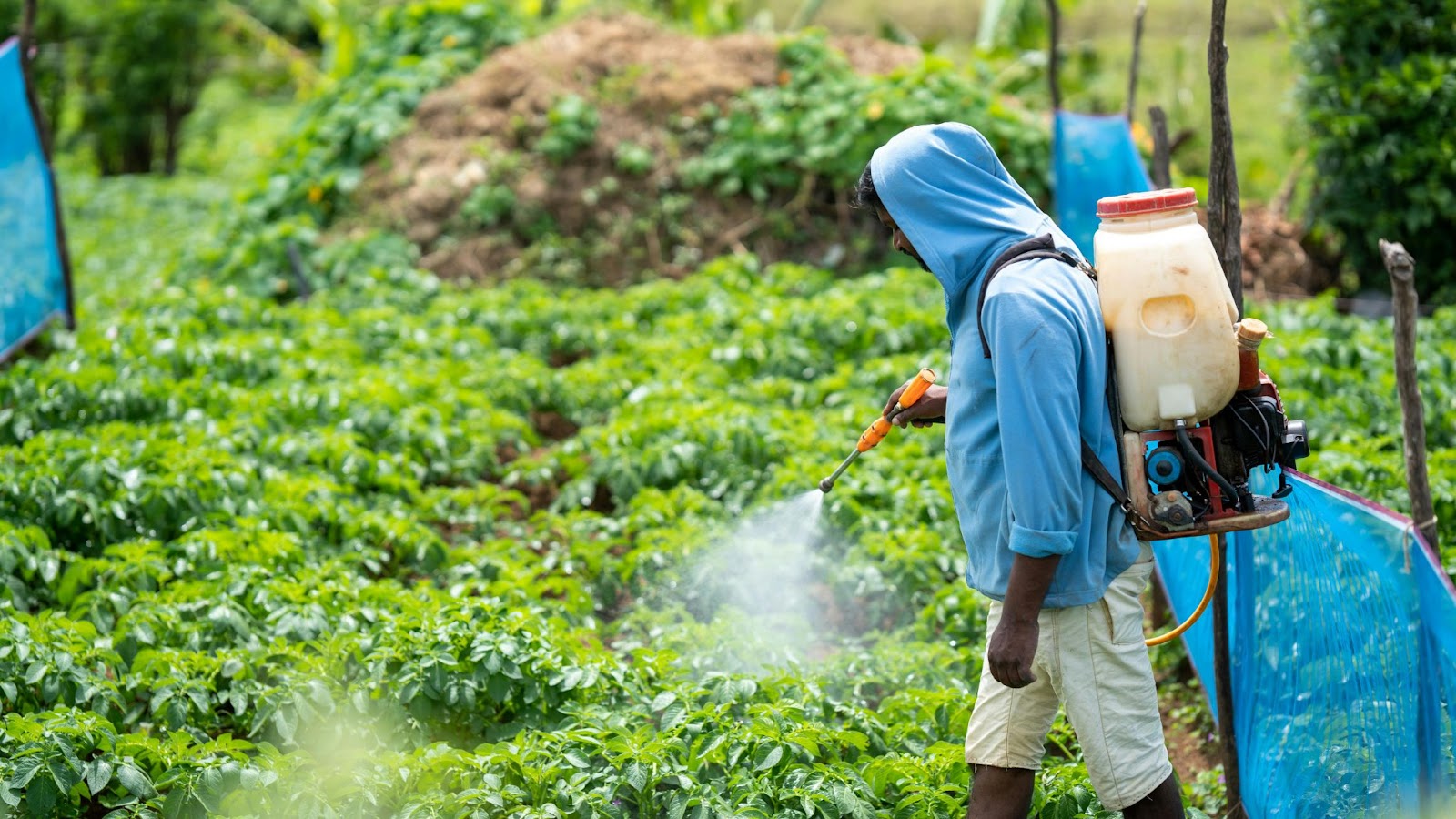
A farmer is spraying plants with eco-enzymes manually. (Source: Pexels.com/Dinuka Gunawardana)
Excessive use of pesticides and chemical fertilizers in agriculture leads to soil degradation and environmental pollution. Ecoenzymes are present as a natural solution that supports sustainable agriculture. Benefits include:
Fertilize the soil and accelerate the process of seed germination.
Improve plant health and productivity.
It acts as a natural plant hormone by converting ammonia to nitrate (NO₂), which is essential for plant growth.
Help rehabilitate barren and sandy land to be more fertile.
Serves as a natural pesticide and herbicide to protect plants from pests.
3. For animal husbandry and livestock health
In the world of livestock, ecoenzymes can create a cleaner and healthier environment, while improving the welfare of farm animals. Some of the benefits of its use are:
Reduce unpleasant odors from the cage and repel flies.
Maintain the cleanliness of the cage and the comfort of the animal.
Improves the endurance and quality of livestock meat when added to their food or drink.
4. For sewage treatment and environment
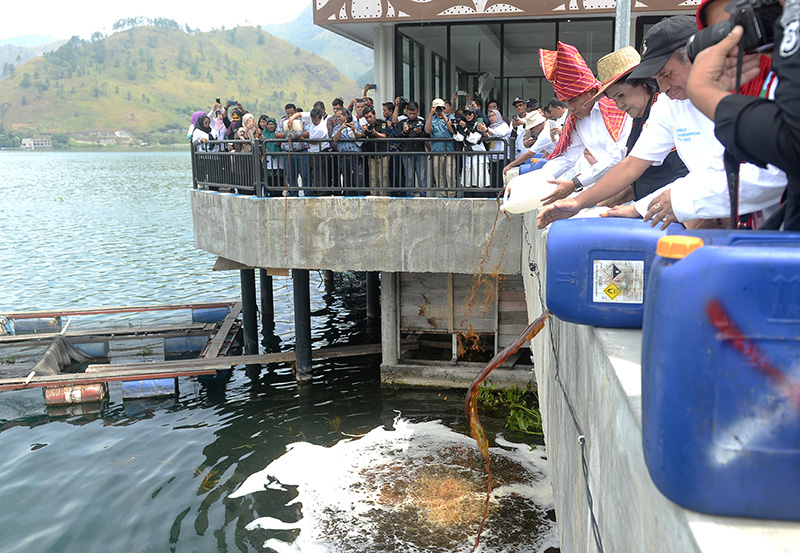
Some people are pouring ecoenzymes in Lake Toba. (Source: sumutprov.co.id)
In contrast to ordinary detergents that only emulsify fats, eco-enzymes work as natural catalysts that decompose fats and contaminants into simpler molecules. This process makes cleaning more effective and does not pollute the water.
By pouring the diluted ecoenzyme into a river, ditch, or drainage system, you can help:
Purify wastewater naturally.
Reduce the level of water pollution.
Restore river ecosystems; fish and aquatic biota that previously disappeared can come back to life.
The use of eco-enzymes also has a direct impact on reducing the volume of organic waste. Because it is made from food waste and fruit peels, eco-enzymes help to significantly lower the cost of managing household waste.
How to make your own eco-enzyme at home
Want to contribute to reducing kitchen waste and at the same time get a versatile liquid that is environmentally friendly? You can make your own ecoenzyme at home with simple ingredients. Here are the tools, materials, and steps you need to know.
Dua buah gula aren di atas telenan kayu (Source: Freepik.com)
Tools and materials
Ecoenzymes are made from three main components: sugar, fruit and vegetable residues, and water. The comparison ratio is 1: 3: 10. That is, for every 1 kg of sugar, you need 3 kg of leftover fruits and vegetables and 10 liters of water.
Ingredients used:
Leftover fruits and vegetables: choose those that are fresh and uncooked, not rotten, moldy, or wormy. The more types of fruits and vegetables used, the more diverse the benefits of enzymes produced. Cut into small pieces to speed up fermentation.
Sugar: use natural sugars such as palm sugar, cane brown sugar, palm sugar, or molasses. Avoid using white sugar because it has gone through a bleaching process that reduces its mineral content.
Water: water can come from wells, rainwater that is directly collected, pump water, gallon water, or AC wastewater that is clean and not contaminated with chemicals.
Necessary tools:
Plastic containers with a wide mouth (avoid glass or metal as they cannot withstand gas pressure).
Plastic or wooden spoon or mixer.
Sieve and a small plastic bottle for storage of the final result.
Steps to create an Ecoenzyme
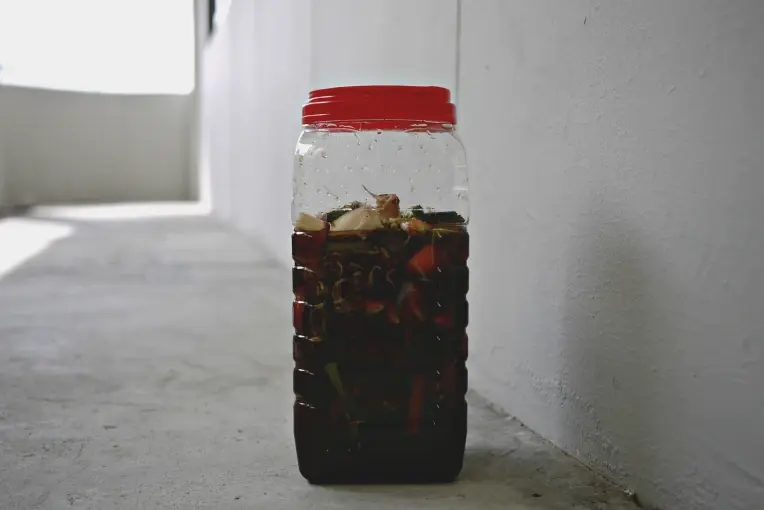
Clear plastic jar with a red lid and contains a mixture of organic waste, sugar ,and water (Source: monoandco.com)
Thoroughly wash the container from soap or other chemical residues.
Fill the container with water to 60% of its capacity.
Add sugar in the amount of 10% by weight of water, then stir until dissolved.
Add the remaining pieces of fruit and vegetables as much as 30% of the weight of the water, then stir until well blended.
For a fresher aroma, you can add orange peel, lemon, or pandan leaves.
Leave some free space in the container to make room for the fermented gases.
Close the container tightly, but keep it easy to open for the “burping”process. During the first 30 days, periodically open the lid of the container to release gas.
Press down on the remaining floating material every now and then to keep it submerged in the liquid.
Store containers in a cool, well-ventilatedarea, away from direct sunlight, lavatories, trash cans, or chemicals. Fermentation lasts for at least 3 months. After that, strain the echoenzyme liquid and store in a plastic bottle.
The remaining fermentation dregs can still be used as plant fertilizers, waterway cleaners, or new eco-enzyme materials.
Important notes
Avoid using paper, glass, metal, or thin plastic containers.
The ideal color of the eco-enzyme is dark brown. If it turns black, add the same amount of brown sugar to reactivate the fermentation.
The appearance of a white, black, or brown coating on the surface is a normal part of the process.
If larvae or worms appear, let the fermentation continue and make sure the container remains tightly closed.
The longer the fermentation, the better the quality of the resulting eco-enzyme.
The harvested ecoenzyme has no expiration period and does not need to be stored in the refrigerator.
Cover
Creating an eco-enzyme is not only a matter of managing kitchen waste, but also a real step towards a more sustainable lifestyle and caring for the environment. By utilizing materials that are commonly considered garbage, you can produce versatile liquids that are beneficial for households, agriculture, to environmental preservation.
In addition to saving costs, the use of eco-enzymes also helps reduce dependence on synthetic chemicals that are at risk of polluting water and soil. The manufacturing process is simple, the ingredients are easy to find, and the benefits are vast.
So, what are you waiting for? Start from your own kitchen and invite family or friends to try making ecoenzymes together. This one small step can have a big impact on a cleaner and healthier Earth.