Apex predators such as lions and Tigers are known to pose a major threat to wildlife in their natural habitat.
However, in contrast to most animals, there is one unique creature that is able to survive the attack of predators without having to run away—simply by standing still. Can you guess what animal it is?
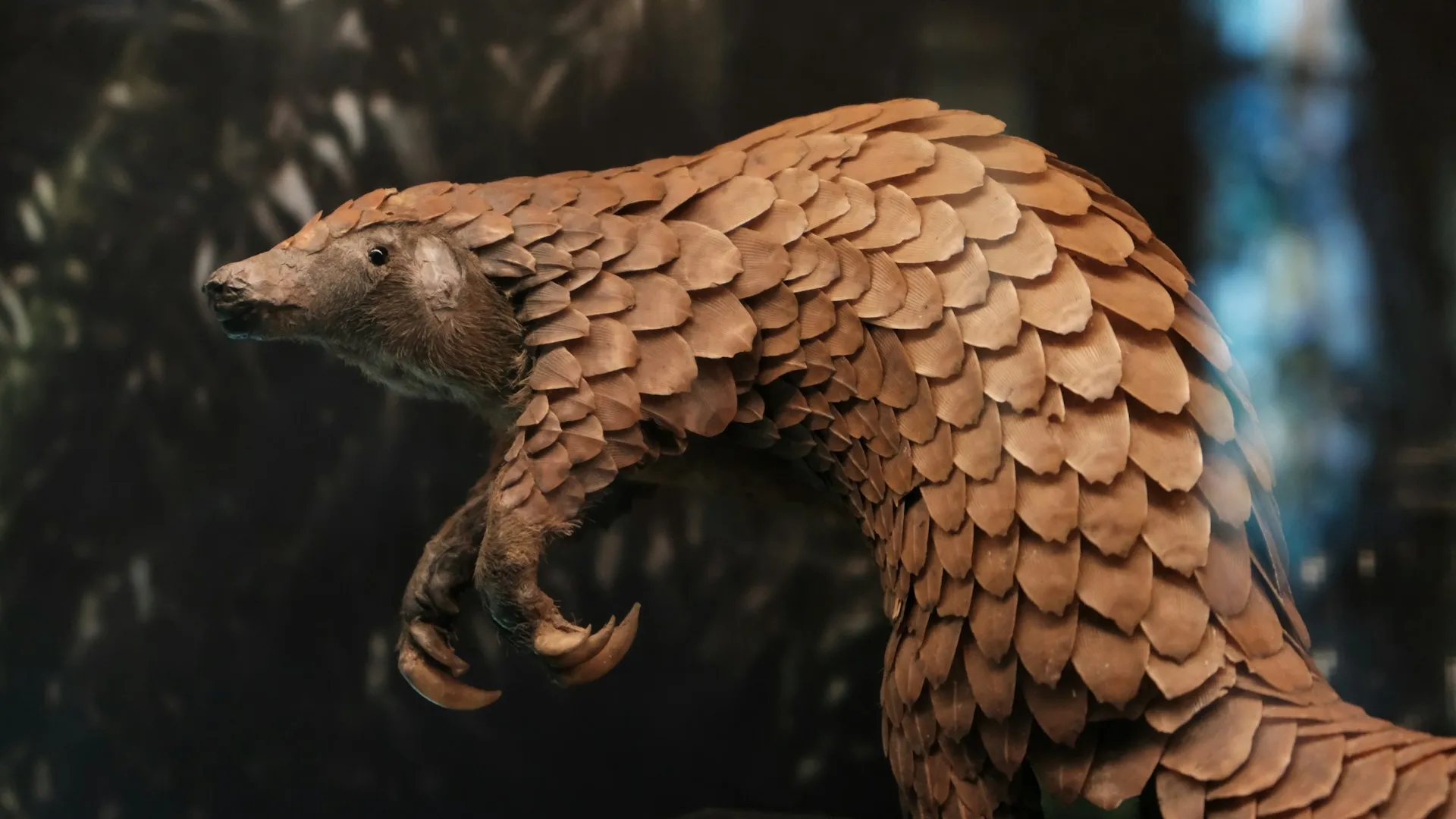
Yup, the answer is the anteater, a scaly mammal that has incredible natural defenses. Known as’ the scaly ball’, the anteater has a layer of hard scales that envelops almost its entire body. The scales function like an effective shield to protect it from wild animal attacks.
How, then, do anteaters protect themselves? When feeling threatened, the anteater will immediately roll its body up to form a solid ball. With this position, the vulnerable part of his body was hidden inside the scroll, while the outer part, covered with hard scales, became a defensive shield.
Unfortunately, behind its uniqueness and ability to survive predators, pangolins actually face a great threat from humans. This mammal is listed as one of the most illegally traded animals in the world. The high demand for their scales and meat makes pangolins the target of massive poaching.
What, then, makes anteaters so hunted, and how are conservation efforts going today? Check out the full explanation in the next section.
Getting To Know Pangolins
The anteater is one of the animals belonging to the class of mammals. As mammals, anteaters reproduce sexually and give birth to young (viviparous). Female anteaters have mammary glands for feeding their young.
The name ‘pangolin’ comes from the Malay language meaning to rollover, referring to the animal’s habit of rolling over when it feels threatened. In English, pangolins are known as pangolins.
This unique animal has hard and strong scales that line almost its entire body, except for the abdominal part. The main function of these scales is to protect against predator attacks. When it feels in danger, the anteater will roll its body up to form a ball, hiding vulnerable parts of the body inside the roll.
Pangolin habitats are very diverse, ranging from tropical rainforests, savannas, grasslands, to agricultural land in the lowlands. Its main food is ants and termites, which it catches using a long, sticky tongue—a characteristic feature of anteaters that helps it reach prey in the nest.

There are currently eight species of anteaters spread across two continents, namely Asia and Africa. Here’s the list:
Species of anteaters in Asia:
- Chinese anteater (sweet pentadactyla)
- Indian anteater (sweet crassicaudata)
- Philippine anteater (Manis culionensis)
- Pangolin Sunda (sweet javanica)
Species of anteaters in Africa:
- Trenggiling tanah (Smutsia temminckii)
- Giant anteater (Smutsia gigantea)
- Trenggiling pohon (Phataginus tricuspis)
- Trenggiling berekor panjang (Phataginus tetradactyla)
In Southeast Asia, including Indonesia, the species of pangolin found is the Sunda pangolin (Manis javanica). This animal is spread in several regions such as Sumatra, Kalimantan, and Java, as well as a number of small islands such as Bangka, Belitung, and Nias.
Citing a report from Traffic, the Sunda pangolin is currently categorized as a Critically Endangered species on the IUCN Red List of Threatened Species. The population of this anteater is experiencing a drastic decline, which is largely due to the rampant illegal trade.
In Indonesia, pangolins are protected animals Under Law No. 5 of 1990 on the Conservation of Natural Resources and ecosystems. Protection against Sunda pangolins is also emphasized in the regulation of the Minister of Environment and Forestry number 106 of 2018.
Anyone who catches, kills, injures or trades pangolins illegally may be subject to criminal sanctions. In accordance with Article 40 Paragraph (2) and Article 21 paragraph (2) letter (d) of Law No. 5 of 1990, such violations can be subject to a maximum prison sentence of five years and a fine of up to Rp100 million.
Characteristics of Anteaters
Pangolins are mammals that have a number of unique physical and behavioral characteristics, making them different from other animals. In fact, the anteater is the only mammal in the world that has scales.
These scales become one of the most characteristic body defense systems among mammalian animals.

Here are the common characteristics of pangolins that you need to know:
- It has hard and strong scales that cover its entire body, except for the lower part. These scales are composed of keratin, the same protein that makes up human nails and hair.
- It is able to protect itself from predators by rolling its body into a tight ball, so that only its hard scales are visible.
- It has a long tail that serves as a counterweight when moving and also as an aid when climbing.
- Anteater legs are relatively short with large and strong claws, which are used to dig nests for ants and termites.
- Has 46-47 vertebrae, the largest number among all mammals known to date.
- It has no teeth. Instead, anteaters swallow food whole and grind it using small pebbles in their hulls.
- It has a very long, sticky, and flexible tongue, which can extend longer than its own body. This tongue is used to catch ants and termites in the nest.
- It is nocturnal, meaning that it is active at night to find food and move.
- Solitary, that is, living alone and rarely seen in groups.
- It is an insectivore (insectivore), with the main food being ants and termites.
- It has a keen sense of smell, which helps it detect the location of ant colonies or termites.
- The length of its body (from head to tail) ranges from 79-88 centimeters.
- Its body weight can reach 12 kilograms, although it is generally in the range of 8-10 kilograms.
- Reproduce sexually, and include viviparous animals, that is, they reproduce by giving birth to offspring.
12 unique facts about pangolins
In addition to being known for their hard scales, anteaters also have very unique behaviors and characteristics. This mammal is classified as shy and prefers to live alone (solitary). In their natural habitat, anteaters exhibit a number of interesting behaviors that distinguish them from other animals.
Here are some unique facts about anteaters that live in the wild:
1. The scales are made of keratin
Pangolin scales are composed of keratin, which is the same protein that makes up human nails and hair. Although not a bone, these scales are so strong and hard that they are able to protect pangolins from wild predators such as lions, tigers and even humans.
2. Destroys Food in the stomach
Having no teeth, anteaters do not chew their food in the mouth. Instead, food such as ants and termites will be crushed in the stomach, assisted by small pebbles that are swallowed to grind food mechanically.
3. Lives in tree crevices or earthen holes
During the day, the anteater usually rests in tree crevices, trunk cavities, or earthen holes that it digs on its own. This hiding place protects it from the heat of the sun and the threat of predators.
4. The size of the tongue exceeds the length of the body
Mengutip dari American Association for the Advancement of Science (AAAS), lidah trenggiling bisa lebih panjang dari tubuhnya sendiri. This flexible tongue is very helpful when reaching insects in ant nests or termites that are deep in the ground or wood.
5. Have sticky saliva
Anteaters have very sticky saliva, which serves to trap ants and termites when their tongue sticks out into the insect’s nest. In one meal, anteaters can consume thousands of insects at a time.
6. Have a keen sense of smell
Anteaters rely on a very sensitive sense of smell to find food. With this ability, they can detect the presence of ant colonies or termites even from a distance. The sense of smell becomes the main navigational tool in its survival, especially since its EyeSight tends to be weak.
7. Have a poor sense of sight
Anteaters are known to have less keen eyesight. Therefore, they rely heavily on their sense of smell to find food and recognize the surrounding environment

8. Can walk on hind legs only
Anteaters have the ability to walk bipedally, that is, on two hind legs only. When walking upright, it uses its long tail as a counterweight to the body. This movement is usually done while exploring or avoiding obstacles.
9. The only scaly mammal in the world
The anteater is the only mammal in the world whose entire body is covered with large, hard scales. Interestingly, the weight of such scales can reach about 20 percent of the total body weight.
10. The number of scales differs per species
The number of scales on the body of an anteater varies depending on the type of species. Reporting from ScienceDirect, here is a comparison of the number of scales in several species:
- Chinese anteater (sweet pentadactyla): about 527-581 scales
- Philippine anteater (Manis culionensis): about 940 scales
- Sunda pangolin (Manis javanica): can reach about 1,000 scales
11. Mammals with the largest number of vertebrae
Anteaters have 46 to 47 vertebrae, making them the mammals with the most number of vertebrae compared to other mammals. The flexibility of this bone also supports its ability to roll the body perfectly.
12. Preys on up to 20,000 insects per night
Based on the Wild Planet Report, pangolins can prey on up to 20,000 insects such as ants and termites in one night. With this ability, anteaters act as a key species in maintaining the balance of insect populations in their ecosystems.
Pangolin Conservation Status
Anteaters are currently in a very alarming condition. Although it has the ability to survive from natural predators, the biggest threat to the survival of pangolins comes precisely from humans. Poaching and illegal trade have been the main causes of the drastic decline in pangolin populations in recent decades.
According to the IUCN (International Union for Conservation of Nature) Red List, All pangolin species in the world have been categorized as endangered species, with some of them having a critical status (Critically Endangered), including the Sunda pangolin (Manis javanica) spread in Southeast Asia, including Indonesia.
The biggest threat comes from international illegal trade, both in scales and meat. Pangolin scales are believed to have medicinal properties in traditional medicine, although there is no scientific evidence to support these claims. In addition, pangolin meat is considered an exotic food in some countries, especially in the East Asian region.
To combat this threat, various protective measures have been put in place. In Indonesia, pangolins are legally protected animals. This protection is set in:
- Law No. 5 of 1990 on the Conservation of living Natural Resources and ecosystems.
- Regulation of the Minister of Environment and Forestry number P.106/MENLHK/SETJEN/KUM.1/12/2018, which establishes a list of protected plants and wildlife, including the Sunda pangolin.
Any person who illegally catches, maintains, injures, kills or trades pangolins may be subject to criminal sanctions. Based on Article 40 paragraph (2) in conjunction with Article 21 paragraph (2) letter (d) of Law No. 5 of 1990, such violations may be subject to imprisonment for up to 5 years and a maximum fine of Rp100 million.
In addition to legal efforts, National and international conservation agencies such as TRAFFIC, WWF, and IUCN also continue to promote education, animal patrols, as well as the rehabilitation and release of confiscated pangolins.
Why should we care about Anteaters?
The anteater is not only a unique animal with hard scales and a super long tongue, but also an important creature in maintaining the balance of the ecosystem. As natural predators of ants and termites, anteaters help control insect populations that can be pests to crops and damage soil structure.
By getting to know pangolins better—from their characteristics, unique facts, to their conservation status-it is hoped that our awareness of the importance of protecting these animals will increase. You can play a role by not buying pangolin-based products, spreading the right information, and supporting conservation programs and law enforcement against wildlife trafficking.
Let’s keep pangolins in the wild, for generations to come and for a more balanced Earth!
Sources and references:
What is a Pangolin. Save Pangolins.
The Plight of the Pangolin. EcoHealth Alliance.
Facts About Pangolins. World Animal Protection.
Pangolins: Introducing the lonely and sweet-natured scaly anteater. Planet Wild.
Featured image: Ilustrasi trenggiling (unsplash.com/Studio Crevettes)

