When it comes to animals that can climb and hang on trees, what is the first animal that comes into your head? Perhaps, your mind will immediately go to monkeys or squirrels that are already clearly reliable in terms of climbing climbing.
However, more than monkeys and squirrels, there are other animals that are no less adept at moving from tree to tree in a short time.
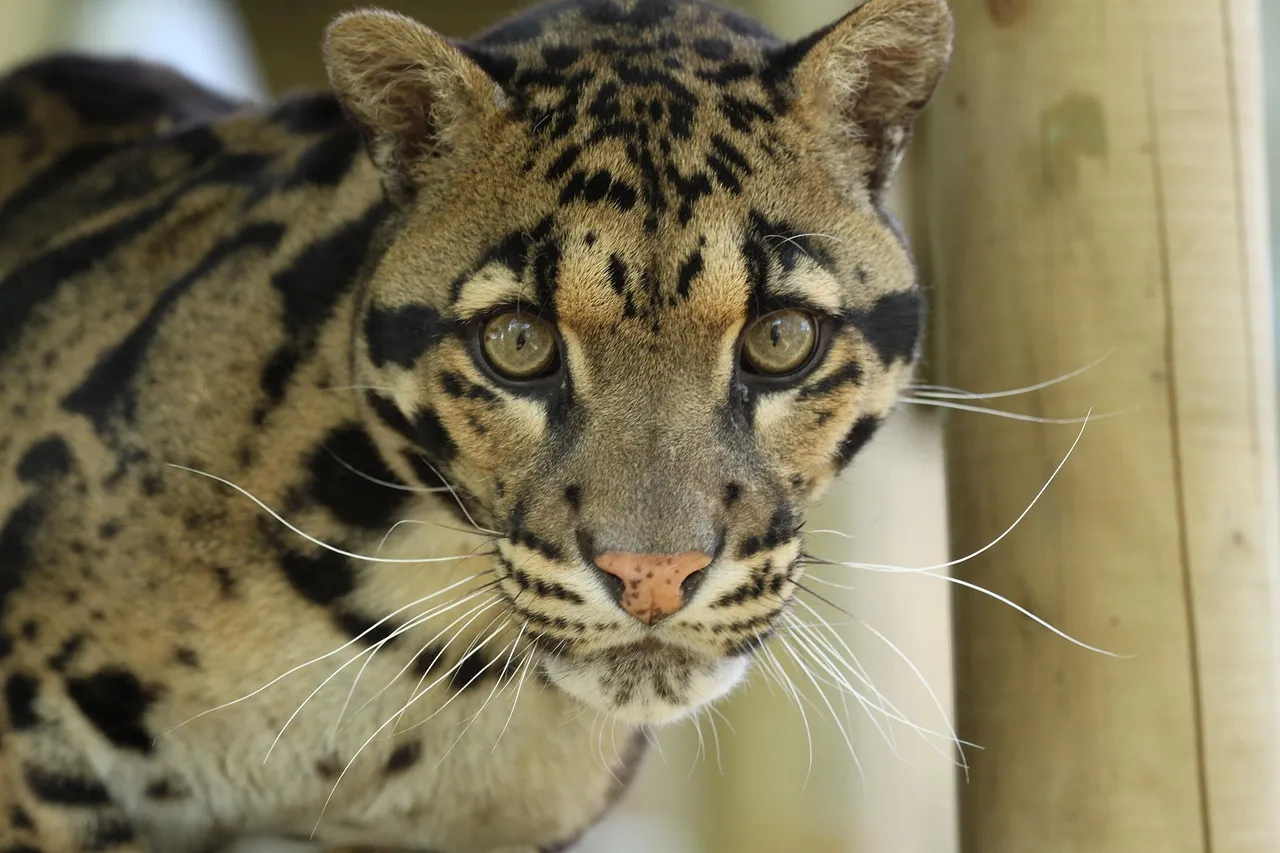
The animal is a clouded leopard (Neofelis), a medium-sized cat that spends a lot of time on trees.
Clouded leopards are a unique and interesting cat species. They have very long and sharp canines. This makes them similar to the extinct ancient Big Cat, the saber-tooth tiger(Smilodon populator).
Although not as large as Sumatran tigers or Javan Leopards, clouded leopards are predators feared by most land mammals, such as monkeys, deer, pigs, and other small mammals. They hunt in ambush, then carry their prey up trees to enjoy until nothing remains.
Want to know more details about clouded leopards? Come on, check out the full explanation below!
Getting To Know Clouded Leopard
Clouded leopard is a medium-sized wild cat species known for its skill in climbing and hanging from trees. This animal still belongs to the Felidae family, so it is closely related to tigers, lions, leopards, as well as domestic cats.
Like other cats, clouded leopards have sharp canines and claws. However, what distinguishes it is the amazing ability to climb trees—one of the best among the cat family.

Quoting from Khao Sok National Park, Thailand, clouded leopards are known as the best tree climbers among all cat species. They are able to climb with their body upside down, as well as hang using their hind legs. In fact, they can get down from trees headfirst, a technique rarely found in other wild cats.
Because it relies heavily on trees, the clouded leopard’s favorite habitat is dense, evergreen tropical rainforests. However, they can also be found in many other types of habitats such as dry forests, swamps, grasslands, and scrub.
As carnivorous animals, clouded leopards hunt a wide variety of mammals, ranging from small to large, such as squirrels, mice, hedgehogs, monkeys, deer, wild boars, as well as various types of birds.
Types of clouded leopards
Taxonomically, clouded leopards are divided into two main species, namely:
1. Continental clouded leopard (Neofelis nebulosa)
Continental clouded leopards are widespread in mainland Asia, including Bhutan, Nepal, Bangladesh, Myanmar, India, China, to Peninsular Malaysia. This species has a cloud-shaped pattern all over its body, with a larger size than the Sunda clouded leopard.
2. Sunda clouded leopard (Neofelis diardi)
Sunda clouded leopards live in the territory of the Sunda Islands, such as the islands of Sumatra and Kalimantan. The cloud pattern on the body is smaller, with the coat color tending to be more gray. Based on the distribution, the Sundanese clouded leopard is subdivided into two subspecies:
a. Sumatran clouded leopard (Neofelis diardi sumatraensis)
This subspecies lives on the island of Sumatra and the Batu Islands. They have a very arboreal nature, which means that they are more often on trees and rarely go down to the ground. This is due to the presence of Sumatran tigers that dominate land areas and can be a threat.
b. Macan dahan Kalimantan (Neofelis diardi borneensis)
Unlike its relatives in Sumatra, The Borneo clouded leopard lives without the presence of other big cats as competitors. Therefore, they often descend to the ground and become apex predators in their habitat. Their presence is very important in maintaining the balance of Kalimantan’s forest ecosystem.
Characteristics and characteristics of clouded leopards
Clouded leopards have a number of distinctive features that distinguish them from other cat species, both large cats and domestic cats. In addition to being known as an excellent tree climber, one of the main peculiarities of clouded leopards is their long and sharp canines, which are not shared by other modern cats today.

Here are the typical physical and behavioral characteristics of clouded leopards:
- The color of the plumage varies from gray-brown, pale yellow, to dark brown.
- It has a pattern of black patches shaped like clouds all over its body—a distinctive feature that is the origin of the name “clouded leopard” in English.
- The canines are very long and strong, proportional to the jaws.
- The tail is long and thick, serves as a counterweight when moving on trees.
- Short legs with large and strong claws, perfectly support the ability to climb.
- Vision is very sharp, favoring hunting activity, especially at night.
- It is arboreal, that is, it spends most of its time in trees.
- Nocturnal, actively hunting and moving at night.
- The body size is medium, with a body length of about 90 cm, not counting the tail.
- Has a solitary nature, lives alone except during the breeding season or caring for children.
- Polygamous, that is, changing partners when the mating season comes.
- Does not have a fixed breeding season; breeds all year round.
- The body weight of males can reach 23 kilograms.
- The body weight of females ranges from 11 to 21 kilograms.
In comparison, clouded leopards are about four times smaller than Sumatran tigers, but five times larger than domestic cats. Despite its not very large body, the clouded leopard remains a formidable predator and dominates its territory, especially in dense tropical forest ecosystems.
9 Interesting Facts Clouded Leopard

Known as one of the best climbers among all types of cats, the clouded leopard has a number of interesting facts that make it even more unique. Here are some interesting facts about clouded leopards:
1. Can not Roar and snore
Menurut Smithsonian’s National Zoo & Conservation Biology Institute, macan dahan tidak dapat mengaum seperti harimau atau singa. This is due to the different structure of the larynx and hyoid bones, which are not as flexible as in other large cats.
In addition, they also cannot purr in full, in contrast to domestic cats.
2. Communicate with growls, hisses and sniffs
Unable to make roars or purrs, clouded leopards communicate with growls, hisses, hissing sounds, to sniffs. This form of communication is used to mark territory, attract the attention of a partner, or signal when feeling threatened.
3. Shorter Life Expectancy Than Lions
In the wild, clouded leopards have an average life expectancy of about 12-15 years. However, if treated in captivity or controlled environments, their lifespan can reach 17 years.
This figure is classified as shorter than lions, which can live up to 16 years in the wild and even 20 years in captivity.
4. Can prey on animals larger than its body
Although its body is not as large as that of other predators such as tigers, clouded leopards are capable of preying on animals larger than it. Their prey can include Gibbons, Wild Boars, as well as medium to large primates and mammals, thanks to effective ambush techniques and incredible bite force.
5. Sexually mature at about two years of age
Clouded leopards reach sexual maturity when they are about two years old. At this age, they are already ready for breeding, with an unlimited breeding season at a certain time of the year.
6. The breeding peak occurs between December and March
Although in general clouded leopards can breed at any time of the year, in an environment of captivity or human care, the majority of the breeding process has been recorded to occur from December to March.
This is most likely influenced by environmental factors and activity patterns that are more stable under controlled conditions.
7. The female can give birth to 1 to 5 Cubs
When entering the reproductive period, the female clouded leopard is able to give birth to between one and five cubs in one pregnancy. Clouded leopard cubs will be cared for and cared for by their mother independently until they are strong enough to live alone in nature.
8. Able To Open The Mouth Up To 100 Degrees
One of the peculiarities of the anatomy of a clouded leopard lies in the ability to open the mouth very wide, that is, up to 100 degrees. In comparison, Lions can only open their mouths at about 65 degrees. This ability favors the effectiveness of the clouded leopard bite when capturing and immobilizing its prey.
9. Similar to the ancient Saber Tooth Tiger
Clouded leopards have long, strong, curved canines, which resemble the ancient saber-tooth tiger (Smilodon populator). Although not as large as the extinct Smilodon millions of years ago, this similarity in tooth structure suggests that clouded leopards inherited the characteristics of formidable ancient predators.
The Conservation Status Of Leopards
Macan dahan saat ini dikategorikan sebagai spesies yang rentan terhadap kepunahan oleh International Union for Conservation of Nature (IUCN). The two main species of clouded leopard—the continental clouded leopard (Neofelis nebulosa) and the Sunda clouded leopard (Neofelis diardi)—each have alarming statuses.
- Neofelis nebulosa (macan dahan benua) terdaftar dalam status Vulnerable (Rentan) menurut IUCN Red List.
- Neofelis diardi (Sunda clouded leopard) is included in the Vulnerable category, but some subpopulations are considered to have a higher risk locally.
In addition, clouded leopards have also been legally protected in many Asian countries, including Indonesia, Malaysia, and Thailand.
In Indonesia, the Sunda clouded leopard is listed in Appendix I of CITES (Convention on International Trade in Endangered Species), which means that any form of international trade in this species is prohibited except for scientific conservation purposes.
Cover
Clouded leopards are not just wild cats that climb trees. It is a symbol of the unique and rich biodiversity of the tropical forests of Southeast Asia. With outstanding physical characteristics, distinctive behaviors, and an important role as a predator in the ecosystem, the presence of clouded leopards is vital to the balance of nature.
Unfortunately, various threats continue to lurk for his survival. Therefore, it takes awareness and real action from all parties—from governments, conservation agencies, to the general public—to protect this species from extinction.
Let’s take care of the forest and all the creatures that depend on it, including this amazing clouded leopard!
Sources and references:
- Clouded Leopard (Macan Dahan). dari Smithsonian’s National Zoo & Conservation Biology Instistute. https://nationalzoo.si.edu/animals/clouded-leopard
- Clouded Leopard: Neofelis nebulosa, Neofelis diardi. San Diego Zoo Wildlife Alliance Animals & Plants. https://animals.sandiegozoo.org/animals/clouded-leopard
- Clouded Leopard. Khao Sok National Park Thailand. https://www.khaosok.com/national-park/clouded-leopard/#:~:text=The%20legs%20are%20quite%20short,branches%20with%20their%20hind%20feet.
- Clouded Leopard. World Land Trust. https://www.worldlandtrust.org/species/mammals/clouded-leopard/#:~:text=Habitat,of%20dry%20and%20deciduous%20forest.
- Featured image: Ilustrasi macan dahan (pixabay.com/dannynic)

