Silakan atur halaman utama di Settings → Reading → Your homepage displays
dan pilih A static page, lalu pilih halaman dengan template Home.
BioAcoustic harmony for conservation: stories from SIMBA 2025
Acoustic recorders are one of the tools that can be used to monitor biodiversity, although their use is still relatively rare. At the end of last May, I had the opportunity to attend Symposium of Indonesia-Malaysia Bioacoustics 2025 (SIMBA 2025) di Universiti Terengganu Malaysia.
The event was organized by the University of Terengganu Malaysia in collaboration with K. Lisa Yang Center for Conservation Bioacoustics, Cornell Lab of Ornithology, Cornell University dan Universitas Gadjah Mada. This activity is a forum to build a BioAcoustic network and exchange knowledge for BioAcoustic practitioners, especially in Indonesia and Malaysia.
Group discussion discusses BioAcoustic guide for beginners (Simba 2025 committee)
This is my second time participating in SIMBA, after previously participating in SIMBA 2023 held at Gadjah Mada University. On this occasion, I represent Yayasan Initiasi Alam Rehabilitas Indonesia (YIARI) to deliver the interim results of our research on the sound response of Bornean orangutans (Pongo pygmaeus) and kelawo Gibbons (Hylobates albibarbis) to anthropogenic sounds in the Pematang Gadung Village Forest of West Kalimantan.
This experience was a very valuable experience for me because I was able to share the results of the hard work of the Pematang Gadung Village Forest Management Institute (LPHD) and YIARI in maintaining the Pematang Gadung Village Forest and get direct input from BioAcoustic experts. Not only that, I also had the opportunity to meet old friends and new friends of bioacoustic researchers with their equally interesting research and opportunities to learn and collaborate in the future.
Selfie with SIMBA 2025 participants from various countries (Ashraft Yusni)
The keynote speaker at the symposium was Dena Jane Clink from K. Lisa Yang Center for Conservation Bioacoustics, Cornell Lab of Ornithology, Cornell University dan Asman Adi Purwanto dari BISA Indonesia. The speaker delivered about the development of the use of BioAcoustic recording devices as an important tool in efforts to protect biodiversity. This method is a non-invasive method that allows large-scale data collection to understand biodiversity, including species distribution, behavior patterns, and threats to ecosystems.
Speakers emphasised the importance of building networks to blend scientific research and conservation action in harmony. Two key emerging initiatives— The BEAT program and SIMBA-are platforms for BioAcoustic practitioners to address challenges such as lack of access to technology and knowledge by fostering collaboration between researchers, local communities, NGOs and governments. This initiative actively plays a direct role in species conservation efforts in Indonesia and Malaysia.
Group photo of SIMBA 2025 participants at Wetland School of Setiu (SIMBA 2025 Committee)
In addition to participating in the symposium, I had the opportunity to visit the Wetland School of Setiu, which is a community empowerment program initiated by UMT. Here I learned about the culture of the Setiu people, learned to make satar (typical Terengganu snacks) and made woven mats from sea pandan accompanied directly by Setiu’s native mothers. Uniquely, the Setiu people have a fish listener culture that has been passed down from generation to generation to help find fish. Unfortunately, very few people still have this ability.
Photo with the organizing committee of SIMBA 2025 and all participants of simba 2025 (Universiti Terengganu Malaysia)
Through this short article, I share a pleasant and valuable experience for me. Thanks to K. Lisa Yang Center for Conservation Bioacoustics, Cornell Lab of Ornithology dan Universiti Terengganu Malaysia atas pengalaman yang berharga serta memberikan wadah bagi para pejuang bioakustik untuk belajar dan bertumbuh. See you next time!
Featured Image: Kennedi delivers a presentation (Muhajir Hasibuan)
Recovering from the wound, Marisa was sent home to TANAGUPA
PRESS RELEASE
The West Kalimantan Natural Resources Conservation Center (BKSDA) Regional Conservation Section I Ketapang together with the Gunung Palung National Park Center (TANAGUPA) and the Indonesian rehabilitation nature initiation Foundation (YIARI) released one individual orangutan (Pongo pygmaeus) at Bukit Daun Sandar, perfect RPTN II, Gunung Palung National Park, Kecamatan Laur River, Ketapang Regency on Thursday (14/11).
This 6 – year-old female Orangutan was previously rescued from a case of human-orangutan conflict by a joint Wildlife Rescue Unit (WRU) team of the West Kalimantan BKSDA, Tanagupa and YIARI centers in one of the gardens owned by residents in Riam ASAP Village, Sukadana District, North Kayong Regency on July 10, 2024. Marisa was rescued after her mother was found dead in the residents ‘ garden. Based on the results of necropsy by YIARI’s medical team, the death of her mother is suspected to be caused by an infection due to a deep wound in her back. Meanwhile, Marisa was also found with severe injuries to her right leg. This wound is thought to have been caused by a sharp weapon.
Seeing Marisa’s condition, the West Kalimantan Regional Disaster Management Agency (BKSDA) decided to send her to the YIARI Orangutan Rescue Center in Sungai Awan Kiri Village, Muara Pawan Sub-District, Ketapang Regency for further examination and treatment. After four months of intensive care under the supervision of a team of medical and veterinary nurses at the yiari orangutan Rehabilitation Centre, Marisa was declared recovered and ready to be returned to her natural habitat.
Pemeriksaan Marisa sebelum dilepasliarkan (Muffidz Masum | YIARI)
Yiari’s medical team coordinator, Fina Fadiah, confirmed that Marisa’s wounds had healed and she could be immediately returned to her habitat. “Currently, Marisa’s wounds have healed and after a series of examinations, we believe it is time for Marisa to be returned to her habitat. When he was rescued, the wound on his leg was quite severe. There are open fractures that are already infected and festering. The wound on his right leg was also deep enough to penetrate into the muscles and bones. Fortunately, thanks to the hard work of all the teams, now the wound has recovered and Marisa is ready to be sent back to TANAGUPA,” he explained. He also explains this recovery not only focused on the physical, but also with his psychic. “We take care of Marisa by keeping in mind the principles of animal welfare. We are working to reduce her stress by minimizing direct contact with Marisa,” added Fina.
To prevent a similar conflict from happening again, these orangutans were released into areas far from settlements and community gardens. TANAGUPA was chosen as the place of release because based on the location of the rescue point, Marisa is estimated to come from the area around the TANAGUPA border. In addition, Daung Sandar Resort is also considered quite good, because based on the results of a survey conducted by the TANAGUPA and YIARI halls, the amount and type of feed is still quite high. The Status of the area as a National Park also further guarantees Marisa’s safety in the future. This location is surrounded by a river which can be a natural barrier to prevent orangutans from returning to the community garden.
After traveling for 6 hours from the yiari Orangutan Rehabilitation Center, the team managed to reach the release point. Marisa was released in the TANAGUPA area. This success certainly cannot be separated from the support of the community who participated in helping to bring orangutans into the National Park area.
Perjalanan menuju lokasi pelepasliaran (Muffidz Masum | YIARI)
Chairman of YIARI, Silverius Oscar Unggul, expressed his appreciation for the collaboration between the government, Non-profit organizations (NGO), and the community in efforts to preserve orangutans and their habitat. Silverius stressed the importance of a shared role in maintaining this sustainability. “We invite all stakeholders, especially the community, to be at the forefront of wildlife conservation efforts, especially orangutans and their habitats. The discovery of orangutans in the community garden area is a reminder of the importance of strengthening cooperation, especially with communities living around orangutan habitat areas. If people who live on the border of orangutan habitat can live harmoniously side by side, orangutans can be preserved and enjoyed by future generations.”
“This is in line with YIARI’s vision to create a world where humans and animals coexist in a healthy ecosystem. This also supports the direction of the Minister of Forestry, Raja Juli Antoni, in his speech at the handover ceremony for the position of Minister of Forestry which emphasizes that we all have the spirit of how to maintain the balance of life with nature,” he concluded.
Himawan Sasongko, head of the TANAGUPA Center, said: ‘the release of this young orangutan is a new form of hope after losing its mother due to conflict with humans. We are committed to ensuring it can live independently in its natural habitat. And it is our shared responsibility to replace the role of the mother orangutan by ensuring the recovery of physical and psychological health and behavior in the Rehabilitation Center and then provide a place to live that can ensure its survival, but keep in mind that no matter how great and advanced our knowledge, we will never, ever again be able to replace mother in nature. Through this release, we hope the orangutans can rediscover a new life in their natural habitat and become a symbol of the importance of harmony between humans and Wildlife.’
About YIARI
Yayasan Initiasi Alam Rehabilitasi Indonesia (YIARI) is a non-profit organization engaged in the conservation of primates in Indonesia based on rescue, recovery, release, and post-release monitoring efforts. YIARI is also committed to provide protection of primates and their habitats with a holistic approach through multi-stakeholder cooperation to realize a harmonious ecosystem between habitats, animals, and humans.
For more information, please contact:
Yiari: +62 821-5346-2720 (Heribertus Suciadi, media and Communication Manager of YIARI)
West Kalimantan Marine Conservation Cooperation: Joint Efforts To Protect Coastal Ecosystems
Cooperation in the management of coastal and marine resources plays a crucial role in maintaining ecosystem balance while supporting environmental sustainability. Coastal and marine areas store biodiversity, as well as being the main source of livelihood for the people who live around them.
Unfortunately, pressures from overexploitation, the effects of climate change, and various other human activities are increasingly threatening the sustainability of these resources. Therefore, an integrated management strategy is needed, based on cross-sector collaboration, and involving various stakeholders.
In this case, the synergy between government agencies, conservation organizations, and local communities is a key element to ensure the sustainability of the coastal environment can be maintained sustainably.
One example of this collaborative effort is the signing of a cooperation agreement between Yayasan Initiasi Alam Rehabilitasi Indonesia (YIARI) and Balai Pengelolaan Sumberdaya Pesisir dan Laut (BPSPL) Pontianak, which aims to strengthen the protection and management of coastal resources more effectively.
When Is This Activity Carried Out?
Atmosphere of cooperation agreement signing (BPSPL Pontianak)
The signing of the cooperation agreement was held on February 10, 2025 between YIARI, BPSPL Pontianak, Faculty of Agriculture, University of Tanjungpura, and Ketapang Conservation WeBe Foundation.
This collaboration aims to strengthen environmental conservation efforts, encourage sustainable management of Natural Resources, and increase the involvement of academics and communities in the preservation of coastal and aquatic ecosystems in West Kalimantan.
The signing ceremony took place in a hybrid format, combining physical presence and online participation. Some participants attended directly at the Bpspl Pontianak office, while others followed the procession through the Zoom Meeting platform.
This Format allows for greater participation, encourages transparency, and strengthens cross-sector collaboration. Through this cooperation, it is expected that various programs will be born that have a real impact in maintaining ecosystem sustainability and improving the welfare of coastal communities.
Purpose of Yiari cooperation agreement with BPSPL Pontianak
The process of signing a cooperation document between YIARI and BPSPL (BPSPL Pontianak)
Through this agreement, the four institutions are committed to strengthening conservation efforts and sustainable management of Coastal Resources in the West Kalimantan region. The main objectives of this cooperation are:
1. Strengthen effective networking and collaboration
Synergy between government, academia, and conservation organizations is an important element in preserving coastal and marine ecosystems. Through this agreement, communication and coordination across sectors are expected to be stronger, so as to be able to face various challenges in managing natural resources more effectively and integrated.
With a sea area of about 3.25 million km2, Indonesia holds an extraordinary marine biodiversity. This agreement aims to strengthen various conservation initiatives in order to run sustainably, maintain ecosystem balance, while ensuring the economic and social sustainability of coastal communities in the long term.
3. Improving Marine Resource Management in West Kalimantan
The waters of West Kalimantan are an important habitat for a number of rare and protected species, such as turtles, dugongs, and various types of reef fish. This cooperation is expected to encourage the implementation of scientific and adaptive management systems, emphasizing practices oriented to environmental sustainability.
4. Preserving Natural Wealth
Yiari and BPSPL commitment to safeguard the West Kalimantan sea (BPSPL Pontianak)
Threats to marine ecosystems, such as pollution, destruction of coastal habitats, and destructive fishing activities, are increasing.
This agreement is a concrete step in strengthening efforts to preserve marine biodiversity, so that future generations can still enjoy and utilize Indonesia’s natural resources responsibly and sustainably.
Cooperation Implementation Plan
In order for this cooperation agreement to be implemented effectively and have a real impact, the four institutions involved have designed an implementation plan that includes a number of strategic programs.
The plan is based on collaborative, science-based, and sustainability-oriented principles. The main steps that will be carried out include:
1. Training and counseling
This Program aims to increase the capacity of coastal communities and other stakeholders in managing marine resources sustainably. Activities that will be carried out include conservation training, the application of environmentally friendly cultivation techniques, as well as the introduction of sustainable fishing practices that support ecosystem balance.
2. Research and development
To ensure every conservation measure is based on accurate data, a series of scientific studies will be conducted on the condition of coastal and marine ecosystems in West Kalimantan. The research includes monitoring populations of protected species, identification of threats to marine habitats, as well as preparation of Technical Recommendations for better management.
3. Strengthening policies and regulations
In an effort to strengthen environmental governance, this cooperation also includes support for the formulation and implementation of policies based on scientific data. In addition, there will be monitoring of the implementation of conservation regulations to ensure compliance at the local and regional levels.
4. Increased Public Awareness
Community education is an important aspect in maintaining sustainability. Through various campaign activities, socialization, and dissemination of information, this program aims to raise public awareness about the importance of preserving marine ecosystems, as well as the benefits of managing coastal resources wisely and sustainably.
Marine Ecosystems, Shared Responsibility
The synergy between BPSPL Pontianak, Faculty of Agriculture, University of Tanjungpura, YIARI, and Ketapang Conservation WeBe Foundation is a strategic step in maintaining the sustainability of coastal and marine natural resources.
Through this cross-sector collaboration, the utilization of marine resources is expected to be done wisely, without compromising the sustainability of the ecosystem. Various initiatives such as scientific research, community assistance, and the application of environmentally friendly technologies are the main pillars in building a sustainable resource management model.
This joint effort not only focuses on ecological aspects, but also emphasizes the importance of a balance between conservation and the well-being of coastal communities. Thus, the marine ecosystem is maintained, while providing economic benefits for current and future generations.
In addition, education and capacity building activities for fishermen and local communities are important elements in strengthening marine-based economic resilience. This approach is expected to create coastal communities that are independent, resilient, and concerned about the preservation of the marine environment.
Featured image: the initiator team of yiari and BPSPL cooperation for West Kalimantan marine conservation (BPSPL Pontianak)
What is a slow loris? Characteristics, behavior, Habitat, type, to the threats faced
Have you heard of Loris? Primates with big charming eyes and their barely audible slow motion.
However, behind its uniqueness, the slow loris faces serious threats that threaten its survival in the wild. From illegal hunting to habitat degradation, every day becomes a struggle for the survival of this species.
This article will discuss in full about Loris-ranging from physical characteristics, natural habitat, diet, type, to various threats that continue to loom. Come on, let’s explore the life of the big-eyed who keeps a myriad of these ‘miracles’!
Loris Introduction
Lorises are small primates belonging to the genus Nycticebus, part of the Lorisidae family.
In English, this animal is known as slow loris because of its very slow and cautious movement. The body size of the loris is relatively small, generally no more than 30 centimeters.
As nocturnal animals, Loris are active at night. They spend most of the day sleeping behind dense foliage or hiding in tree crevices. Its slow and silent movements become a natural mechanism to avoid predators and keep their presence Hidden.
Slow loris are widespread in various regions of Southeast Asia, including India, Vietnam, the Philippines, Indonesia, and other countries that have tropical forest ecosystems. Their existence is highly dependent on the preservation of forests, which are the main habitat.
Distinctive features and behavior
One of the most striking features of the loris is a pair of large, round eyes that exude an adorable impression. However, the function of these eyes is more than just appearance. As nocturnal animals, lorises rely on their sharp vision in the dark to find food and avoid threats at night.
Very slow and careful movements of the loris are not without reason. This is a natural adaptation to avoid predators. By moving slowly, slow loris do not make sounds or conspicuous movements that could invite danger. In addition, its strong grip allows the loris to hang on tree branches for long periods without fatigue, an important ability in arboreal habitats.
Another peculiarity of slow loris that is rarely found in other primates is the ability to produce poison. The glands in the elbow part of the loris secrete toxic substances that, when mixed with saliva, become an effective defense weapon. This poison can be used to protect themselves from predators and to paralyze small prey.
Behaviorally, slow loris are solitary and highly territorial animals. They prefer to live alone, except during the breeding season or when caring for offspring. One of their unique defense mechanisms is the ability to ‘play dead’-a complete stop of movement when feeling threatened, a strategy that can outwit predators.
Habitat Of Slow Loris
Slow loris inhabit the dense humid tropical forests of the Southeast Asian region, including Indonesia, Thailand and Malaysia. They are found in various types of forests, ranging from lowland forests to mountain forests with cooler temperatures.
These primates are very dependent on the presence of a dense tree canopy as a shelter and activity. Shady canopies not only provide protection from predators, but also become the main route for Loris to move and find food without the need to go down to the ground. Therefore, habitat loss due to deforestation and forest fragmentation is a serious threat to their survival.
Slow Loris Food
Lorises are omnivores with a diverse diet, depending on the species and habitat in which they live. Its natural Diet includes insects, bird eggs, small reptiles, as well as various fruits and tree sap. This flexibility reflects the adaptability of Loris to environmental conditions, which allows them to maximize their intake of nutrients available in the wild.
One very important food source for lorises is tree sap. This sap is rich in nutrients and is relatively easy to find in tropical forest habitats. Lorises use special sharp teeth (known as dental Combs) to scrape the surface of the tree bark and stimulate the release of SAP. After that, they lick the sweet liquid slowly.
In addition, lorises also eat insects and other small animals, which provides a high protein intake. In addition to being important for its nutritional balance, this behavior also contributes to the control of insect populations in forest ecosystems. By selectively preying on insects, lorises play a significant ecological role as natural biological controllers.
Lorises are known to be very selective in choosing food. They do not carelessly consume whatever is available, but rather show a preference for a certain type of food that best suits their nutritional needs. This habit is part of a smart survival strategy in a constantly changing environment.
Types of slugs in Indonesia
Indonesia is home to several species of slow loris, each of which has unique and interesting characteristics. Types of slugs in Indonesia include:
1. Sumatran slow loris (nycticebus coucang)
Nycticebus coucang | Bobby Muhidin (YIARI)
Sumatran slow loris is known as one of the slow loris species with the largest body size.
Its body length can reach from 27 to 38 centimeters. The main distinctive feature of this Loris is its dense fur of varied colors, ranging from grayish-brown to reddish-brown, usually decorated by a contrasting stripe on the back.
His face is striking with a dark ‘mask’ that runs from eye to eye, as well as a pair of very prominent large eyes. Sumatran Loris also have special teeth that are used to scratch the bark of trees to get the sap out.
Geographically, this species is distributed on the island of Sumatra, Peninsular Malaysia, and parts of the southern regions of Thailand. They inhabit lowland tropical rainforests, but can also be found in secondary forests and mangrove forests that still have dense vegetation.
2. Kukang Jawa (Nycticebus javanicus)
Nycticebus javanicus | Reza Septian (YIARI)
Javanese slow loris is an endemic species found only on the island of Java. Its body size is smaller than that of the Sumatran Loris, and its fur tends to be darker, serving as a natural camouflage when on the move at night.
This species is very territorial and spends almost its entire life on trees. They rarely descend to the ground, since arboreal movement is safer from predators. The diet of Javanese Loris consists of insects, tree sap, and fruits, with a strong tendency towards the consumption of SAP as the main source of nutrition.
3. Kukang Kalamasan Kalimantan (Nycticebus menagensis)
The Kalamasan slow loris, also known as the Philippine slow loris, is a species of slow loris that inhabits coastal areas north and east of Borneo, as well as the Sulu Islands in the Philippines. Formerly, this species was considered a subspecies of the Bornean slow loris (Nycticebus borneanus), but recent genetic and morphological studies have confirmed its status as a separate species.
The physical characteristics of the Kalamasan Loris resemble those of other lorises, with dense gray to brown fur that helps to camouflage itself among the trees. It is relatively small in size, with an average body length of just under 25 centimeters. Like other lorises, they are nocturnal and rely on their sense of smell and sight to find food.
4. Kukang Kayan (Nycticebus kayan)
Nycticebus kayan | Jmiksanek (Wikimedia)
Kayan slow loris is one of the slow loris species that has only been scientifically identified in the last decade. The name of this species is taken from the Kayan River in North Kalimantan, one of the main regions in its natural distribution.
The distinctive feature of this slow loris lies in its unique facial pattern, which is the presence of a firm white line that runs from the eyes towards the mouth, giving it a distinctive contrasting appearance. Its coat color tends to be darker than other slow loris species, serving as camouflage in tropical forest habitats.
The distribution of the Kayan Loris covers the central to northern regions of the island of Borneo, including Brunei, Sarawak, Sabah, East Kalimantan, to the Mahakam River and Rajang River. These species inhabit a variety of forest ecosystem types, ranging from lowland to mountainous, and depend on the preservation of dense forests as shelter and foraging.
5. Nycticebus bancanus
Nycticebus bancanus | Denny Setiawan (YIARI)
The Bangka slow loris is a species of slow loris that is geographically restricted to the island of Bangka, off the east coast of Sumatra. Living in a relatively isolated island environment, this species developed several unique adaptations.
Physically, the Bangka Loris is smaller than its mainland relatives, with feathers that tend to be paler and denser. Their Diet is similar to that of other lorises, consisting of fruits, tree sap, as well as small insects.
Due to habitat limitations and threats from human activities, this slow loris is a species that is prone to environmental stress and requires special conservation attention.
6. Bengal slow loris (Nycticebus bengalensis)
Although not an endemic species of Indonesia, the Bengal slow loris is found in some western parts of the Indonesian territory, especially those bordering mainland Southeast Asia such as Myanmar, Laos, and Thailand.
These lorises have a larger body and thicker fur, which is an adaptation to environments with lower temperatures in mountainous regions. The color of the coat varies from light brown to gray, with a characteristic facial pattern resembling a dark “mask”.
The pattern of foraging is not much different from other species of lorises—they consume fruits, tree sap and insects as the main part of their diet.
7. Kukang Kalimantan (Nycticebus borneanus)
Bornean slow loris is an endemic species of slow loris found exclusively on the island of Borneo. Previously, this species was often classified as part of the Sumatran slow loris or slow loris Menagensis. However, recent genetic and morphological analyses have established it as a stand-alone species.
The characteristics of the Bornean Loris include a medium body size with a coat color that varies between grayish brown to reddish, as well as a facial pattern that resembles other Loris species, but with smoother lines and different color contrasts.
They consume insects, fruits, and tree sap, and rely heavily on the existence of Borneo’s intact tropical forests for survival.
Protection Status Of Slow Loris
The loris is one of the primates facing a serious threat of extinction. Berdasarkan Daftar Merah IUCN (International Union for Conservation of Nature), sebagian besar spesies kukang masuk dalam kategori Rentan (Vulnerable) hingga Terancam Punah (Endangered). The condition is compounded by massive poaching and widespread habitat destruction.
The two biggest threats to the loris ‘ survival are illegal trade and deforestation. Loris are often hunted to be exotic pets because of their cute appearance. Not infrequently, the capture process is carried out brutally, leading to serious injuries and even death. In addition, Loris body parts are also used in traditional medicine practices in some cultures, which further encourages hunting numbers.
To protect this species, various international and national regulations have been implemented. Kukang termasuk dalam daftar Apendiks I CITES (Convention on International Trade in Endangered Species of Wild Fauna and Flora), yang berarti segala bentuk perdagangan internasional spesies ini dilarang secara ketat.
In Indonesia, slow loris are protected by Law No. 5 of 1990 on the Conservation of living Natural Resources and ecosystems, and Government Regulation No. 7 of 1999 on the preservation of plant and animal species. Unlicensed hunting, possession or trade of Loris is illegal and punishable by criminal penalties.
The threat posed by mosquitoes
Here are some of the main threats faced by slugs:
Illegal trade
Lorises are often victims of the illegal pet trade. His face is considered adorable making it the main game of the exotic animal market. Many slow loris are caught from the wild in a cruel way-their fangs are cut off without anesthesia so as not to bite, which, on the contrary, leads to infection to death.
This trade not only violates the law, but also damages the natural population of Loris.
Use in traditional medicine
In some areas, Loris are believed to have medicinal value. His body parts were used as ingredients in traditional potions to cure various diseases. This practice reinforces black market demand and aggravates poaching.
Habitat loss and fragmentation
Activities such as clearing land for agriculture, logging, and infrastructure development have resulted in severe damage to the slow loris ‘ habitat. The loss of the tree canopy that is the main place of life causes the loris to lose food sources and shelter.
In addition, habitat fragmentation leaves slow loris populations isolated, which decreases genetic diversity and magnifies the risk of extinction.
Negative interactions with humans
When their habitat is disturbed and adjacent to settlements, lorises are sometimes considered pests. Many were captured, killed, or driven from their natural habitat. This negative interaction often occurs due to people’s ignorance of the ecological value of Loris.
Ignorance and lack of public awareness
The low level of public knowledge about the status of Loris as protected animals causes many people to still buy or maintain Loris illegally. The limited education campaign and the lack of legal socialization also worsened the situation.
Together To Preserve The Natural Heritage
At the end of our journey to know Loris, one thing becomes even more evident: their existence is not just a biological treasure, but also an important indicator of the health of our forest ecosystems. Loris are an indispensable part of the Living network that maintains the balance of the universe.
Any individual slow loris disappearing from the forest is a sign that the ecosystems that support our lives are being disrupted. Protecting lorises means preserving tropical forests and all the life that depends on them—from soil microorganisms to giant trees, from rare birds to humans.
The actions we take today will determine the future of Loris and the quality of the environment we will pass on to future generations. Now is the time for us to join hands—communities, governments, conservation agencies, and businesses—to strengthen our commitment to nature conservation.
Let’s make sure that the voice of our forests will not disappear in silence. Let the sound of life continue to flow, and let the slow loris continue to swing between the branches of trees, becoming a symbol of hope and the sustainable continuation of nature!
Featured image: Nycticebus javanicus | Denny Setiawan (YIARI)
Forest security with kph Batutegi: mission to protect the heart of Sumatra’s forests from encroachment
Batutegi protected forest located in Lampung is one of the most vital forest areas on the island of Sumatra. This area is a natural habitat for a variety of flora and fauna, including endemic species found only in Indonesia.
However, the threat of increasingly massive forest encroachment has the potential to damage the ecological balance and disrupt the survival of species in it. If not treated immediately, this damage can have long-term impacts on environmental sustainability.
To overcome this problem, Batutegi Forest Management Unit (KPH) together with Yayasan Initiasi Alam Rehabilitasi Indonesia (YIARI) implemented a technology-based conservation approach. Joint teams in the field continue to carry out security and surveillance against potential destruction.
What is the strategy and implementation like? Check out the following description!
Getting To Know Batutegi Forest Management Unit
Batutegi protected forest spans an area of 58,174 hectares in Lampung Province, covering three districts: Tanggamus, West Lampung, and Central Lampung. In addition to functioning as a priority watershed, this area also stores high biodiversity which has outstanding ecological and conservation value.
Since 2008, YIARI has been actively conducting conservation activities in the area, with an initial focus on wildlife protection as well as habitat rehabilitation. Regular patrols and monitoring of animal populations are part of the protection effort.
The collaboration between YIARI and kph Batutegi was further strengthened as the threat of forest encroachment increased. In response to this, in 2025, YIARI continues the forest Security program with kph Batutegi as a form of long-term commitment in maintaining sustainable forest ecosystems.
With the support of modern technologies such as GPS-based monitoring systems, surveillance drones, and rapid reporting applications, teams in the field are able to respond more efficiently to potential threats. This strategy not only reduces the number of encroachments, but also strengthens the ecological function of forests as a buffer for life and sustainable biological resources.
Tracing the trail of encroachment in the Rindingan Forest
Pieces of wood left over from illegal logging in Batutegi protected forest (Rh | YIARI team)
Understanding the conditions and threats on the ground is a crucial first step in efforts to preserve forests. One of the main areas of concern is the Rindingan core block, a strategic conservation area in the Batutegi protected forest.
This area is not only an important habitat for a variety of rare species, but also provides vital ecosystem services to the surrounding environment.
Unfortunately, the Rindingan core block is facing heavy pressure due to ongoing illegal encroachment activities. Unlicensed land clearing, illegal logging, and hunting disrupt the natural balance and accelerate the destruction of ecosystems.
If left unchecked, the impact can be far-reaching: from disruption of water sources, to a decline in biodiversity, to the destruction of ecological systems that sustain the lives of local communities.
In response to these conditions, KPH Batutegi and YIARI continue to strengthen forest security efforts. One concrete form of this commitment is realized through joint patrols that are carried out periodically.
On January 22, 2025, a joint team consisting of Forest Police (Polhut) KPH Batutegi and yiari field staff conducted intensive patrols in the Rindingan core block.
The rugged terrain and limited access did not dampen the team’s enthusiasm to reach areas prone to encroachment in order to conduct data collection and direct observation of forest conditions.
Polhut KPH Batutegi and Yiari team found a wild hut with a Blue Roof in the middle of the Batutegi protected forest encroachment area (Rh | YIARI team)
Patrol results show, some areas have been damaged due to illegal activities. The team found a number of evidence such as wild huts built clandestinely, traces of heavy vehicles, the remains of logged wood, as well as land that began to be cleared without official permission.
These findings confirm the practice of encroachment is still a real threat and urgent to be addressed immediately.
Surveillance and patrolling are therefore not only important as preventive measures, but also as a form of consistent law enforcement.
Concrete and sustainable measures are needed so that the preservation of the Batutegi protected forest, especially the Rindingan core block, can be maintained for future generations.
Technology and Rapid Action in Forest security
To respond effectively to the field findings, the patrol team conducted data collection on the affected areas while immediately taking measurable security measures. Armed with the support of advanced monitoring technology, the surveillance process is now carried out more systematically, accurately, and responsively.
One key technology being leveraged is Global Forest Watch—GFW)-a satellite imagery-based platform that enables real-time detection of forest cover changes.
With this system, encroachment activities can be monitored early on, so the team can directly direct patrols to vulnerable points.
Top view of the area affected by encroachment in the Batutegi protected forest (Rh | YIARI team)
To reach areas that are difficult to access, the team also operates drones that provide a thorough visual overview of the forest conditions from the air.
Meanwhile, the SMART Patrol application is used to record and analyze findings in the field. The Data collected through this application becomes an important basis in decision making, from determining patrol patterns to formulating follow-up strategies.
The use of technology not only accelerates the response to encroachment, but also allows for a more comprehensive evaluation of the effectiveness of forest safeguards. This data-driven approach is expected to reduce the risk of damage while supporting sustainable and adaptive long-term conservation planning.
A step in protecting the environment
The joint patrol carried out on January 22, 2025 is one of the important steps in continuing efforts to protect the Batutegi protected forest habitat.
This activity not only aims to stop the practice of encroachment, but also becomes an integral part of the grand strategy in preserving forest ecosystems.
However, habitat protection does not stop at patrols and enforcement alone. Once the points of encroachment have been identified, the next stage is the restoration of the affected ecosystem. Rehabilitation processes-such as replanting trees on open land—are becoming an important component in improving the structure of forests and restoring their ecological function.
Moreover, community involvement around forest areas is key in creating sustainable protection. Education and empowerment of local communities continue to be carried out so that they not only understand the importance of preserving forests, but also have alternative livelihoods that do not depend on illegal exploitation of forest resources.
Protect The Forest, Protect Life
Protecting Batutegi protected forest is not a momentary effort, but a long-term commitment to ensure the sustainability of the ecosystem and the lives that depend on it. These efforts cover a wide range of aspects—from routine patrols, to the implementation of monitoring technology, to the empowerment of local communities as the vanguard of preservation.
KPH Batutegi, YIARI, and other stakeholders continue to strengthen synergy and collaboration. This cross-sectoral collaboration is a strong foundation in preserving the ecosystem as a whole.
However, protecting the forest is not only the task of those on the front lines. This is a shared responsibility. Every individual has a role, no matter how small, to support forest conservation. Some simple steps that can be done include:
Disseminate information about the importance of forest conservation to people around.
Support the use of environmentally friendly and sustainably produced products.
Reduce paper consumption by choosing digital documents or using recycled paper.
Participate in tree planting activities or support local reforestation and conservation programs.
Every small step has a big meaning for the future of our forests. Do not let the practice of encroachment continue to damage such a precious natural heritage. Now is the time to move together—taking care of the forest means taking care of life itself!
Featured image: a blue illegal hut in the middle of the Batutegi protected forest encroachment site
Editor: Hasna Latifatunnisa
Loris cystotomy surgery: removal of stones from Shuri’s bladder
Lying weak in the action room, a male Javanese slow loris named Shuri seemed to calm down under the influence of anesthesia.
But despite the calm, his body was struggling with a serious condition—two fairly large stones lodged in his bladder. Such stones, if not treated immediately, can provoke dangerous complications that threaten his safety.
Shuri is not a young sloth. He is among the elderly slow loris individuals who are under care at the Indonesian rehabilitation nature initiation Foundation (YIARI). In a routine X-Ray examination, there were two stones in Shuri’s bladder. This condition requires immediate medical action through a cystotomy surgical procedure, which is surgery to remove stones from the bladder.
Then, where did the stone inside Shuri’s bladder actually come from? Come on, check out the further explanation below!
What Is Cystotomy Surgery?
To deal with Shuri’s condition, YIARI’s medical team performed a cystotomy, a surgical procedure performed to remove stones from the bladder.
This surgery is also common in other animals—even humans—when bladder stones are already large and cannot be removed naturally.
According to drh. Imam Arifin, a veterinarian who handles Shuri directly, cystotomy becomes the only best option in this case.
“Cystotomy surgery means bladder surgery on Loris. The goal is to take the stone, because in Shuri’s bladder two large stones have formed,‘ he explained.
drh. Imam Arifin performed a cystotomy operation on Shuri (Rendi Afandi | YIARI)
If they are not removed immediately, the stones can disrupt the voiding process, cause pain, and in the long term provoke infections up to organ damage.
“If left unchecked, more serious complications can arise. That is why fast and precise action is needed,’ added Imam.
Cystotomy surgery is not done carelessly. This procedure requires careful preparation because Loris include animals that are very sensitive to stress. Even a slight overpressure can drastically affect their physiological condition.
Therefore, before the surgery is performed, the medical team must ensure that Shuri is stable and strong enough to undergo anesthesia as well as surgery.
Operation process: two stones were successfully removed from Shuri’s bladder
After being confirmed to be in stable condition, Shuri is scheduled to undergo surgery on January 16, 2025. Despite his no longer young age, this male slow loris showed a fairly good body response ahead of the procedure.
That morning, the action room at the yiari facility was specially prepared. All sterile instruments, anesthetic drugs, and veterinary medical support have been prepared. Shuri was carefully positioned, and the process of total anesthesia was carried out so that she did not feel pain during the operation.
“During the operation, Shuri seemed to be sleeping peacefully. This is very important to avoid excess stress, because Loris are very sensitive to pain and pressure,” explains drh. Priest.
Surgery is performed directly by drh. Imam Arifin, assisted by several other medical personnel. The operation went smoothly, two stones were successfully removed from Shuri’s bladder. The stones have a flattened shape and are white, exactly as the previous X-Ray showed.
The size of the stone is quite large when compared to the size of Shuri’s body. This further confirms the existence of the Stone has the potential to seriously disrupt the urinary system if not immediately addressed.
“The operation went well. Two stones that settled in the bladder were successfully removed completely without complications. We are relieved to see the results, ‘ said Imam.
After the operation is completed, Shuri is transferred to the recovery room. In the first few hours, the medical team continuously monitors his vital signs: heart rate, body temperature and respiratory response. All are within normal limits.
Although still in a weak condition, Shuri’s response shows her body is starting to adjust to the postoperative recovery process.
What are the causes of the formation of stones in the bladder of a slow loris?
The appearance of stones in the bladder is not something that happens suddenly. There are a number of factors that can generally trigger the formation of such stones in animals, including Loris. According to drh. Imam Arifin, these factors include:
Inappropriate type of food or diet
Urinary tract infection
Genetic factors
urine pH that is too alkaline or too acidic
Advanced age
Shuri’s condition while in the action room (Rendi Afandi | YIARI)
Shuri, as an old male Loris, is likely to experience a natural decline in organ function. This can affect the excretory system, including the quality and pH balance of urine.
However, the priest stated that it could not be ascertained specifically the dominant factor causing the formation of stones on Shuri.
“The factors are many. It can be due to food, it can also be due to a changed urine pH. But in Shuri’s case, we haven’t been able to determine the exact cause. Further urine analysis we will do”’ said Imam.
To ascertain the root of the problem, YIARI’s medical team will perform a urinalysis to check the composition of Shuri’s urine, including mineral levels, pH, and potential for infection.
The results of this examination will be very important to determine future preventive measures, not only for Shuri, but also other lorises that are in the rehabilitation program.
Regarding possible food factors, Imam explained that the loris feed in YIARI has been adapted as close as possible to their natural food in the wild. The feeding of fruits, small insects and foliage is ensured in the right portions and frequency.
“Our feed has been arranged to follow their diet in nature. But to be sure, we will still re-evaluate and adjust if necessary,” he added.
Challenges when performing cystotomy surgery
Handling wildlife in critical condition is not an easy task, especially when medical procedures involve surgery such as cystotomy surgery.
Although Shuri is not the first case encountered, any medical action still requires high physical and mental readiness from the veterinary team.
Portrait of two stones successfully removed from Shuri’s bladder (Rendi Afandi | YIARI)
drh. Imam Arifin revealed that the operation on Shuri was the third case of cystotomy on Loris that he had handled with YIARI’s team in recent years.
“This is not the first experience, but each case must have its own challenges. Moreover, Loris are primates that are very sensitive to stress. That makes the handling must be extra careful, ‘ explained Imam.
He recalled the first time he performed a cystotomy on a slow loris several years ago. At that time, Imam admitted that he had doubts because of the lack of references and experience in the practice of similar operations on animals with unique characteristics such as Loris. But after the first successful operation, his confidence increased, and the medical approach was refined over time.
“The first time, Honestly I was tense. But we learned a lot from that experience. Now, we’re better prepared, more structured. But still, one must be vigilant-because the risk remains great, ‘ he added.
One of the biggest challenges in this surgery is maintaining the physiological stability of the loris during the procedure. Loris can experience a sudden drop if stressed, even just because of noise or changes in room temperature. Therefore, YIARI always ensures that the operating room is quiet, sterile, and the team works with neat coordination and minimal distraction.
The priest also stressed that although the stones removed from the bladder look small, the impact can be enormous on health. If not treated immediately, the stone can provoke serious infections, inflammation and organ damage that is difficult to recover from.
Yiari’s commitment to Wildlife Health
Shuri’s story is a true reflection of YIARI’s relentless commitment to the welfare of wildlife, especially those in rehabilitation. Each individual treated animal, including Loris such as Shuri, receives attention and thorough treatment, from early detection of the disease to advanced medical procedures.
Shuri’s experience is a reminder that animal health needs to be monitored regularly, especially for the elderly. Not only that, this story also opens a wider discussion space about the importance of advanced research, community education, and cross-party collaboration in maintaining the preservation and welfare of Indonesia’s wildlife.
Featured image: Shuri, kukang jawa jantan lansia yang harus menjalani operasi sistotomi (Rendi Afandi | YIARI)
Editor: Hasna Latifatunnisa
Forestry Minister Raja Juli Antoni, seven orangutans return to their natural Habitat
At the beginning of Raja Juli Antoni’s tenure as forestry minister, the West Kalimantan Natural Resources Conservation Agency (BKSDA) together with the Bukit Baka Bukit Raya National Park Agency (BTNBBBR) and the Indonesian rehabilitation nature initiation Foundation (YIARI) released 7 (seven) orangutans in the Bukit Baka National Park working area Mentatai Resort, National Park Management Section I Nanga Pinoh Region (31/10)
They are orangutans who were taken care of by the West Kalimantan KSDA Center at the Yiari Ketapang Orangutan Rescue and Rehabilitation Center from 2010 to 2020. All are orangutans rescued from illegal rearing of protected wildlife. Prior to their release, they underwent rehabilitation at the orangutan Rehabilitation Center in YIARI in Sungai Awan Village, Ketapang.
This rehabilitation process is intended to restore their natural properties, as well as make them have the ability to survive in the original habitat. Orangutans should live with their mothers from birth until the age of 6-8 years. During this nurturing period, orangutans need to learn various life skills such as climbing, foraging, and nest building. However, due to various reasons, this baby orangutan was separated from its mother and ended up in the hands of humans, thus losing the opportunity to learn all these abilities. The rehabilitation process until this release can take time and cost a lot. The time required can reach 14 years, depending on the ability of each individual.
Orangutan release is an important step after rehabilitation, as an effort to preserve protected wildlife and restore orangutan populations in nature. Of the seven orangutans released, two orangutans named Rika and Kamila are female. While Aben, Muaro, Onyo, Batis, and Lambai are male. The special thing about this release is that four of the seven orangutans are mother and daughter pairs. They are Kamila-Batis and Rika-Aben.
The release team departed from the Yiari Rehabilitation Center in Ketapang on October 29, 2024 at 04.00 WIB. During the trip, the team always pays attention to the condition of the orangutans so that they do not experience stress in the cage, considering the long distance (Muffidz Masum | YIARI)
Rika is a female orangutan from Batu tangis Village, tumbang Titi Sub-District, Ketapang regency, West Kalimantan. He was rescued from the illegal trade and maintenance of protected wildlife by the WRU BKSDA of West Kalimantan and YIARI on October 28, 2013. The caretaker claimed to have obtained Rika from his son who bought the orangutan from a hunter for Rp500, 000. For three months of being kept, Rika was tied with chains under the house and fed rice and vegetables.
Yiari Animal Management Manager, Andini Nurillah, stated that during her ten years of study at the yiari Rehabilitation Center, Rika has made significant progress in mastering her survival skills as an orangutan. ‘Not only mastering the ability to survive as an orangutan, Rika has also proven to be able to teach this ability to other orangutans, and can even become a qualified foster mother for baby orangutans,” said Andini.
Meanwhile, Aben, a male orangutan who was rescued from a wildlife case in Ketapang on December 10, 2019, became the lucky baby orangutan who did not need to undergo a long rehabilitation period like Rika. Rika is paired with Aben to become a foster mother. As a result, Rika can teach Aben with various abilities necessary for survival such as climbing, foraging, and making nests. Rika can also be a protector for Aben who is petite. This strategy worked. Rika becomes a protective mother and Aben becomes more confident to learn new things.
Other orangutan success stories come from Karmila and Batis. Karmila is a female orangutan from Kayong continent, Ketapang, West Kalimantan. He was rescued from a case of illegal maintenance of wildlife from a resident who claimed to get Karmila from an oil palm plantation in the area. Andini emphasized that during the 14 years in YIARI, Karmila has undergone an intensive rehabilitation process and has shown remarkable development. ‘He became an orangutan who is adept at finding food, making nests, and has other essential survival skills in the wild,” he said. On November 19, 2020, Karmila began to be socialized as a foster mother for a baby orangutan named Batis. During the period of socialization, Karmila was able to adapt well, showed strong maternal abilities, and managed to become a reliable foster parent. Currently, Karmila who is estimated to be around 15 years old is ready to be released with her foster child, Batis.
The journey of carrying the orangutan cages into the tnbbbr forest area was assisted by porters from villagers around Tnbbbr (Muffidz Masum | YIARI)
Batis is a male orangutan from Batu Lapis Village, Hulu Sungai Sub-District, Ketapang regency, West Kalimantan. He was rescued on April 17, 2020 from a case of illegal animal maintenance protected. Previously, Batis was found by a resident in the forest while collecting wood and did not realize the orangutan was a protected animal. For three months kept, Batis placed in a wooden cage measuring 50 x 80 cm and fed rice, bananas, papaya, and drink water and even coffee. When rescued, Batis was estimated to be about 1 year old. After undergoing quarantine, he began to be socialized with Karmila, his foster mother, on November 19, 2020. Through this socialization, Batis learned various survival skills, such as foraging, traveling, dan membuat sarang. During four years of rehabilitation, his health condition was well monitored and he was ready to be released with his foster mother, Karmila.
Muaro is a male orangutan from Kubu Raya regency, West Kalimantan, who arrived in YIARI on February 11, 2018. His story began when he was separated from his mother due to land clearing by an oil palm plantation company in December 2016. During that time, Muaro was kept by a villager and given human food such as milk, sugar water, rice, and side dishes. The rescue of Muaro was carried out by a joint team of WRU BKSDA West Kalimantan and YIARI on February 9, 2018. After six years of rehabilitation, Muaro, who is now eight years old, has demonstrated his ability to live wild in his natural habitat.
Onyo is a male orangutan from Nek Doyan, Ketapang. He first arrived at Yayasan Initiasi Alam Rehabilitasi Indonesia (YIARI) on March 10, 2013, after being found by a resident under a tree. Based on the narrative of residents, Onyo’s mother was seen around the location, but then went away leaving Onyo alone. During the maintenance period before being handed over to YIARI, Onyo was fed rice and sweetened condensed milk by local residents. After eleven years of rehabilitation in YIARI, Onyo, who is currently estimated to be 12 years old, is considered worthy of being released.
In addition to land travel by motor vehicle and on foot, the trip to the release site is also done by driving a motor boat for 1 hour (Muffidz Masum | YIARI)
Lambai is a male orangutan from Tanjung Lambai Hamlet, Nanga Tayap District, West Kalimantan. He arrived at Yayasan Initiasi Alam Rehabilitasi Indonesia (YIARI) after being rescued by a joint team of WRU BKSDA West Kalimantan and YIARI on April 30, 2016. The story of his rescue began when an employee of an oil palm plantation company found Lambai in a cardboard box that had fallen from a car. After undergoing a rehabilitation process for 8 years, Lambai, who is currently 10 years old, is considered ready to be released into his native habitat.
This rehabilitation is necessary to restore the natural nature and ability of orangutans to survive in their habitat. In the wild, baby orangutans will stay with their mother until the age of 7-8 years. He learned from his mother about surviving in nature as an orangutan. As the baby orangutans were forced to separate from their mothers to be used as pets, they lost the opportunity to master their survival skills.
The journey to the release point takes 3 days, from the Yiari Rehabilitation Center in Sungai Awan, Ketapang to the release point in the TNBBBR area. The release team departed from the Yiari Rehabilitation Center in Ketapang on October 29, 2024 at 04.00 WIB. During the trip, the team always pay attention to the condition of the orangutans brought so as not to experience stress in the cage, considering the long distance. It took at least 17 hours for the team to reach the Bukit Baka Bukit Raya National Park section office in Nanga Pinoh. The team rested one night before proceeding to the release point. This release activity involved more than 100 people consisting of the community, West Kalimantan BKSDA, BTNBBBR, and the YIARI team itself.
Lambai, salah satu orangutan jantan yang dilepasliarkan di TNBBBR (Muffidz Masum | YIARI)
The next morning, the journey continued to the nearest Hamlet to the TNBBBR area. The road trip is taken for 5 hours, then continued by motor boat for 1 hour. Not getting there, the journey continues on foot into the forest area TNBBBR.
Supported by porters who come from villagers around TNBBBR, the journey by carrying this cage takes up to 5 hours. Afterwards, the four orangutans were placed in a habituation cage so that they could rest and adapt a bit to the new environment. The next day, the team continued on foot and the seven orangutans were released at two different release points.
Bukit Baka Bukit Raya National Park was chosen as the orangutan release site because the habitat provides abundant food sources and is suitable for orangutan habitat as well as proof that the habitat in TNBBBR is still safe and protected the survey results of the btnbbbr and YIARI joint team showed the number and type of orangutan feed trees were abundant. In addition, the number of orangutan populations in the area is still very small. The Status of the TNBBBR area as a conservation area further ensures the safety and welfare of the animals in it. To date, YIARI has released 82 orangutans since 2016.
Considering that the released orangutan is a rehabilitated orangutan, YIARI and BTNBBBR deployed a monitoring team to monitor the behavior and adaptation process of this orangutan in its new environment. The monitoring team consisting of the people of the buffer villages of the TNBBBR area will record the behavior of orangutans every 2 minutes, from waking up to going to sleep again every day. The monitoring process lasts for 1-2 years, ensuring that released orangutans can survive and adapt to their new environment.
A couple of children (Batis) and their foster mother (Karmila) climbed a tree shortly after their release (Muffidz Masum / YIARI)
Chairman of YIARI, Silverius Oscar Unggul appreciated this joint effort as a good start in the leadership of the new Minister of Forestry. ‘Hopefully this release activity will be a good first step at the beginning of the leadership of our Minister of Forestry, Mr. Raja Juli Antoni.” He also emphasized that this is a real effort from the collaboration of Wildlife Conservation in Indonesia. “I am proud to be part of a team that gives new life to orangutans who previously needed to be rescued and have undergone rehabilitation. The release of these seven orangutans is a clear proof of our shared commitment to the conservation of Indonesia’s protected wildlife. This success cannot be separated from the solid cooperation between YIARI, West Kalimantan KSDA Hall, and Bukit Baka Bukit Raya National Park Hall. Each individual orangutan we release has gone through a long and thorough rehabilitation process, which aims to ensure that they have the skills to survive in their natural habitat. We hope this step can strengthen the orangutan population in West Kalimantan and support the preservation of the forest that is their home,’ he concluded.
The head of BTNBBBR, Andi Muhammad Kadhafi, stressed that this success is the result of strong collaboration between various parties. TNBBBR was chosen as the release site because it provides an abundant source of food and is suitable for orangutan habitat.
Head of BKSDA West Kalimantan, RM Wiwied Widodo, revealed the importance of preserving Kalimantan’s endemic wildlife. He stressed that orangutans are part of Indonesia’s rich biodiversity, which must be preserved and preserved. Support from all parties is essential to ensure the survival of this species.
About YIARI
Yayasan Initiasi Alam Rehabilitasi Indonesia (YIARI) is a non-profit organization engaged in primate conservation in Indonesia based on rescue, recovery, release, and post-release monitoring efforts. YIARI is also committed to provide protection of primates and their habitats with a holistic approach through multi-stakeholder cooperation to realize a harmonious ecosystem between habitats, animals, and humans.
For more information, please contact:
Yiari: +62 821-5346-2720 (Heribertus Suciadi, media and Communication Manager of YIARI)
Coffee beans, a hope in the soil of Batu Lapis
In the midst of the dark shadow of the depletion of forest resources, a new glimmer of hope appears in Batu Lapis Village.
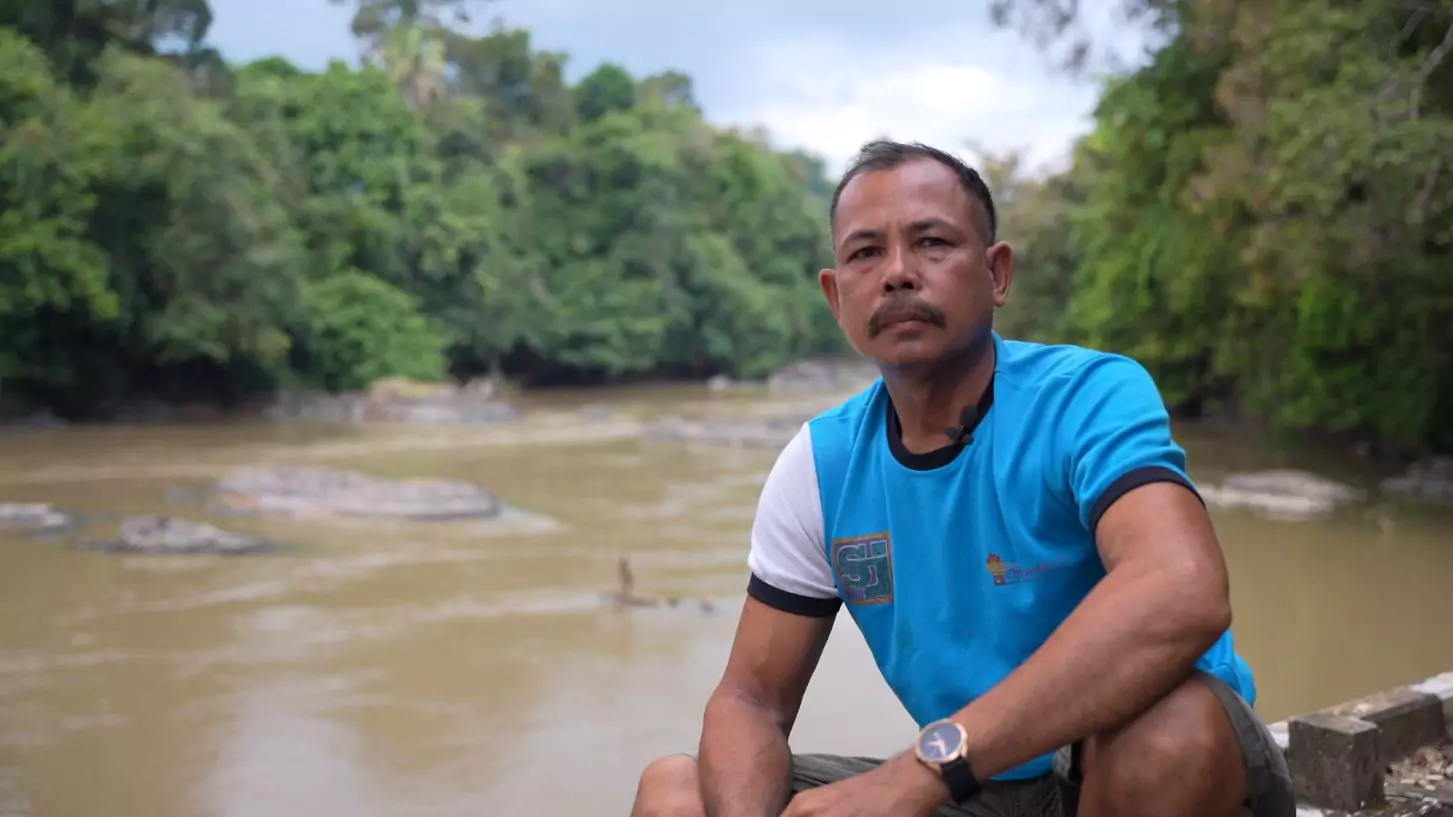
Deli, a village youth who used to live from chopping wood, has now found another way to survive—through coffee beans. This small step he took slowly changed not only his life, but also the future of his village.
Uncertainty of the future in Batu Lapis Village
Moses, a father of three, often pondered the future of his offspring. He is aware that natural resources in the forest are depleting.
Moses ( Muffidz Masum | YIARI )
‘Maybe our generation can still survive, but what about our grandchildren?’he said while talking on the terrace of his house.
For decades, Moses has worked as a woodcutter in the forests of Borneo. As part of the Dayak tribe, Moses depended on forest products for his livelihood.
Farming and cutting Ironwood is the main occupation of the majority of residents in Batu Lapis Village, Ketapang regency, West Kalimantan. In the last two decades, this work has indeed advanced the village. The economic condition of the community is getting better.
‘The houses here used to be small, but now they are bigger, and we can build roads to make transportationeasier,’ Moses said.
However, he realized that dependence on logging could not be relied upon forever. Increasingly stringent government regulations related to logging are becoming a pressure for villagers.
‘We certainly want to find other jobs that are safer and no longer destroy the forest,’ Moses said Hopefully.
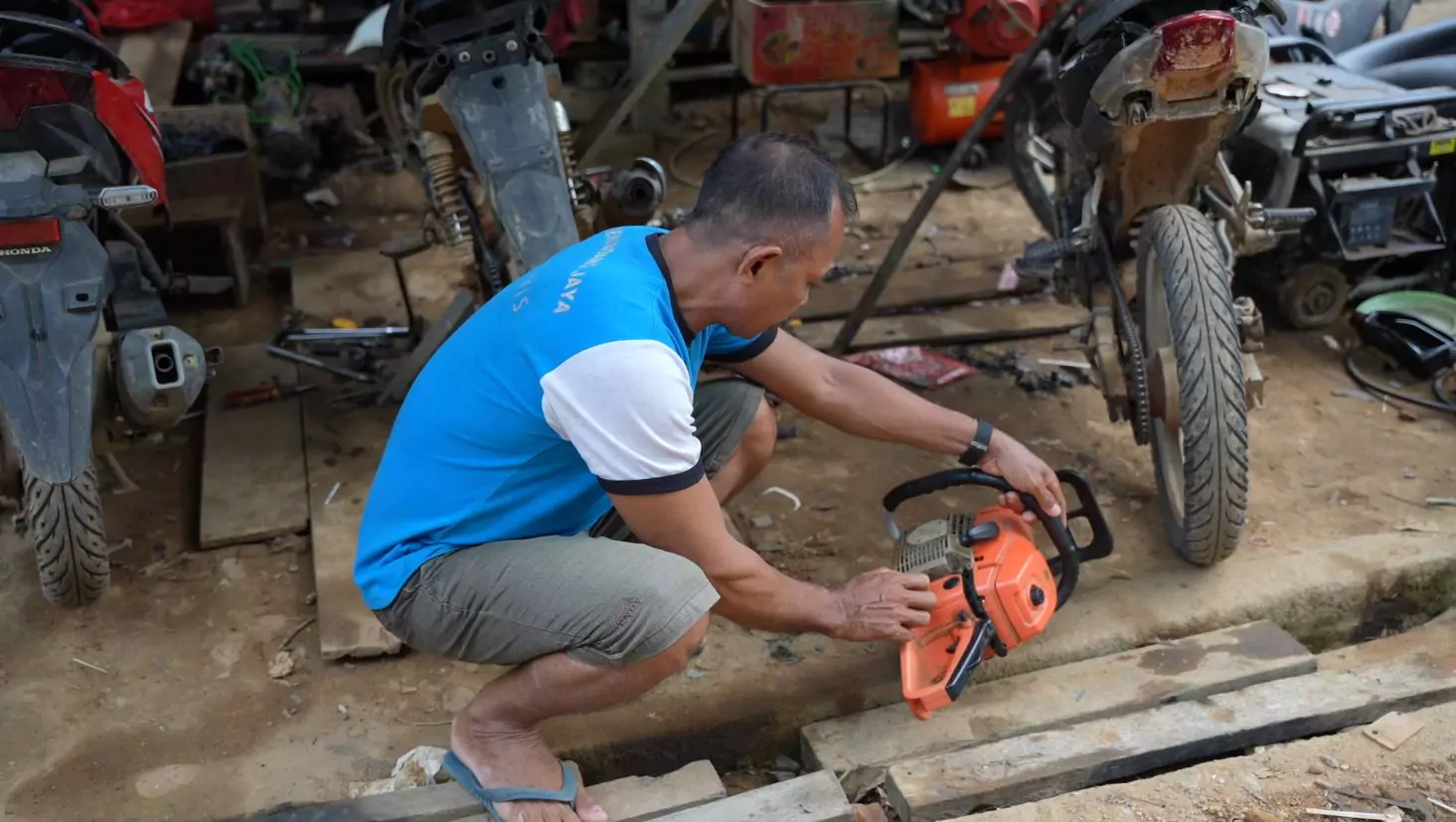
Moses checking woodcutter tools in his workshop(Muffidz Masum | YIARI )
Deli and Clarisa: New Hope for the future of the village
Hope is now starting to appear, thanks to the efforts of two young people from Batu Lapis Village, Deli and Clarisa.
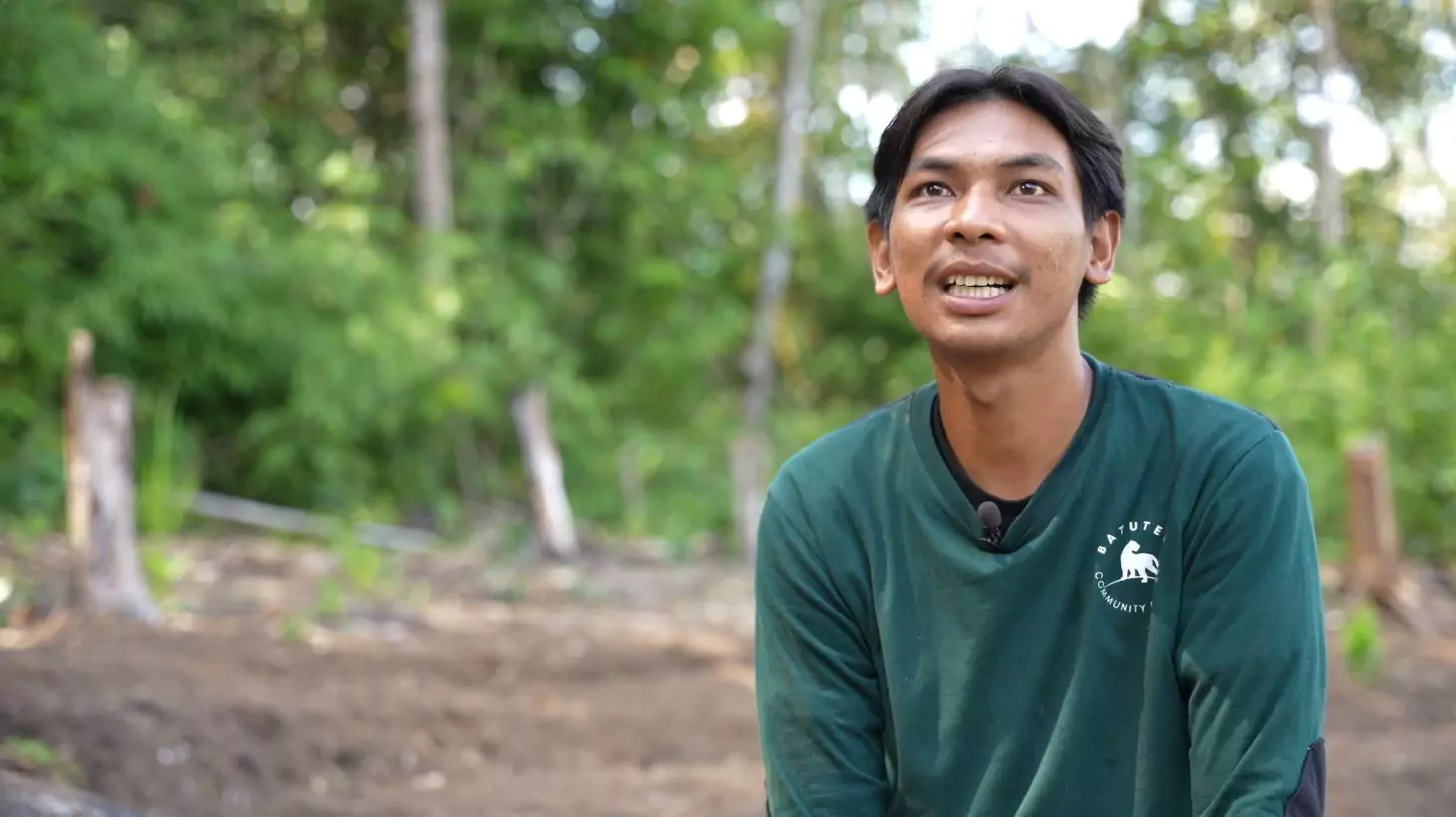
Deli ( Muffidz Masum | YIARI )
They are graduates of Kahiu Academy–a mentoring program for school dropouts initiated by Yayasan Initiasi Alam Rehabilitasi Indonesia (YIARI). After the training, Deli and Clarisa were accompanied to develop independent businesses, such as teaching children or farming.
‘If there is education for children, as well as training and mentoring for residents, such as in farming, this can be a hope for us in the future,’ Moses said with an optimistic smile.
Building a coffee plantation in Batu Lapis Village
One morning, a wooden boat drove over the Biha River receding due to drought.
On it, Deli with a companion from YIARI sat preparing to go to the field.
Arriving at the farm, Deli immediately prepare equipment for gardening. He walked along the path to his field, where he had prepared ten beds of plants.
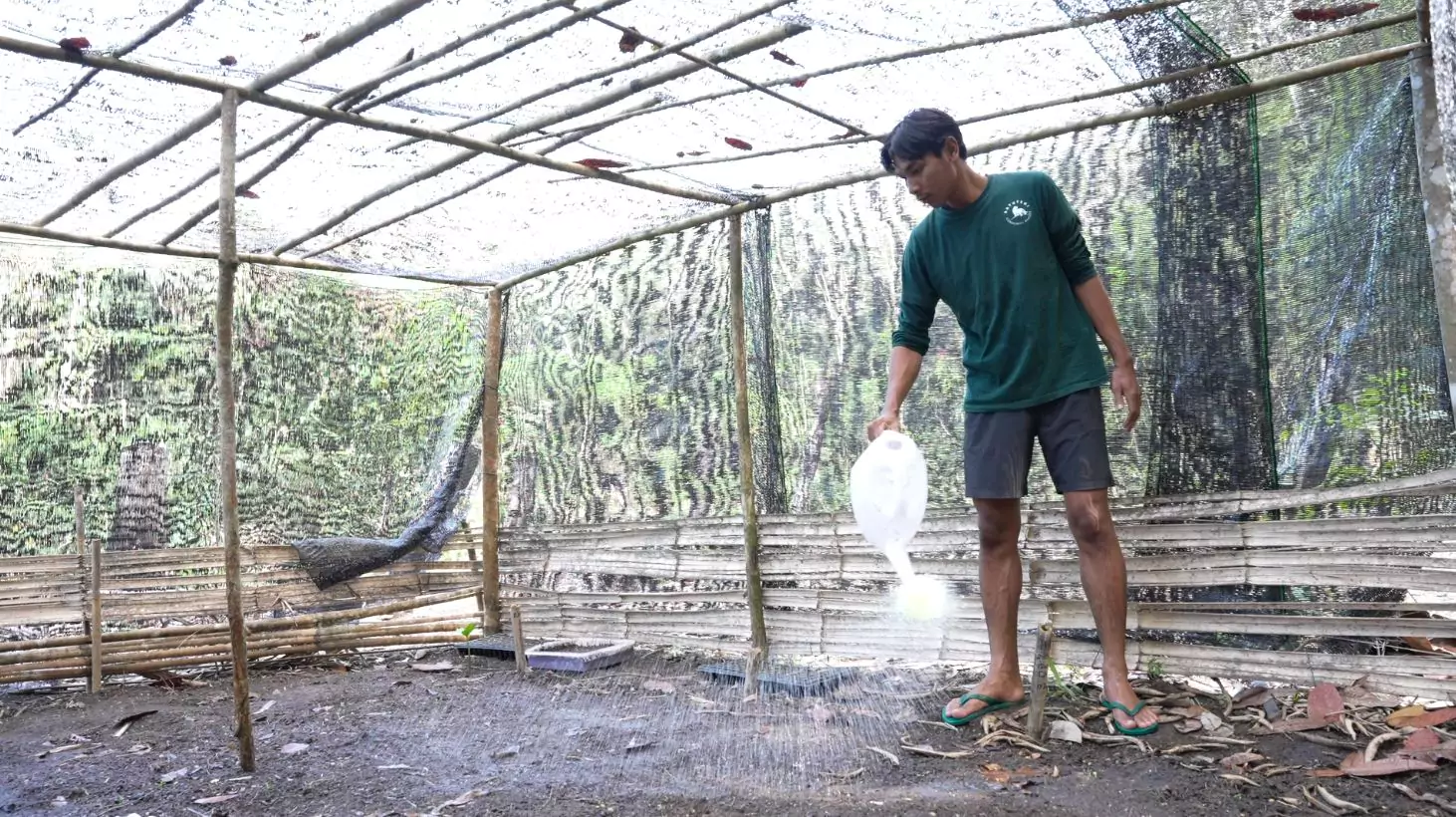
In the middle of the field, stands a seedling house with a black tarpaulin that shades the leaves of coffee seedlings that are starting to grow. With care, Deli watered the plants that would become the forerunner of the first coffee plantation in Batu Lapis Village.
Deli is watering a coffee seedling that he will later plant for a coffee plantation( Muffidz Masum | YIARI )
Before his foray into agriculture, he worked as a woodcutter and animal hunter. ‘I used to cut wood and hunt, but I realized that this job was not suitable for me,’ he says.
Meeting with Kahiu Academy changed his life. He was interested in the agricultural science taught in the program and attended training for four months in Ketapang.
After graduation, Deli was sent to Lampung to learn more about coffee cultivation, including seeding techniques, seedlings, and planting.
The choice of coffee as the main crop is not without reason.
‘In Batu Lapis Village, most people plant oil palm whose storage only lasts 2 days at most. While the coffee beans can be stored longer, dried and stored for months,” said Deli.
In addition, the coffee I can send to the city by motor, so this is more practical for me,’ he added. This is a more effective solution for delis that still do not have large vehicles for transportation of agricultural products.
New hope for the future of the village
For Deli, coffee plantations are a new hope. The support of his family and friends strengthened his resolve.
‘I hope this effort can inspire other people. If many follow, people’s lives can be better, the village economy increases, and the environment is protected from forest destruction,’ he said excitedly.
Dieka, Kahiu Academy’s program manager, took part in reviewing Deli and Clarisa’s progress.
‘Kahiu Academyis intended for school dropouts so that they have skills and can be independent,’ explained Dieka.
The programme is for young people aged 17-25, with four months of intensive training covering a range of subjects, from agriculture to gender equality.
‘We hope the participants can practice the knowledge they get for themselves and their communities,’ Dieka added.
With 48 materials provided during the training, Dieka hopes that there will be more “Deli” and “Clarisa” who can practice their knowledge for the good of themselves and the community.
Potential zoonotic transmission in macaques, dangerous but preventable!
Happy International Makaka Day, #KonservasYIARI Friends! March 16 is celebrated International Makaka day. makaka Day is celebrated for the first time on March 16, 2016, which is motivated by love and efforts to preserve makaka around the world.
Macaque is a genus of primates found in the world. Its populations can be found ranging from Morocco, Algeria, Afghanistan, China, Japan, and Southeast Asia (Napier and Napier 1985), many also yes , man! In Indonesia, the genus Makaka also has a wide distribution level, especially on the islands of Java, Sumatra, Kalimantan, Sulawesi to the islands in Nusa Tenggara. Types of macaca that can be found in Indonesia include Macaca nemestrina, M. siberu, M. pagensis, M. nigra, M. nigrescens, M. tonkeana, M. ochreata, M. hecki, M. maura, M. fascicularis (Ruskhanidar et al. 2017).
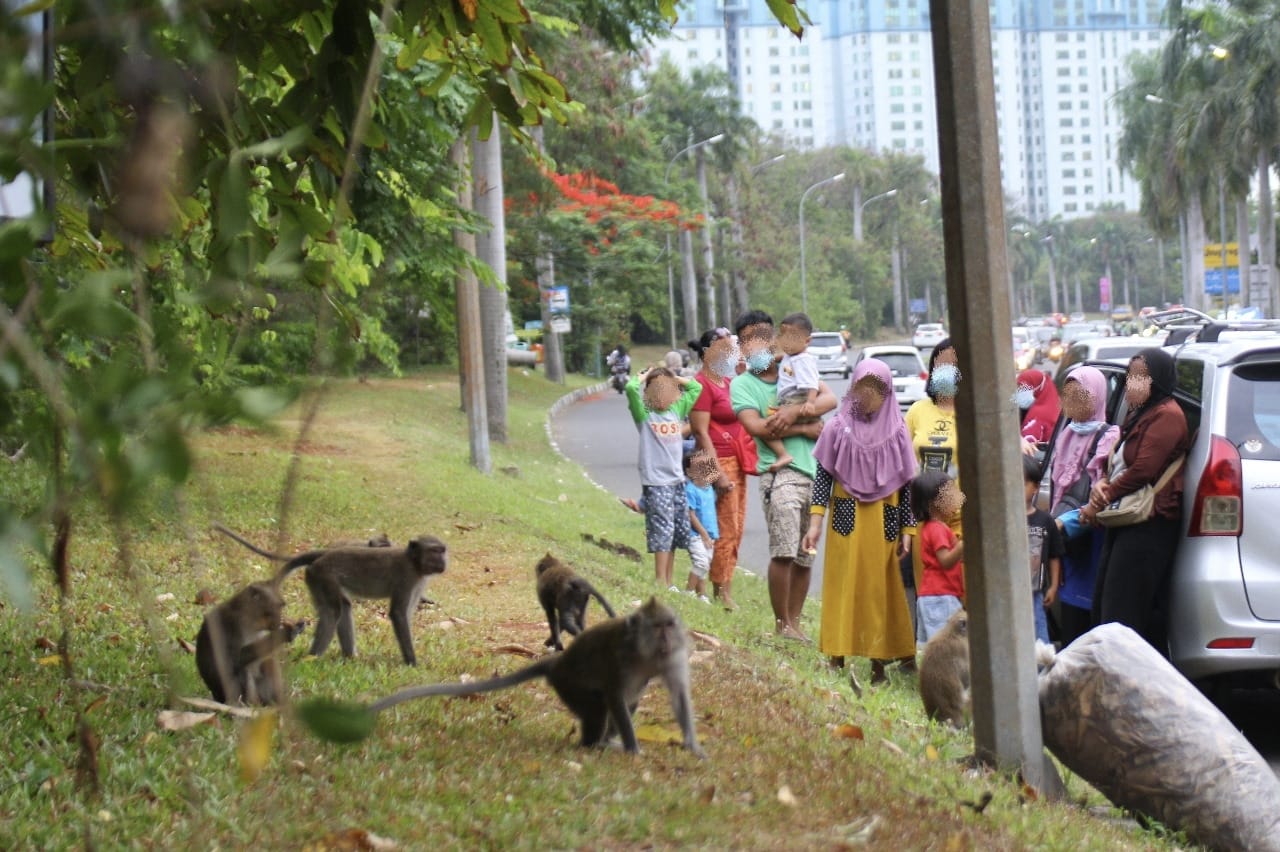
Community prohibited activities against Macaca Fascicularis (long-tailed monkey) in Angke Kapuk Wildlife Sanctuary (YIARI)
makaka is one genus that has a fairly good level of adaptation. So, don ‘t be surprised, friend, if you are visiting a location close to where you live, then there is a possibility that you will be harassed. like the photo above, which is an incident located in the Angke Kapuk Wildlife Sanctuary, Jakarta. This happens because the habitat of the makaka is directly adjacent to human activities, which causes the makaka to get used to meeting humans.
But, don’t let you interact directly with them! Because makaka has the potential to carry viruses, bacteria, and parasites that can transmit diseases to humans. The transmission of the disease is commonly called zoonosis, which means the transmission of the disease from animals to humans or vice versa.
Do you know why it can pose a threat to humans? Because, macaques belong to the Order of primates that have genetic, physiological and behavioral similarities with humans (Schillaci et al. 2005). Primates are significant zoonotic agents or sources of disease for humans, as they can transmit 25%of emerging infectious Diseases (Pedersen and Davies 2009).
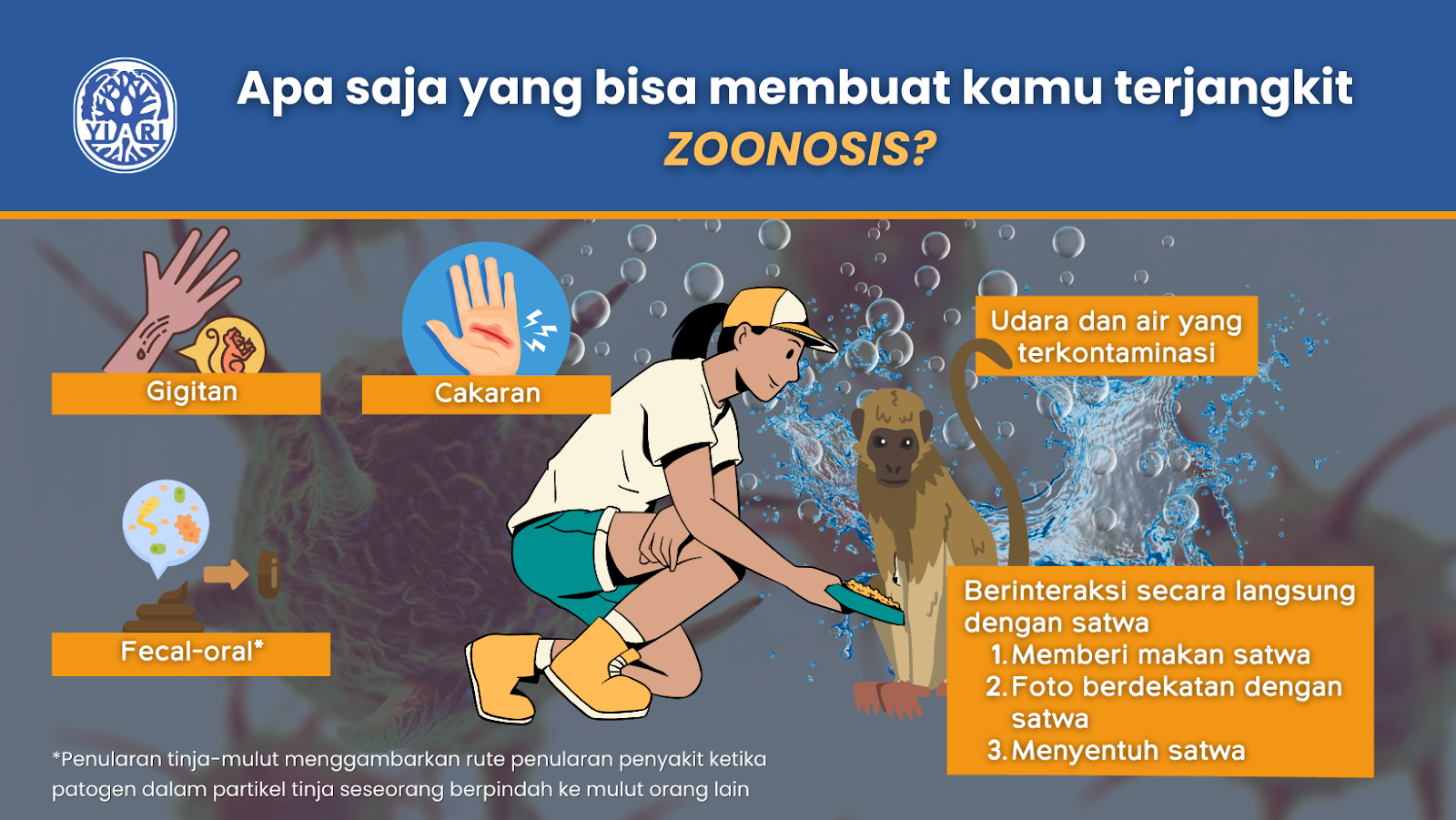
Then, how is it transmitted? There are various ways of bacterial infection from macaca to humans, either directly or indirectly. Get infected directly if you get a bite or scratch from a macaque. While indirect infection is through contaminated water, also food contaminated with Entamoeba SPP cysts. In addition, the main potential for infection is from fecal-oral and direct contact between humans andNon-Human Primates1(Lastuti 2021). for more details, you can listen to the poster below!
Cara Penularan Zoonosis (Ria Risyanti | YIARI)
Based on research that has been carried out by Lastuti (2021), in Macaca fascicularis (long-tailed monkey) in Baluran National Park, positive results show that Entamoeba coli. bacteria is a disease agent that infects the digestive tract. In Addition To E.coli are still many disease agents carried by macaques, among others , Plasmodium knowlesi , which is parasitic on macaques in Southeast Asia (Macaca nemestrina and M. fascicularis), which can cause malaria loh Sob. (Jongwutiwes et al. 2011; Millar dan Cox-Singh 2015).
Ohiya, you should know that one of the most significant Zoonoses is tuberculosis. The main causes of this disease are the bacteria Mycobacterium tuberculosis and Mycobacterium bovis (Une and Mori 2007).
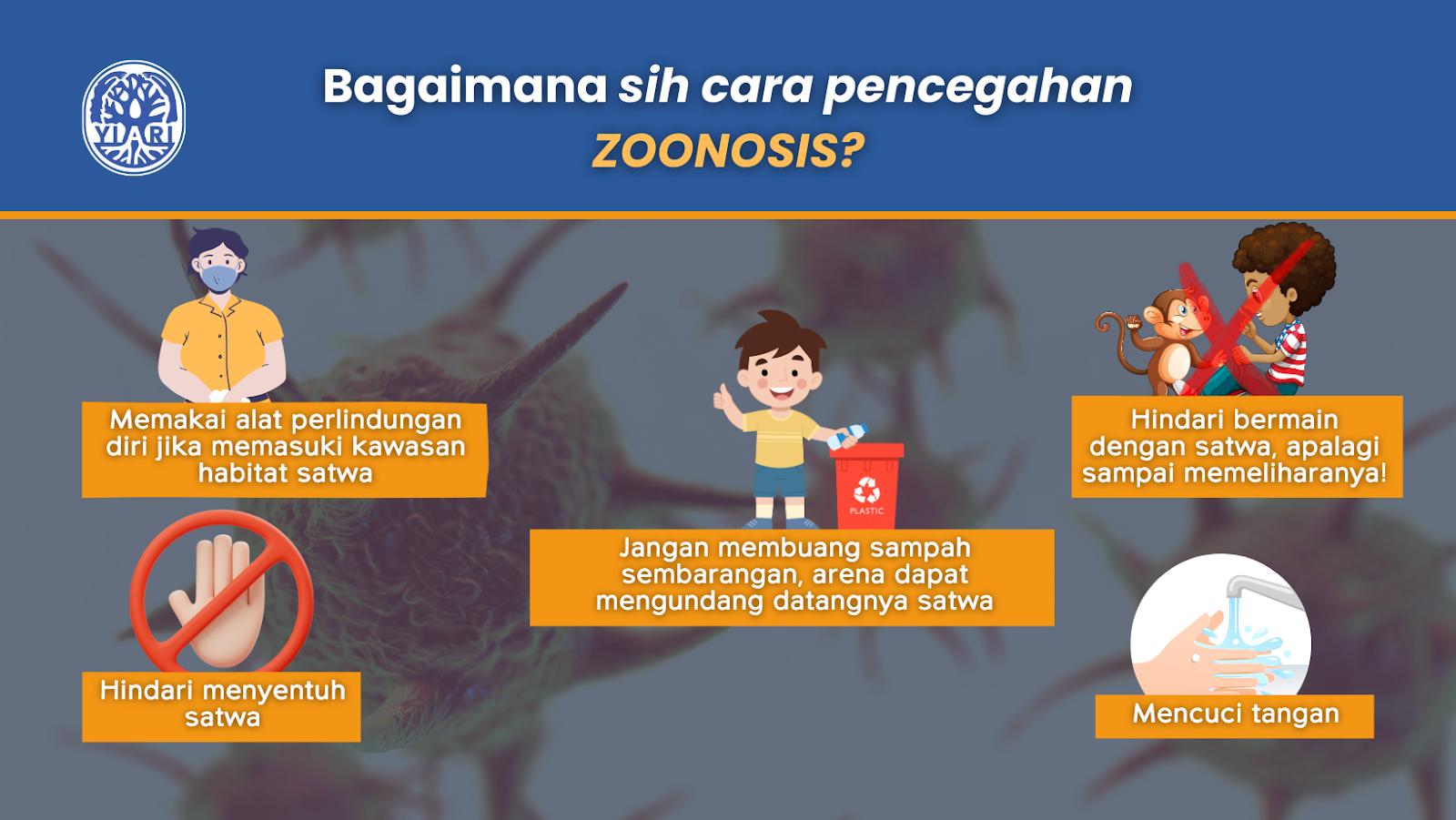
So how do we avoid Zoonoses? Buddy # KonservasYIARI can do early prevention in the following ways !
Cara Pencegahan Zoonosis (Ria Risyanti | YIARI)
The potential transmission of zoonoses should be watched out for as they can lead to pandemic outbreaks. This can be influenced by an increase in the distribution of human populations and human activities in primate habitats that can trigger negative human-animal interactions.
Be careful and watch out, man! Do not get infected and transmit the disease to primates.