Silakan atur halaman utama di Settings → Reading → Your homepage displays
dan pilih A static page, lalu pilih halaman dengan template Home.
HPSN 2025: Yiari invites children in Ketapang to clean up trash
Waste is a serious problem that is not only a national responsibility, but also a global challenge that is still being resolved.
Based on Circular Letter (SE) Number 1 of 2025 concerning the commemoration of National Waste Care Day (HPSN) 2025, data from the Global Waste Management Outlook 2024 notes that around 38 percent of waste in the world is still not managed properly. This condition contributes greatly to three major environmental crises known as the Triple Planetary Crisis, namely climate change, biodiversity loss, and environmental pollution.
At the national level, Indonesia recorded a waste dump of 56.63 million tons in 2023. Of this total, only 39.01 percent or about 22.09 million tons were successfully managed. The rest, which is 60.99 percent or about 34.54 million tons, has not received adequate handling.
As part of the commemoration of HPSN 2025, Yayasan Initiasi Alam Rehabilitasi Indonesia (YIARI) initiated environmental clean-up activities with children in Ketapang regency, West Kalimantan. This action aims to instill environmental awareness from an early age, and invite people to be more concerned about waste management around them.
Curious as to what activities are carried out? Come on, check out the excitement of yiari’s action with the children in Ketapang below!
Clean trash action carried out at seven locations
In commemoration of National Waste Care Day (HPSN) 2025, Yayasan Initiasi Alam Rehabilitasi Indonesia (YIARI) together with children in Ketapang regency, West Kalimantan, held a clean-up action at seven different locations. This activity lasted for two days, namely on February 21 and 22, 2025.
Right on February 21, coinciding with the commemoration of HPSN, the activity began with a garbage clean action with students of SDN 20 Pangkalan Jihing, which is also part of the Gunung Tarak work site.
Yiari and students at SDN 20 Pangkalan Jihing. (Education team | YIARI)
Still on the same day, YIARI held a waste recycling activity at the Sir Michael Uren Learning Center (LC SMU). In this activity, YIARI collaborated with Genta (nature lovers movement) from SMKN 1 Ketapang, creating an educational moment about Creative Waste Management and utilization.
In addition, YIARI also held an environmental clean action with children in Nusa Poring Village, which is part of the Melawi site project.
On February 22, the clean-up action continued in three elementary schools and one village, namely SDN 33 Cali, SDN 14 Pulau Cempedak, SDN 07 Hulu Sungai, and Batu Lapis Village.
Community welcomes Yiari-initiated clean-up action
Clean up trash in Nusa Poring Village. (Education team | YIARI)
The clean-up action initiated by Yayasan Initiasi Alam Rehabilitasi Indonesia (YIARI) in Nusa Poring Village received a positive response from the local community. This activity is part of a series of commemoration of National Waste Care Day (HPSN) 2025.
According to Dieka Pertiwi, education and awareness manager of YIARI, garbage cleaning activities are actually not new for children and residents in Ketapang Regency. Similar actions have become routine activities carried out in various villages.
‘Actually, this clean-up action is not a new activity. Activities like this have been routinely done. So, HPSN is only ceremonial, because outside of festive moments like this, clean-up activities have become a regular agenda in the villages,” explained Dieka.
Furthermore, Dieka explained that in the framework of HPSN 2025, YIARI held a garbage clean action with a more ceremonial approach and involved a number of schools in the Ketapang area.
‘The response from the community is very positive, especially from children who are used to participating in this activity regularly every month,” he added.
Children in Ketapang used to play while cleaning garbage
One of the interesting facts about clean-up activities in Ketapang Regency is the habit of children who make environmental care actions as part of their daily play activities. In some areas, such as in Mentatai, children often swim or dive in the river while picking up garbage they find on the surface and bottom of the river.
A child picks up garbage in Batu Lapis Village, Hulu Sungai District. (Education team | YIARI)
“They, if they see garbage at the bottom of the river, immediately taken. It has become a habit” ‘ said Dieka.
He added that this awareness is the result of various educational activities and environmental care actions carried out consistently in the Ketapang area.
“The activities that have been routinely carried out make children more aware. In fact, they take their own initiative to collect garbage, including those at the bottom of the river,” he explained.
Plastic Waste Remains The Biggest Challenge
Of the various types of waste that pollute the environment, plastic waste is the biggest challenge faced today. This is due to the high level of use of plastic in everyday life, including among children. In Ketapang Regency, for example, children still have the habit of buying snacks that are generally packaged in disposable plastic.
Nevertheless, children’s awareness of the importance of maintaining environmental cleanliness is quite good. Although they still consume plastic packaged products, they have become accustomed to throwing garbage in place, not carelessly.
As part of its ongoing efforts, YIARI continues to educate children and communities in Ketapang, especially regarding the dangers and management of plastic waste. One of the positive habits that began to be built is to bring your own container or place to drink when buying snacks, in order to reduce dependence on disposable plastic packaging.
The garbage problem will never really end. However, as individuals, we can contribute through consistent small steps, such as sorting garbage, bringing our own containers, or regularly participating in environmental clean-up activities. Not having to wait for a certain moment such as the National Waste Care Day (HPSN), the action of maintaining cleanliness can be done every week, even every day, in the environment where we live.
As the children in Ketapang have shown-playing while picking up trash-this simple action has a big impact if done collectively. It’s time we make caring about waste a part of our lifestyle. Yuk, from now on get used to picking up trash and throwing it where it should be!
Featured image: students of SDN O7 Hulu Sungai clean up trash. (Education team | YIARI)
West Kalimantan Marine Conservation Cooperation: Joint Efforts To Protect Coastal Ecosystems
Cooperation in the management of coastal and marine resources plays a crucial role in maintaining ecosystem balance while supporting environmental sustainability. Coastal and marine areas store biodiversity, as well as being the main source of livelihood for the people who live around them.
Unfortunately, pressures from overexploitation, the effects of climate change, and various other human activities are increasingly threatening the sustainability of these resources. Therefore, an integrated management strategy is needed, based on cross-sector collaboration, and involving various stakeholders.
In this case, the synergy between government agencies, conservation organizations, and local communities is a key element to ensure the sustainability of the coastal environment can be maintained sustainably.
One example of this collaborative effort is the signing of a cooperation agreement between Yayasan Initiasi Alam Rehabilitasi Indonesia (YIARI) and Balai Pengelolaan Sumberdaya Pesisir dan Laut (BPSPL) Pontianak, which aims to strengthen the protection and management of coastal resources more effectively.
When Is This Activity Carried Out?
Atmosphere of cooperation agreement signing (BPSPL Pontianak)
The signing of the cooperation agreement was held on February 10, 2025 between YIARI, BPSPL Pontianak, Faculty of Agriculture, University of Tanjungpura, and Ketapang Conservation WeBe Foundation.
This collaboration aims to strengthen environmental conservation efforts, encourage sustainable management of Natural Resources, and increase the involvement of academics and communities in the preservation of coastal and aquatic ecosystems in West Kalimantan.
The signing ceremony took place in a hybrid format, combining physical presence and online participation. Some participants attended directly at the Bpspl Pontianak office, while others followed the procession through the Zoom Meeting platform.
This Format allows for greater participation, encourages transparency, and strengthens cross-sector collaboration. Through this cooperation, it is expected that various programs will be born that have a real impact in maintaining ecosystem sustainability and improving the welfare of coastal communities.
Purpose of Yiari cooperation agreement with BPSPL Pontianak
The process of signing a cooperation document between YIARI and BPSPL (BPSPL Pontianak)
Through this agreement, the four institutions are committed to strengthening conservation efforts and sustainable management of Coastal Resources in the West Kalimantan region. The main objectives of this cooperation are:
1. Strengthen effective networking and collaboration
Synergy between government, academia, and conservation organizations is an important element in preserving coastal and marine ecosystems. Through this agreement, communication and coordination across sectors are expected to be stronger, so as to be able to face various challenges in managing natural resources more effectively and integrated.
With a sea area of about 3.25 million km2, Indonesia holds an extraordinary marine biodiversity. This agreement aims to strengthen various conservation initiatives in order to run sustainably, maintain ecosystem balance, while ensuring the economic and social sustainability of coastal communities in the long term.
3. Improving Marine Resource Management in West Kalimantan
The waters of West Kalimantan are an important habitat for a number of rare and protected species, such as turtles, dugongs, and various types of reef fish. This cooperation is expected to encourage the implementation of scientific and adaptive management systems, emphasizing practices oriented to environmental sustainability.
4. Preserving Natural Wealth
Yiari and BPSPL commitment to safeguard the West Kalimantan sea (BPSPL Pontianak)
Threats to marine ecosystems, such as pollution, destruction of coastal habitats, and destructive fishing activities, are increasing.
This agreement is a concrete step in strengthening efforts to preserve marine biodiversity, so that future generations can still enjoy and utilize Indonesia’s natural resources responsibly and sustainably.
Cooperation Implementation Plan
In order for this cooperation agreement to be implemented effectively and have a real impact, the four institutions involved have designed an implementation plan that includes a number of strategic programs.
The plan is based on collaborative, science-based, and sustainability-oriented principles. The main steps that will be carried out include:
1. Training and counseling
This Program aims to increase the capacity of coastal communities and other stakeholders in managing marine resources sustainably. Activities that will be carried out include conservation training, the application of environmentally friendly cultivation techniques, as well as the introduction of sustainable fishing practices that support ecosystem balance.
2. Research and development
To ensure every conservation measure is based on accurate data, a series of scientific studies will be conducted on the condition of coastal and marine ecosystems in West Kalimantan. The research includes monitoring populations of protected species, identification of threats to marine habitats, as well as preparation of Technical Recommendations for better management.
3. Strengthening policies and regulations
In an effort to strengthen environmental governance, this cooperation also includes support for the formulation and implementation of policies based on scientific data. In addition, there will be monitoring of the implementation of conservation regulations to ensure compliance at the local and regional levels.
4. Increased Public Awareness
Community education is an important aspect in maintaining sustainability. Through various campaign activities, socialization, and dissemination of information, this program aims to raise public awareness about the importance of preserving marine ecosystems, as well as the benefits of managing coastal resources wisely and sustainably.
Marine Ecosystems, Shared Responsibility
The synergy between BPSPL Pontianak, Faculty of Agriculture, University of Tanjungpura, YIARI, and Ketapang Conservation WeBe Foundation is a strategic step in maintaining the sustainability of coastal and marine natural resources.
Through this cross-sector collaboration, the utilization of marine resources is expected to be done wisely, without compromising the sustainability of the ecosystem. Various initiatives such as scientific research, community assistance, and the application of environmentally friendly technologies are the main pillars in building a sustainable resource management model.
This joint effort not only focuses on ecological aspects, but also emphasizes the importance of a balance between conservation and the well-being of coastal communities. Thus, the marine ecosystem is maintained, while providing economic benefits for current and future generations.
In addition, education and capacity building activities for fishermen and local communities are important elements in strengthening marine-based economic resilience. This approach is expected to create coastal communities that are independent, resilient, and concerned about the preservation of the marine environment.
Featured image: the initiator team of yiari and BPSPL cooperation for West Kalimantan marine conservation (BPSPL Pontianak)
Yiari and JPK collaboration: strengthening Gender and community-based Environmental Journalism
Environmental and sustainability issues are now getting more attention, especially in the midst of the rampant exploitation of Natural Resources (SDA) that have a direct impact on ecosystems and people’s lives. To help encourage the role of the media in raising these important issues, Yayasan Initiasi Alam Rehabilitasi Indonesia (YIARI) together with Khatulistiwa women journalists (JPK) held a writing workshop at Hotel Neo, Pontianak, towards the end of 2024.
The workshop is designed to strengthen journalists ‘ ability to cover environmental topics in greater depth and meaning. Participants are also equipped with an understanding of the management and conservation of natural resources, plus writing training so that the results of their coverage are sharper, informative, and have a real impact on the community.
“Maybe you’ve seen videos of orangutans who are confused about looking for a place to live because their habitat has been damaged—their land has become empty land. This is still an important issue that needs to be raised. In addition, there is also the topic of One Health , which is no less important. This concept explains how animal, natural, and human health are interrelated. If the animal is not healthy, it can affect humans as well,” explained Hasna, Yiari’s media and communication Supervisor.
Pembukaan acara oleh Ketua JPK Aseanty Pahlevi (Fathia Rosatika | YIARI)
The workshop was officially opened by the Secretary of YIARI, Marius Marcellius, together with the head of Khatulistiwa women journalists (JPK), Aseanty Pahlevi. In their remarks, both emphasized the importance of the role of journalists in maintaining public attention to environmental issues. They also highlighted how the media can be a powerful advocacy tool to encourage wiser and more sustainable management of Natural Resources.
JPK co-authoring workshop: enhancing journalist capacity in natural resources coverage
A total of 16 journalists from Pontianak, Ketapang, and Singkawang took part in this activity. Participants come from various media backgrounds, both print, online, and television. Interestingly, the majority of participants are female journalists who do have a high concern for environmental issues.
During the workshop, the participants got a lot of insight from the speakers who are experienced in their fields, such as Ganjar Krisdiyan (Assistant Manager Community Development YIARI), Sapariah Saturi (journalist Mongabay Indonesia), and Aries Munandar (editor Jubi and freelance journalist).
They discussed various strategies for covering environmental issues, the latest developments in natural resource management, and the challenges that often arise when writing conservation and sustainability news. In addition, participants were also invited to explore effective writing techniques and how to compose strong and data-based narratives.
In the next session, the discussion continued to the topic of Environmental Journalism Ethics and issue mapping, which helps journalists understand the principles of ethical coverage as well as the various obstacles they commonly face in the field.
Session 1: Exploring the conservation and management of Natural Resources
Material presentation by Ganjar Krisdiyan(Fathia Rosatika | YIARI)
Sesi pertama dalam lokakarya ini dibuka oleh Ganjar Krisdiyan, Assistant Manager Community Development YIARI. In his presentation, Ganjar invited participants to understand more about the trend of natural resource management, conservation, and the importance of maintaining biodiversity. This material became the initial foundation to broaden participants ‘ horizons on increasingly urgent environmental issues in Indonesia.
Ganjar explains comprehensively what forests and forest areas are, and why biodiversity is crucial to ecosystem balance. He also highlighted real challenges on the ground, such as land conversion and increasing conflict between humans and Wildlife—phenomena that are increasingly occurring due to forest encroachment and overexploitation of Natural Resources.
Not only that, Ganjar also discussed various regulations related to wildlife protection, and explained the stages in conservation efforts suchas rescue, rehabilitation, and the release of animals back to their natural habitat. The discussion also highlighted the importance of active community involvement in conservation activities, both through community-based approaches and through policies that are more in favor of the environment.
Session 2: exploitation of Natural Resources, Energy Crisis, and Gender perspectives in Environmental Journalism
After the first session, the training continued with an explanation from Sapariah Saturi, a senior journalist from Mongabay Indonesia. In this session, Sapariah raised important issues around extractive industries, energy, and their impact on vulnerable groups—especially women and Indigenous communities.
Material presentation by Sapariah Saturi(Fathia Rosatika | YIARI)
Sapariah invited participants to take a closer look at the real impact of the fossil energy industry, especially coal, on the environment and public health. He also discussed the urgency of the transition to clean and sustainable energy, such as solar and wind power. On the other hand, he highlighted the government’s energy policy which is still considered too dependent on biomass and less in favor of environmentally friendly energy.
Sapariah also emphasized the importance of gender sensitivity in the coverage of environmental issues. Women are often the group most affected by environmental crises—from limited access to clean water to rising domestic burdens—but their voices still rarely appear in the media or in policy-making.
Through this session, participants are invited to be more sensitive in highlighting social vulnerabilities in the environmental crisis and how journalism can be a tool to fight for ecological justice and equality.
Session 3: Challenges and opportunities of Environmental Journalism
The next session was hosted by Aries Munandar, editor of Jubi and freelance journalist, who discussed various challenges as well as opportunities in covering environmental issues, especially in the West Kalimantan region. According to Aries, ecosystem damage cannot only be seen as an environmental issue, because the impact is very broad—including social, cultural, and economic aspects of local communities.
In his presentation, Aries explained how deforestation and forest degradation contribute to the disruption of the global carbon cycle and the increased risk of disasters such as floods. He also highlighted the complexity of forest management policies that are often influenced by political and economic interests, making the coverage of environmental issues a challenge that is not only technical, but also structural.
Another issue that is no less important is the loss of local vocabulary and traditions along with the destruction of nature. Aries reminded that the preservation of local culture and conservation of endemic animals need to be viewed as one unit in an effort to maintain the environment holistically.
This discussion opened the participants ‘ insight on the importance of exploring issues that often escape the spotlight of the mainstream media. With a more critical and in-depth perspective, journalists can present coverage that is not only informative, but also encourages real change at the community and policy level.
Discussion and exploration: developing impactful environmental coverage
As part of the interactive learning process, the participants also took part in an exploration session on the idea of coverage. In this session, they had the opportunity to consult directly with mentors, developing original, innovative, and potentially impactful coverage ideas for the community.
Discussion process between participants and mentors(Fathia Rosatika | YIARI)
Not only listening to the material, participants were also actively involved in small group discussions. Through this discussion, they mapped various challenges and opportunities in the coverage of environmental issues. Some of the main challenges that arise include limited access to data, pressure from various stakeholders, to low media interest in environmental issues because they are considered less commercially selling.
However, this session encourages participants to keep looking for gaps and strategies in voicing environmental issues creatively and relevantly. Collaboration among participants and guidance from mentors help reinforce coverage ideas that are not only informative, but also able to arouse public awareness.
Together, let’s write for nature!
Support healthy children and Achievers, Yiari holds nutritious eating activities
Optimal health and nutrition is an important foundation in supporting children’s growth and development, especially at school age which is a crucial period in the formation of physical and intelligence.
Unfortunately, there are still many children in Indonesia who experience nutritional problems, including malnutrition, which has the potential to inhibit their development in the future, both physically and cognitively.
In response to these conditions, various parties—including governments, non—governmental organizations, and local communities-are actively working to expand children’s access to nutritious food. One of the initiatives carried out by YIARI is healthy eating activities together.
This activity was inspired by the concept of free meals proclaimed by the government, but developed specifically to reach children at the yiari work site.
Through this activity, YIARI is committed to providing balanced nutrition for children, especially in remote areas.
More than just sharing food, healthy eating activities together also emphasize the educational aspect. Children and the surrounding community are invited to understand the importance of healthy eating and lifestyles that support long-term health. With this holistic approach, activities are expected to create sustainable changes in consumption patterns and community nutrition awareness.
What are the details of the show? Check it out!
When Is This Activity Held?
Students of SDN 02 Muara Pawan queue to take food (Heribertus Suciadi | YIARI)
This healthy eating activity was held at SDN 02 Muara Pawan, Ketapang Regency, and was attended by more than 200 students. This school was chosen because of its location directly adjacent to the forest area and is included in the yiari assisted area.
The activity lasts for one week, starting from February 20 to February 27, 2025. On the first day of implementation, the activity was attended by the Muara Pawan Police Chief, IPDA Lukman Hakim, S.H., along with the apparatus of Sungai Awan Kiri Village, Muara Pawan Sub-District. The presence of these figures shows the full support of the police and the village government in efforts to improve the nutrition of children in the region.
The Purpose Of Healthy Eating Together
Healthy eating activities together in the classroom with students (Heribertus Suciadi | YIARI)
The purpose of healthy eating activities together:
1. Improving Child Nutrition
The main purpose of this activity is to ensure that children get a balanced intake of nutrients needed to grow and develop optimally.
Based on data from the Ministry of Health in 2023, around 21.6% of children under five in Indonesia are stunted, and another 7.7% suffer from malnutrition. This condition can seriously affect a child’s physical growth and cognitive abilities.
Through the provision of nutritious food rich in protein, vitamins, and essential minerals, YIARI seeks to reduce the number of cases of malnutrition, while supporting the fulfillment of children’s daily nutritional needs, especially in areas prone to nutritional inequality.
2. Educating Healthy Eating
In addition to providing nutritious food, YIARI also emphasizes the importance of nutrition education to children and parents. This activity is designed to build an understanding of the importance of healthy eating, how to process the right food, as well as the habit of consuming fruits and vegetables on a regular basis.
According to the 2022 Global Nutrition Report, about 40% of deaths from non-communicable diseases, such as diabetes and heart disease, are related to poor diet. By raising awareness of nutrition from an early age, this activity aims to encourage long-term behavioral changes towards a healthier lifestyle.
3. Supporting A Brighter Future
Children who get enough nutrition tend to have better energy, concentration, and endurance. This has a direct effect on their learning ability and performance in school.
A study from UNICEF in 2024 shows that children with good nutritional status have concentration levels up to 25% higher than children who are malnourished.
By supporting optimal physical and mental development, these activities contribute to creating a smart, productive, and highly competitive young generation in the future. That’s why Healthy Eating Together is not just a short-term intervention in nutrition fulfillment, but a strategic investment for Sustainable Human Resource Development.
Yiari synergy for the future
Local communities synergize with YIARI in healthy eating activities together (Heribertus Suciadi | YIARI)
Through the implementation of healthy eating activities together, YIARI emphasized that children’s health and education are inseparable aspects of environmental conservation efforts. This initiative reflects YIARI’s holistic view of building a sustainable future.
“By ensuring children in our landscape receive proper nutrition, we are investing in a brighter and healthier future. This is not only for the wildlife we protect, but also for future generations of Conservation,” said Silverius Oscar Unggul, Chairman of YIARI.
Interestingly, all foodstuffs used in this activity are obtained directly from the surrounding community, creating local economic support while strengthening community involvement. This shows that the activity also builds synergies between the education, health, environment, and public welfare sectors at large.
This activity also received appreciation from the principal of SDN 02 Muara Pawan, Nurlita, S.Pd., which expressed great hopes for the sustainability of activities. “With better nutritional intake, we hope that children can focus on learning and growing healthily. Hopefully this activity can continue and provide long-term benefits for children in our school,” he said.
Healthy Eating Together For The Next Generation
By providing nutritionally balanced food, YIARI is committed to supporting the growth and development of Indonesian children in order to become an excellent generation—healthy, intelligent, and competitive. This initiative emphasizes the importance of meeting daily nutritional needs, as well as educating families about healthy eating as a foundation for a brighter future.
Through collaboration with various parties, ranging from local communities to government agencies, YIARI hopes to reach more children in various regions. With mutual support, this activity is expected to create a real and sustainable impact on the health and well-being of future generations.
Featured image: Makan Sehat Bersama YIARI di SDN 02 Muara Pawan (Heribertus Suciadi | YIARI)
Forestry Minister Raja Juli Antoni, seven orangutans return to their natural Habitat
At the beginning of Raja Juli Antoni’s tenure as forestry minister, the West Kalimantan Natural Resources Conservation Agency (BKSDA) together with the Bukit Baka Bukit Raya National Park Agency (BTNBBBR) and the Indonesian rehabilitation nature initiation Foundation (YIARI) released 7 (seven) orangutans in the Bukit Baka National Park working area Mentatai Resort, National Park Management Section I Nanga Pinoh Region (31/10)
They are orangutans who were taken care of by the West Kalimantan KSDA Center at the Yiari Ketapang Orangutan Rescue and Rehabilitation Center from 2010 to 2020. All are orangutans rescued from illegal rearing of protected wildlife. Prior to their release, they underwent rehabilitation at the orangutan Rehabilitation Center in YIARI in Sungai Awan Village, Ketapang.
This rehabilitation process is intended to restore their natural properties, as well as make them have the ability to survive in the original habitat. Orangutans should live with their mothers from birth until the age of 6-8 years. During this nurturing period, orangutans need to learn various life skills such as climbing, foraging, and nest building. However, due to various reasons, this baby orangutan was separated from its mother and ended up in the hands of humans, thus losing the opportunity to learn all these abilities. The rehabilitation process until this release can take time and cost a lot. The time required can reach 14 years, depending on the ability of each individual.
Orangutan release is an important step after rehabilitation, as an effort to preserve protected wildlife and restore orangutan populations in nature. Of the seven orangutans released, two orangutans named Rika and Kamila are female. While Aben, Muaro, Onyo, Batis, and Lambai are male. The special thing about this release is that four of the seven orangutans are mother and daughter pairs. They are Kamila-Batis and Rika-Aben.
The release team departed from the Yiari Rehabilitation Center in Ketapang on October 29, 2024 at 04.00 WIB. During the trip, the team always pays attention to the condition of the orangutans so that they do not experience stress in the cage, considering the long distance (Muffidz Masum | YIARI)
Rika is a female orangutan from Batu tangis Village, tumbang Titi Sub-District, Ketapang regency, West Kalimantan. He was rescued from the illegal trade and maintenance of protected wildlife by the WRU BKSDA of West Kalimantan and YIARI on October 28, 2013. The caretaker claimed to have obtained Rika from his son who bought the orangutan from a hunter for Rp500, 000. For three months of being kept, Rika was tied with chains under the house and fed rice and vegetables.
Yiari Animal Management Manager, Andini Nurillah, stated that during her ten years of study at the yiari Rehabilitation Center, Rika has made significant progress in mastering her survival skills as an orangutan. ‘Not only mastering the ability to survive as an orangutan, Rika has also proven to be able to teach this ability to other orangutans, and can even become a qualified foster mother for baby orangutans,” said Andini.
Meanwhile, Aben, a male orangutan who was rescued from a wildlife case in Ketapang on December 10, 2019, became the lucky baby orangutan who did not need to undergo a long rehabilitation period like Rika. Rika is paired with Aben to become a foster mother. As a result, Rika can teach Aben with various abilities necessary for survival such as climbing, foraging, and making nests. Rika can also be a protector for Aben who is petite. This strategy worked. Rika becomes a protective mother and Aben becomes more confident to learn new things.
Other orangutan success stories come from Karmila and Batis. Karmila is a female orangutan from Kayong continent, Ketapang, West Kalimantan. He was rescued from a case of illegal maintenance of wildlife from a resident who claimed to get Karmila from an oil palm plantation in the area. Andini emphasized that during the 14 years in YIARI, Karmila has undergone an intensive rehabilitation process and has shown remarkable development. ‘He became an orangutan who is adept at finding food, making nests, and has other essential survival skills in the wild,” he said. On November 19, 2020, Karmila began to be socialized as a foster mother for a baby orangutan named Batis. During the period of socialization, Karmila was able to adapt well, showed strong maternal abilities, and managed to become a reliable foster parent. Currently, Karmila who is estimated to be around 15 years old is ready to be released with her foster child, Batis.
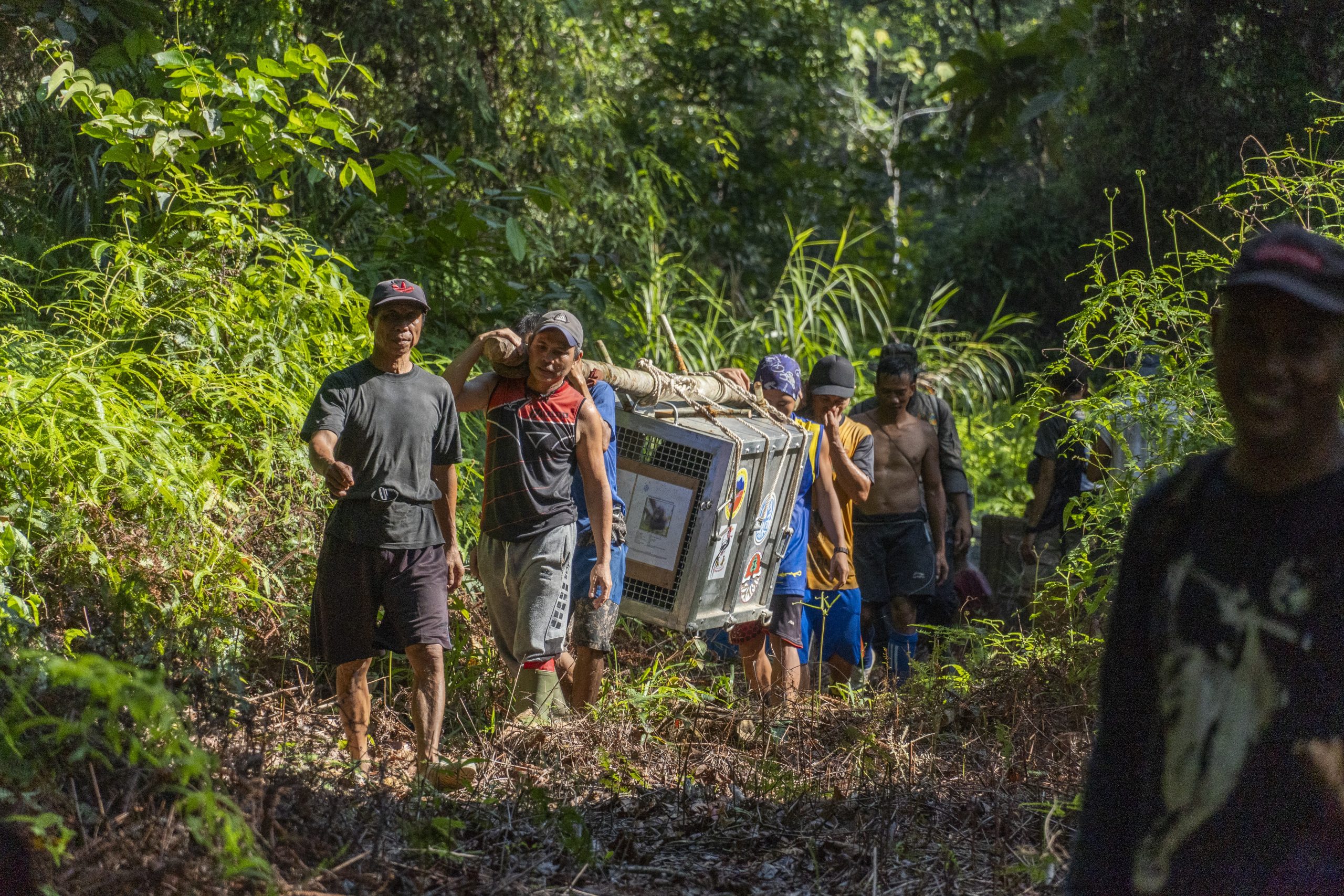
The journey of carrying the orangutan cages into the tnbbbr forest area was assisted by porters from villagers around Tnbbbr (Muffidz Masum | YIARI)
Batis is a male orangutan from Batu Lapis Village, Hulu Sungai Sub-District, Ketapang regency, West Kalimantan. He was rescued on April 17, 2020 from a case of illegal animal maintenance protected. Previously, Batis was found by a resident in the forest while collecting wood and did not realize the orangutan was a protected animal. For three months kept, Batis placed in a wooden cage measuring 50 x 80 cm and fed rice, bananas, papaya, and drink water and even coffee. When rescued, Batis was estimated to be about 1 year old. After undergoing quarantine, he began to be socialized with Karmila, his foster mother, on November 19, 2020. Through this socialization, Batis learned various survival skills, such as foraging, traveling, dan membuat sarang. During four years of rehabilitation, his health condition was well monitored and he was ready to be released with his foster mother, Karmila.
Muaro is a male orangutan from Kubu Raya regency, West Kalimantan, who arrived in YIARI on February 11, 2018. His story began when he was separated from his mother due to land clearing by an oil palm plantation company in December 2016. During that time, Muaro was kept by a villager and given human food such as milk, sugar water, rice, and side dishes. The rescue of Muaro was carried out by a joint team of WRU BKSDA West Kalimantan and YIARI on February 9, 2018. After six years of rehabilitation, Muaro, who is now eight years old, has demonstrated his ability to live wild in his natural habitat.
Onyo is a male orangutan from Nek Doyan, Ketapang. He first arrived at Yayasan Initiasi Alam Rehabilitasi Indonesia (YIARI) on March 10, 2013, after being found by a resident under a tree. Based on the narrative of residents, Onyo’s mother was seen around the location, but then went away leaving Onyo alone. During the maintenance period before being handed over to YIARI, Onyo was fed rice and sweetened condensed milk by local residents. After eleven years of rehabilitation in YIARI, Onyo, who is currently estimated to be 12 years old, is considered worthy of being released.
In addition to land travel by motor vehicle and on foot, the trip to the release site is also done by driving a motor boat for 1 hour (Muffidz Masum | YIARI)
Lambai is a male orangutan from Tanjung Lambai Hamlet, Nanga Tayap District, West Kalimantan. He arrived at Yayasan Initiasi Alam Rehabilitasi Indonesia (YIARI) after being rescued by a joint team of WRU BKSDA West Kalimantan and YIARI on April 30, 2016. The story of his rescue began when an employee of an oil palm plantation company found Lambai in a cardboard box that had fallen from a car. After undergoing a rehabilitation process for 8 years, Lambai, who is currently 10 years old, is considered ready to be released into his native habitat.
This rehabilitation is necessary to restore the natural nature and ability of orangutans to survive in their habitat. In the wild, baby orangutans will stay with their mother until the age of 7-8 years. He learned from his mother about surviving in nature as an orangutan. As the baby orangutans were forced to separate from their mothers to be used as pets, they lost the opportunity to master their survival skills.
The journey to the release point takes 3 days, from the Yiari Rehabilitation Center in Sungai Awan, Ketapang to the release point in the TNBBBR area. The release team departed from the Yiari Rehabilitation Center in Ketapang on October 29, 2024 at 04.00 WIB. During the trip, the team always pay attention to the condition of the orangutans brought so as not to experience stress in the cage, considering the long distance. It took at least 17 hours for the team to reach the Bukit Baka Bukit Raya National Park section office in Nanga Pinoh. The team rested one night before proceeding to the release point. This release activity involved more than 100 people consisting of the community, West Kalimantan BKSDA, BTNBBBR, and the YIARI team itself.
Lambai, salah satu orangutan jantan yang dilepasliarkan di TNBBBR (Muffidz Masum | YIARI)
The next morning, the journey continued to the nearest Hamlet to the TNBBBR area. The road trip is taken for 5 hours, then continued by motor boat for 1 hour. Not getting there, the journey continues on foot into the forest area TNBBBR.
Supported by porters who come from villagers around TNBBBR, the journey by carrying this cage takes up to 5 hours. Afterwards, the four orangutans were placed in a habituation cage so that they could rest and adapt a bit to the new environment. The next day, the team continued on foot and the seven orangutans were released at two different release points.
Bukit Baka Bukit Raya National Park was chosen as the orangutan release site because the habitat provides abundant food sources and is suitable for orangutan habitat as well as proof that the habitat in TNBBBR is still safe and protected the survey results of the btnbbbr and YIARI joint team showed the number and type of orangutan feed trees were abundant. In addition, the number of orangutan populations in the area is still very small. The Status of the TNBBBR area as a conservation area further ensures the safety and welfare of the animals in it. To date, YIARI has released 82 orangutans since 2016.
Considering that the released orangutan is a rehabilitated orangutan, YIARI and BTNBBBR deployed a monitoring team to monitor the behavior and adaptation process of this orangutan in its new environment. The monitoring team consisting of the people of the buffer villages of the TNBBBR area will record the behavior of orangutans every 2 minutes, from waking up to going to sleep again every day. The monitoring process lasts for 1-2 years, ensuring that released orangutans can survive and adapt to their new environment.
A couple of children (Batis) and their foster mother (Karmila) climbed a tree shortly after their release (Muffidz Masum / YIARI)
Chairman of YIARI, Silverius Oscar Unggul appreciated this joint effort as a good start in the leadership of the new Minister of Forestry. ‘Hopefully this release activity will be a good first step at the beginning of the leadership of our Minister of Forestry, Mr. Raja Juli Antoni.” He also emphasized that this is a real effort from the collaboration of Wildlife Conservation in Indonesia. “I am proud to be part of a team that gives new life to orangutans who previously needed to be rescued and have undergone rehabilitation. The release of these seven orangutans is a clear proof of our shared commitment to the conservation of Indonesia’s protected wildlife. This success cannot be separated from the solid cooperation between YIARI, West Kalimantan KSDA Hall, and Bukit Baka Bukit Raya National Park Hall. Each individual orangutan we release has gone through a long and thorough rehabilitation process, which aims to ensure that they have the skills to survive in their natural habitat. We hope this step can strengthen the orangutan population in West Kalimantan and support the preservation of the forest that is their home,’ he concluded.
The head of BTNBBBR, Andi Muhammad Kadhafi, stressed that this success is the result of strong collaboration between various parties. TNBBBR was chosen as the release site because it provides an abundant source of food and is suitable for orangutan habitat.
Head of BKSDA West Kalimantan, RM Wiwied Widodo, revealed the importance of preserving Kalimantan’s endemic wildlife. He stressed that orangutans are part of Indonesia’s rich biodiversity, which must be preserved and preserved. Support from all parties is essential to ensure the survival of this species.
About YIARI
Yayasan Initiasi Alam Rehabilitasi Indonesia (YIARI) is a non-profit organization engaged in primate conservation in Indonesia based on rescue, recovery, release, and post-release monitoring efforts. YIARI is also committed to provide protection of primates and their habitats with a holistic approach through multi-stakeholder cooperation to realize a harmonious ecosystem between habitats, animals, and humans.
For more information, please contact:
Yiari: +62 821-5346-2720 (Heribertus Suciadi, media and Communication Manager of YIARI)
Covita Orangutan’s struggle from malnutrition to Wild Escape in the Forest
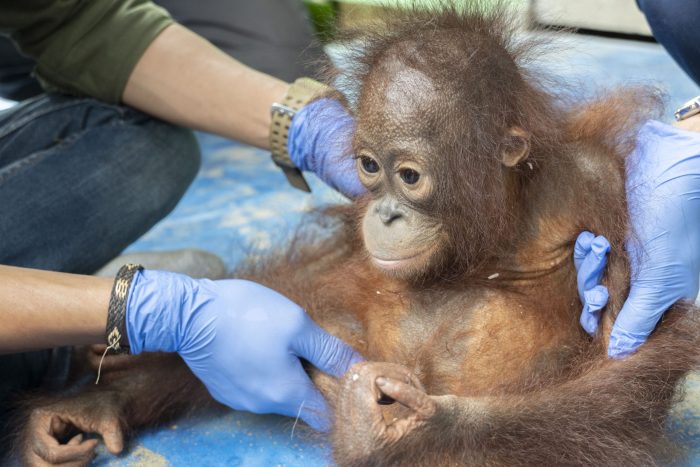
Do you remember Covita? That’s right, the baby female orangutan who was rescued from a wildlife maintenance case was protected during the pandemic yesterday. Covita, who was then two years old, was rescued by a joint team of the West Kalimantan BKSDA and YIARI at the end of August 2020. He was kept illegally by a resident in Ensayang Hamlet, Karang Betong Village, Nanga Mahap District, Sekadau Regency. His condition at that time was malnourished and suffering from skin diseases. After being examined at our rescue and Conservation Centre, X-rays revealed a fracture in the right femur of a rifle bullet on Covita’s left thigh.
Fortunately, now Covita is free and independent in its natural habitat in Bukit Baka Bukit Raya National Park. How so? What’s the story? He’s still a baby, can he survive on his own? EITs calm down, Covita is not alone in the forest kok gangs. He was released with his foster mother named Faini.
Kondisi Covita ketika direscue (Muffidz Masum | YIARI)
More confused how the story is how Covita can get to have a foster parent of everything? So, after being rescued and receiving intensive care from our medical team at the YIARI Orangutan Rescue and Rehabilitation Center in Ketapang, Covita underwent a period of rehabilitation to restore her survival skills as an orangutan. As long as you know # KonservasYIARI, baby orangutans in nature will stay with their mothers for 6-8 years before they can live independently. It is during their stay with their mother that the orangutans learn to forage, climb, build nests and so on. Covita who had left his mother at such a young age became clueless how to survive as an orangutan in the forest, so the rehabilitation process is needed here.
Fortunately, in the rehabilitation process, Covita met a female orangutan named Faini, who was rescued by a joint team of West Kalimantan BKSDA and YIARI from Randau Jekak Village, Sandai District, Ketapang Regency in December 2015. This Orangutan also suffered an unfortunate fate, losing her mother and becoming a victim of illegal maintenance of protected animals. Faini, who is currently around 10 years old, is very concerned with Covita. In fact they then develop a natural bond as mother and child. Faini is very protective of Covita and vice versa, Covita looks comfortable and becomes more confident when she is with Faini. During the rehabilitation period, the interaction between the two leads to positive things. Thanks to Faini, Covita dared to explore the rehabilitation Forest because Faini was also actively exploring. Covita is not very good at NEST building but with Faini, she is making great progress for an orangutan her age.
When Faini makes a nest for the two of them, Covita always tries to help her foster parents make a nest by collecting twigs and leaves. One of the positive things about Covita is that she is still semi-wild and very rarely makes contact or approaches animal keepers. In fact, he tends to stay away from humans and often makes it difficult for medical teams or animal keepers who want to do an examination. They are also more active in trees. Covita and Paini are very good foraging orangutans. The foraging ability of both orangutans is astounding because their dictionary of forest food species is much more extensive than that of other orangutans. This is why our team did not hesitate to include her name in the list of orangutans that will be released soon.
Perjuangan pelepasliaran Covita dan orangutan lainnya di dalam kawasan TNBBBR pada 26 Juni 2023 (Muffidz Masum | YIARI)
In addition to the two of them, there are four other orangutans, namely Budi, Tulip, Binaca, and Jamilah who were also released inside the NNBBBR area on June 26, 2023.They all also suffered the unfortunate fate of being victims of illegal rearing of protected wildlife. Budi, who was the only male orangutan in this release, had been kept in a chicken coop for months and fed only sweetened condensed milk until he was severely malnourished until his body swelled up. Budi was rescued from Kubing, Sawah Sempurna Hamlet, Sungai Laur District, Ketapang Regency in December 2014 when he was 1 year old. After a 9-year rehabilitation period, Budi finally gained true freedom in his natural habitat.
Another Orangutan, Tulip, was rescued in April 2012 from illegal rearing by residents of Delta Pawan Sub-District, Ketapang Regency. Today tulips are estimated to be 13 years old. Bianca, a 7-year-old female orangutan, was rescued by the West Kalimantan conservation and natural resources agency (Balai KSDA) in Randau Jungkal Village, Sandai District, Ketapang Regency on October 5, 2016. Jamilah, a 9-year-old female orangutan, was rescued in Sandai, Ketapang Regency in February 2016.
Let us wish them all health always in their homes in Bukit Baka Bukit Raya National Park.
Heribertus Suciadi
Support Indonesia’s protected animals by sharing this story on your social media or donate to animals in our rehabilitation center by clicking the link here.