Forestry Minister Raja Juli Antoni, seven orangutans return to their natural Habitat
At the beginning of Raja Juli Antoni’s tenure as forestry minister, the West Kalimantan Natural Resources Conservation Agency (BKSDA) together with the Bukit Baka Bukit Raya National Park Agency (BTNBBBR) and the Indonesian rehabilitation nature initiation Foundation (YIARI) released 7 (seven) orangutans in the Bukit Baka National Park working area Mentatai Resort, National Park Management Section I Nanga Pinoh Region (31/10)
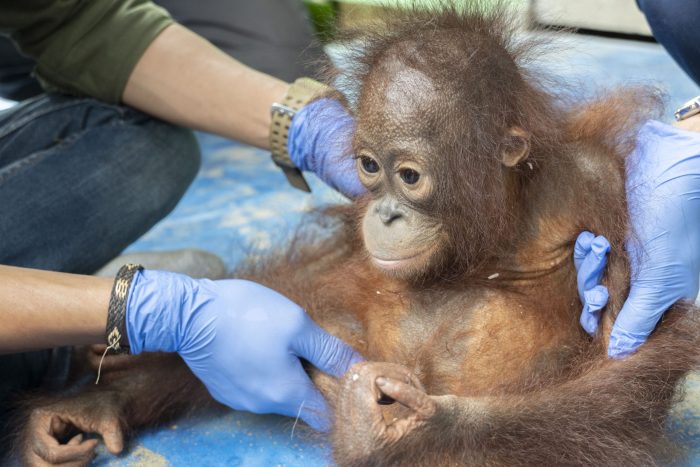
They are orangutans who were taken care of by the West Kalimantan KSDA Center at the Yiari Ketapang Orangutan Rescue and Rehabilitation Center from 2010 to 2020. All are orangutans rescued from illegal rearing of protected wildlife. Prior to their release, they underwent rehabilitation at the orangutan Rehabilitation Center in YIARI in Sungai Awan Village, Ketapang.
This rehabilitation process is intended to restore their natural properties, as well as make them have the ability to survive in the original habitat. Orangutans should live with their mothers from birth until the age of 6-8 years. During this nurturing period, orangutans need to learn various life skills such as climbing, foraging, and nest building. However, due to various reasons, this baby orangutan was separated from its mother and ended up in the hands of humans, thus losing the opportunity to learn all these abilities. The rehabilitation process until this release can take time and cost a lot. The time required can reach 14 years, depending on the ability of each individual.
Orangutan release is an important step after rehabilitation, as an effort to preserve protected wildlife and restore orangutan populations in nature. Of the seven orangutans released, two orangutans named Rika and Kamila are female. While Aben, Muaro, Onyo, Batis, and Lambai are male. The special thing about this release is that four of the seven orangutans are mother and daughter pairs. They are Kamila-Batis and Rika-Aben.

Rika is a female orangutan from Batu tangis Village, tumbang Titi Sub-District, Ketapang regency, West Kalimantan. He was rescued from the illegal trade and maintenance of protected wildlife by the WRU BKSDA of West Kalimantan and YIARI on October 28, 2013. The caretaker claimed to have obtained Rika from his son who bought the orangutan from a hunter for Rp500, 000. For three months of being kept, Rika was tied with chains under the house and fed rice and vegetables.
Yiari Animal Management Manager, Andini Nurillah, stated that during her ten years of study at the yiari Rehabilitation Center, Rika has made significant progress in mastering her survival skills as an orangutan. ‘Not only mastering the ability to survive as an orangutan, Rika has also proven to be able to teach this ability to other orangutans, and can even become a qualified foster mother for baby orangutans,” said Andini.
Meanwhile, Aben, a male orangutan who was rescued from a wildlife case in Ketapang on December 10, 2019, became the lucky baby orangutan who did not need to undergo a long rehabilitation period like Rika. Rika is paired with Aben to become a foster mother. As a result, Rika can teach Aben with various abilities necessary for survival such as climbing, foraging, and making nests. Rika can also be a protector for Aben who is petite. This strategy worked. Rika becomes a protective mother and Aben becomes more confident to learn new things.
Other orangutan success stories come from Karmila and Batis. Karmila is a female orangutan from Kayong continent, Ketapang, West Kalimantan. He was rescued from a case of illegal maintenance of wildlife from a resident who claimed to get Karmila from an oil palm plantation in the area. Andini emphasized that during the 14 years in YIARI, Karmila has undergone an intensive rehabilitation process and has shown remarkable development. ‘He became an orangutan who is adept at finding food, making nests, and has other essential survival skills in the wild,” he said. On November 19, 2020, Karmila began to be socialized as a foster mother for a baby orangutan named Batis. During the period of socialization, Karmila was able to adapt well, showed strong maternal abilities, and managed to become a reliable foster parent. Currently, Karmila who is estimated to be around 15 years old is ready to be released with her foster child, Batis.

Batis is a male orangutan from Batu Lapis Village, Hulu Sungai Sub-District, Ketapang regency, West Kalimantan. He was rescued on April 17, 2020 from a case of illegal animal maintenance protected. Previously, Batis was found by a resident in the forest while collecting wood and did not realize the orangutan was a protected animal. For three months kept, Batis placed in a wooden cage measuring 50 x 80 cm and fed rice, bananas, papaya, and drink water and even coffee. When rescued, Batis was estimated to be about 1 year old. After undergoing quarantine, he began to be socialized with Karmila, his foster mother, on November 19, 2020. Through this socialization, Batis learned various survival skills, such as foraging, traveling, dan membuat sarang. During four years of rehabilitation, his health condition was well monitored and he was ready to be released with his foster mother, Karmila.
Muaro is a male orangutan from Kubu Raya regency, West Kalimantan, who arrived in YIARI on February 11, 2018. His story began when he was separated from his mother due to land clearing by an oil palm plantation company in December 2016. During that time, Muaro was kept by a villager and given human food such as milk, sugar water, rice, and side dishes. The rescue of Muaro was carried out by a joint team of WRU BKSDA West Kalimantan and YIARI on February 9, 2018. After six years of rehabilitation, Muaro, who is now eight years old, has demonstrated his ability to live wild in his natural habitat.
Onyo is a male orangutan from Nek Doyan, Ketapang. He first arrived at Yayasan Initiasi Alam Rehabilitasi Indonesia (YIARI) on March 10, 2013, after being found by a resident under a tree. Based on the narrative of residents, Onyo’s mother was seen around the location, but then went away leaving Onyo alone. During the maintenance period before being handed over to YIARI, Onyo was fed rice and sweetened condensed milk by local residents. After eleven years of rehabilitation in YIARI, Onyo, who is currently estimated to be 12 years old, is considered worthy of being released.

Lambai is a male orangutan from Tanjung Lambai Hamlet, Nanga Tayap District, West Kalimantan. He arrived at Yayasan Initiasi Alam Rehabilitasi Indonesia (YIARI) after being rescued by a joint team of WRU BKSDA West Kalimantan and YIARI on April 30, 2016. The story of his rescue began when an employee of an oil palm plantation company found Lambai in a cardboard box that had fallen from a car. After undergoing a rehabilitation process for 8 years, Lambai, who is currently 10 years old, is considered ready to be released into his native habitat.
This rehabilitation is necessary to restore the natural nature and ability of orangutans to survive in their habitat. In the wild, baby orangutans will stay with their mother until the age of 7-8 years. He learned from his mother about surviving in nature as an orangutan. As the baby orangutans were forced to separate from their mothers to be used as pets, they lost the opportunity to master their survival skills.
The journey to the release point takes 3 days, from the Yiari Rehabilitation Center in Sungai Awan, Ketapang to the release point in the TNBBBR area. The release team departed from the Yiari Rehabilitation Center in Ketapang on October 29, 2024 at 04.00 WIB. During the trip, the team always pay attention to the condition of the orangutans brought so as not to experience stress in the cage, considering the long distance. It took at least 17 hours for the team to reach the Bukit Baka Bukit Raya National Park section office in Nanga Pinoh. The team rested one night before proceeding to the release point. This release activity involved more than 100 people consisting of the community, West Kalimantan BKSDA, BTNBBBR, and the YIARI team itself.

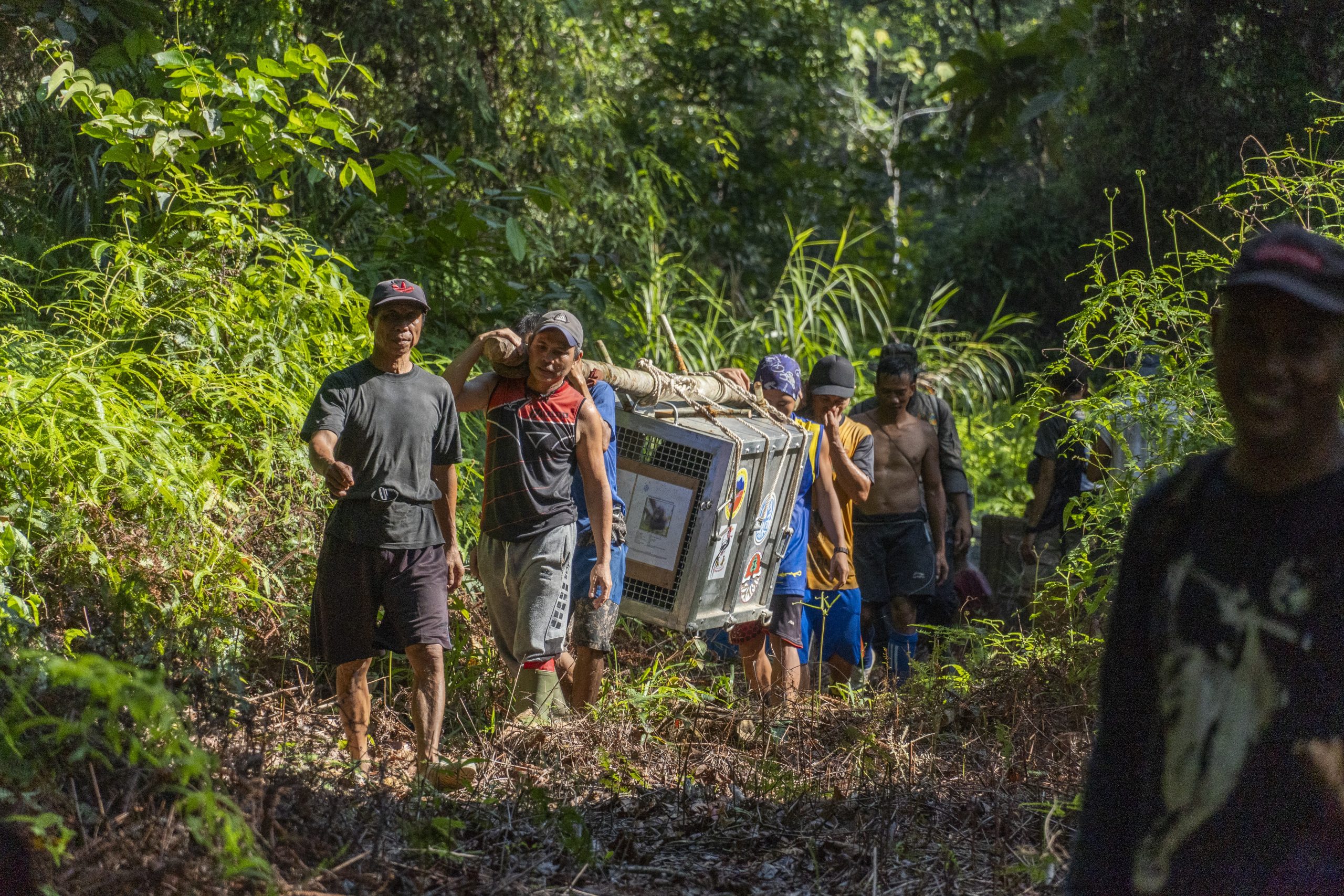
The next morning, the journey continued to the nearest Hamlet to the TNBBBR area. The road trip is taken for 5 hours, then continued by motor boat for 1 hour. Not getting there, the journey continues on foot into the forest area TNBBBR.
Supported by porters who come from villagers around TNBBBR, the journey by carrying this cage takes up to 5 hours. Afterwards, the four orangutans were placed in a habituation cage so that they could rest and adapt a bit to the new environment. The next day, the team continued on foot and the seven orangutans were released at two different release points.
Bukit Baka Bukit Raya National Park was chosen as the orangutan release site because the habitat provides abundant food sources and is suitable for orangutan habitat as well as proof that the habitat in TNBBBR is still safe and protected the survey results of the btnbbbr and YIARI joint team showed the number and type of orangutan feed trees were abundant. In addition, the number of orangutan populations in the area is still very small. The Status of the TNBBBR area as a conservation area further ensures the safety and welfare of the animals in it. To date, YIARI has released 82 orangutans since 2016.
Considering that the released orangutan is a rehabilitated orangutan, YIARI and BTNBBBR deployed a monitoring team to monitor the behavior and adaptation process of this orangutan in its new environment. The monitoring team consisting of the people of the buffer villages of the TNBBBR area will record the behavior of orangutans every 2 minutes, from waking up to going to sleep again every day. The monitoring process lasts for 1-2 years, ensuring that released orangutans can survive and adapt to their new environment.

Chairman of YIARI, Silverius Oscar Unggul appreciated this joint effort as a good start in the leadership of the new Minister of Forestry. ‘Hopefully this release activity will be a good first step at the beginning of the leadership of our Minister of Forestry, Mr. Raja Juli Antoni.” He also emphasized that this is a real effort from the collaboration of Wildlife Conservation in Indonesia. “I am proud to be part of a team that gives new life to orangutans who previously needed to be rescued and have undergone rehabilitation. The release of these seven orangutans is a clear proof of our shared commitment to the conservation of Indonesia’s protected wildlife. This success cannot be separated from the solid cooperation between YIARI, West Kalimantan KSDA Hall, and Bukit Baka Bukit Raya National Park Hall. Each individual orangutan we release has gone through a long and thorough rehabilitation process, which aims to ensure that they have the skills to survive in their natural habitat. We hope this step can strengthen the orangutan population in West Kalimantan and support the preservation of the forest that is their home,’ he concluded.
The head of BTNBBBR, Andi Muhammad Kadhafi, stressed that this success is the result of strong collaboration between various parties. TNBBBR was chosen as the release site because it provides an abundant source of food and is suitable for orangutan habitat.
Head of BKSDA West Kalimantan, RM Wiwied Widodo, revealed the importance of preserving Kalimantan’s endemic wildlife. He stressed that orangutans are part of Indonesia’s rich biodiversity, which must be preserved and preserved. Support from all parties is essential to ensure the survival of this species.
About YIARI
Yayasan Initiasi Alam Rehabilitasi Indonesia (YIARI) is a non-profit organization engaged in primate conservation in Indonesia based on rescue, recovery, release, and post-release monitoring efforts. YIARI is also committed to provide protection of primates and their habitats with a holistic approach through multi-stakeholder cooperation to realize a harmonious ecosystem between habitats, animals, and humans.
For more information, please contact:
Yiari: +62 821-5346-2720 (Heribertus Suciadi, media and Communication Manager of YIARI)